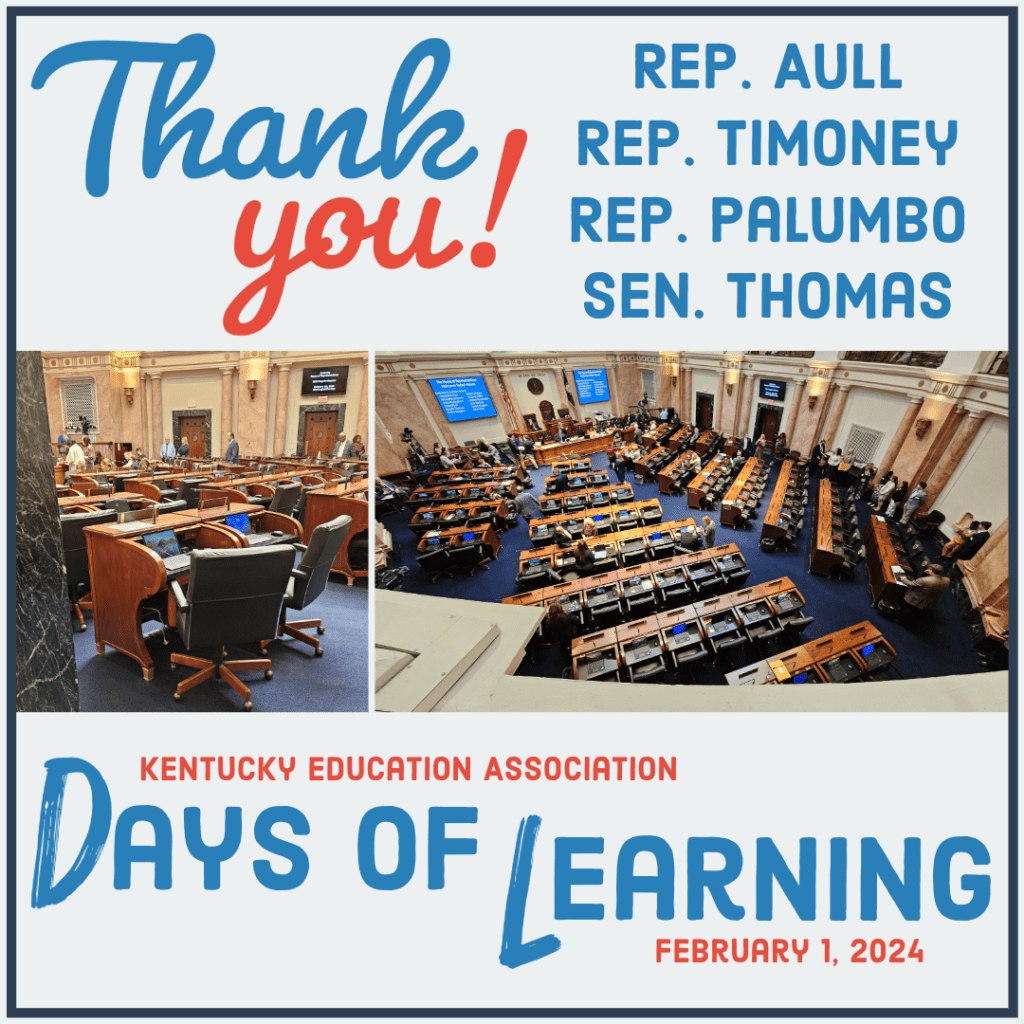
Reflection on FCEA Day of Learning in Frankfort 2024
As an educator, I believe wholeheartedly in the power of advocacy. Fighting for public education, championing classroom needs, and ensuring the well-being of our students – these are noble pursuits demanding our voices. But for years, my trips to the state capital as a teacher union member were filled with apprehension. We’d plead our case, often met with indifference or opposition, leaving us feeling defeated. Recently, however, a glimmer of hope emerged. This time, amidst discussions on budgets, regulations, and student health, I encountered something different: bipartisan dialogue.
This shift resonated deeply. It challenged the ingrained notion that educators must align perfectly with every official’s views. Instead, it highlighted a crucial truth: we must engage with ALL elected officials, regardless of their political affiliation. Why? Because education transcends partisan lines. It’s about nurturing future generations, fostering critical thinking, and equipping them for success in a diverse world. This cannot be achieved through echo chambers; it demands collaboration across the political spectrum.
So why is bipartisanship crucial for effective education advocacy?
- Broader Reach, Amplified Impact: Engaging both sides expands our reach, ensuring our concerns are heard by a wider audience. This fosters understanding, bridges divides, and increases the likelihood of finding common ground. Imagine the impact if teacher voices resonated not just with one party, but with all!
- Sustainable Solutions: Legislation with bipartisan support tends to be more stable and long-lasting. When solutions appeal to diverse viewpoints, they are less likely to be overturned by the next election cycle, creating a more secure foundation for positive change.
- Setting an Example: We, as educators, have a responsibility to model constructive engagement. By demonstrating respectful dialogue and collaboration, we show our students the power of civil discourse and compromise, skills essential for navigating the complexities of our world.
- Moving Beyond Protests: While protests can be powerful tools, they shouldn’t be the only option. Proactive engagement fosters a more proactive approach, allowing us to shape policy before it’s set in stone, rather than simply reacting to it.
- Empowering Families and Students: When families see educators engaging with officials from all sides, they are more likely to feel empowered to do the same. This broadens the base of advocacy, creating a stronger collective voice for education.
Does this mean ignoring differences? Absolutely not. It means approaching those differences with an open mind, seeking common ground, and focusing on the well-being of our students above all else. It means fostering dialogue over division, collaboration over confrontation.
Remember, our students learn by example. Let’s show them that progress doesn’t always come from shouting the loudest, but from listening, understanding, and working together, even when it’s challenging.
Let’s move beyond the “hat in hand” approach and embrace the power of bipartisanship. It’s time to build a brighter future for education, one where all voices are heard, and all students thrive.
Join the conversation and advocate for public education initiatives in your local community.


 BFWClassroom
You must be logged in to post a comment.