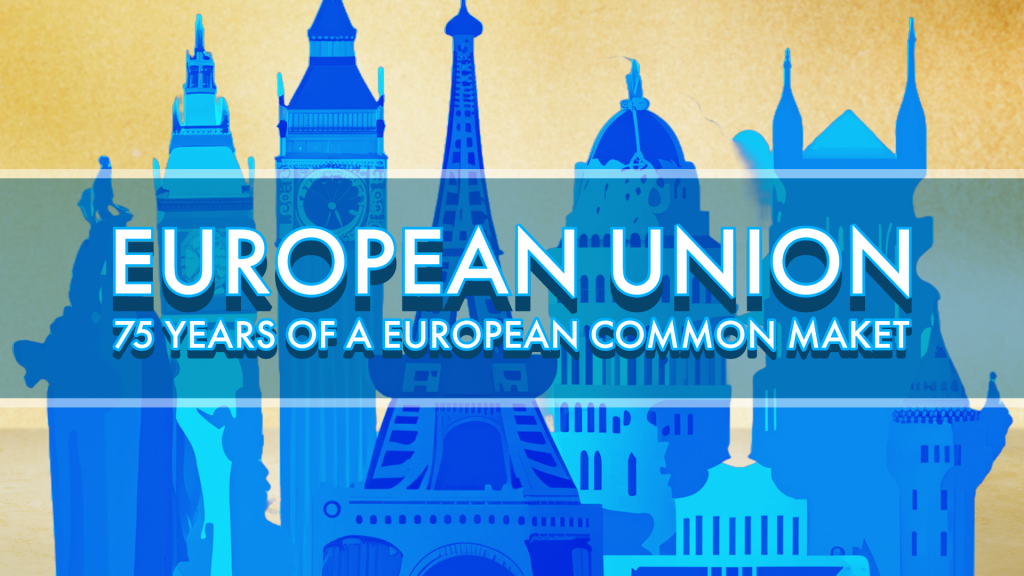
This is series of 3 post highlighting the creation of a European Common Market and its evolution into the modern European Union.
Navigating Challenges: The European Union from 2010 to Today
As the world grappled with the aftermath of the global financial crisis and faced new geopolitical realities, the European Union (EU) entered a period of profound transformation and adaptation. From managing economic instability to addressing migration pressures and grappling with the rise of populism, the EU faced a host of complex challenges that tested its resilience and unity. Against this backdrop, the EU has sought to reaffirm its commitment to its founding principles while charting a path forward in an ever-changing world.
The economic crisis that began in 2008 had far-reaching consequences for the EU, exposing structural weaknesses in the eurozone and sparking debates over economic governance and fiscal discipline. In response, EU member states implemented austerity measures and embarked on ambitious reforms aimed at strengthening economic resilience and promoting sustainable growth. The creation of new financial mechanisms, such as the European Stability Mechanism (ESM) and the European Banking Union, marked important steps towards greater financial integration and stability within the eurozone.
Despite these efforts, the economic challenges facing the EU persisted, exacerbated by political instability and social unrest in some member states. The sovereign debt crises in Greece, Ireland, Portugal, and Spain underscored the need for deeper economic cooperation and solidarity among EU member states. The EU responded with measures to support struggling economies, including bailout programs and structural reforms, while also calling for greater fiscal discipline and coordination among member states.
In addition to economic challenges, the EU has grappled with migration pressures stemming from conflicts and instability in the Middle East and North Africa. The influx of refugees and migrants has tested the EU’s capacity to manage external borders, uphold humanitarian values, and forge a common approach to asylum and migration policy. The EU has implemented various measures to address these challenges, including the establishment of the European Border and Coast Guard Agency (Frontex) and the adoption of the European Agenda on Migration.
Furthermore, the EU has confronted the rise of populist and nationalist movements challenging the established political order and institutions. These movements have capitalized on public discontent with globalization, immigration, and perceived loss of sovereignty, posing a threat to the cohesion and stability of the EU. In response, the EU has reaffirmed its commitment to democratic values, the rule of law, and fundamental rights, while also seeking to address legitimate concerns and grievances through dialogue and engagement.
Looking ahead, the EU faces a host of complex and interconnected challenges, including climate change, digital transformation, and global geopolitical shifts. As it navigates these challenges, the EU must remain true to its founding principles of solidarity, cooperation, and unity, while also adapting to new realities and emerging threats. By working together and embracing diversity, the EU can continue to play a leading role in shaping a more prosperous, peaceful, and sustainable future for its citizens and the world.
Suggested Reading List:
- “Europe Reset: New Directions for the EU” by Richard Youngs
- “European Union Politics” by Michelle Cini and Nieves Pérez-Solórzano Borragán
- “The European Union Explained: Institutions, Actors, Global Impact” by Andreas Staab
- “The Euro: How a Common Currency Threatens the Future of Europe” by Joseph E. Stiglitz
- “The Future of Europe: Reform or Decline?” edited by Alberto Alesina and Francesco Giavazzi
Online Resources:
- European Union Official Website: https://europa.eu/
- European Parliament: https://www.europarl.europa.eu/
- European Commission: https://ec.europa.eu/
- European Council: https://www.consilium.europa.eu/
- European Central Bank: https://www.ecb.europa.eu/
As the European Union continues to evolve and face new challenges, let us remain committed to the values of unity, solidarity, and cooperation that have defined the EU since its inception. By working together and embracing innovation and change, the EU can continue to be a force for progress and prosperity in Europe and beyond.

 BFWClassroom