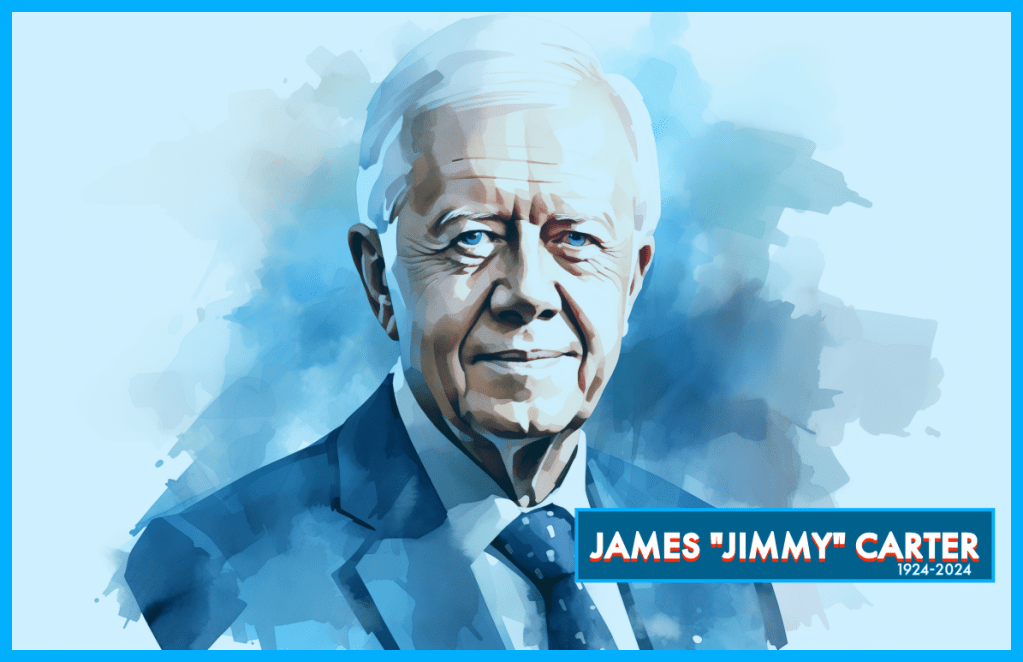
A month later and it still feels like we lost a leader that we never deserved as a country but always needed. I highly recommend listening to NYTimes The Daily to also help give you a longer view prospective.
When we think about former presidents, we often imagine a life of quiet retirement, writing memoirs, and making occasional public appearances. But Jimmy Carter, the 39th president of the United States, changed this perception entirely. His post-presidency career set a new standard for how former leaders can remain engaged in meaningful, world-changing work. This transformation began with his tenure in the White House and continued through his unparalleled contributions to global peace and humanitarian efforts afterward.
Carter’s Leadership in the Middle East Peace Process
One of Carter’s most significant achievements as president was brokering the Camp David Accords in 1978. This landmark agreement between Egypt and Israel brought an end to decades of hostility and laid the groundwork for peace in the region. Carter’s persistence and empathy played a crucial role in getting Egyptian President Anwar Sadat and Israeli Prime Minister Menachem Begin to reach a consensus.
Carter’s approach to diplomacy—listening carefully, emphasizing mutual respect, and seeking common ground—set a precedent for how leaders could address complex international conflicts. His work on the Middle East peace process exemplifies leadership based on principles of justice and fairness, leaving a legacy that still influences international relations today.
The Carter Center: A Legacy of Service
After leaving office in 1981, Carter could have retired quietly to his hometown of Plains, Georgia. Instead, he and his wife, Rosalynn, founded the Carter Center in 1982, a nonprofit organization dedicated to advancing human rights and alleviating suffering worldwide.
The Carter Center has been at the forefront of eradicating diseases like Guinea worm and river blindness, monitoring elections to promote democracy, and mediating conflicts in regions plagued by violence. Carter’s work through the Center earned him the Nobel Peace Prize in 2002, highlighting his commitment to peace and global well-being.
Redefining the Post-Presidency
Jimmy Carter showed that the title of “former president” doesn’t mean the end of public service. By leveraging the global platform that comes with the presidency, he dedicated his post-presidency years to causes that aligned with his deep-rooted values of compassion and justice. Whether swinging a hammer with Habitat for Humanity or advocating for disease eradication in remote parts of the world, Carter has remained a tireless advocate for the marginalized.
Classroom Discussion
As we examine Carter’s life and legacy, ask yourself: What does leadership mean beyond the confines of political office? How can we, like Carter, use our skills and influence to make a positive impact on the world?
Jimmy Carter’s life is a powerful reminder that leadership doesn’t end with a job title—it’s a lifelong commitment to service.
This is part of my Politics in the Classroom series, where I look at the importance of political campaigns, pop culture, sports, music, and geopolitics of the last 50 years and how to use them as resources in the classroom. To read more, check out my other posts in the series. (Link)

 BFWClassroom