
This is part of a 4-part leadership series focusing on the 13 Leadership Principles developed by Sec. Colin Powell. You can download a free poster with all 13 listed or read the other posts by following the link. Or read his book on leadership. (Amazon)
One year later, I wanted to revisit my first set of Monthly Mindfulness blog posts. So, Icreated a new introduction and links to all four posts below. I hope you enjoy.
In today’s dynamic educational landscape, the wisdom of great leaders can illuminate our path forward. General Colin Powell’s 13 leadership principles offer invaluable insights that can revolutionize our approach to classroom leadership and student development. Let’s explore how these timeless principles can create more empowered, resilient, and successful learning environments.
Part 1: Embracing Resilience and a Positive Attitude
“It ain’t as bad as you think! It will look better in the morning.” These words from Secretary Powell resonate deeply within educational contexts. Every educator knows the challenges that arise in classrooms – from struggling students to difficult behavioral situations. However, maintaining optimism isn’t just about putting on a brave face; it’s about modeling resilience for our students.
Consider implementing these strategies:
- Start each day with a “clean slate” mentality, regardless of previous challenges
- Create a “resilience corner” where students can share stories of overcoming obstacles
- Celebrate small victories and progress, not just final achievements
- Teach students to reframe setbacks as learning opportunities
Part 2: Decision Making and Accountability
Powell’s emphasis on decisive leadership and personal accountability provides a framework for developing student agency. In the classroom, this translates to creating an environment where students feel empowered to make decisions and take responsibility for their learning journey.
Key implementation strategies include:
- Establishing clear decision-making protocols for group projects
- Creating opportunities for students to choose their learning paths
- Implementing peer review systems that promote accountability
- Teaching the connection between choices and consequences in a supportive way
Part 3: Fostering Excellence through Attention to Detail and Collaboration
“Check small things” – this principle highlights the critical importance of precision and thoroughness in academic work. When students understand how minor details impact the bigger picture, they develop stronger academic habits and professional skills.
Enhance attention to detail through:
- Developing detailed rubrics that emphasize precision
- Teaching proofreading and self-review techniques
- Creating peer collaboration systems for detail checking
- Demonstrating how small errors can compound into larger issues
Collaboration skills can be strengthened by:
- Implementing structured group projects with clear roles
- Teaching effective communication and feedback methods
- Creating cross-grade mentorship opportunities
- Establishing classroom “quality circles” for continuous improvement
Part 4: Nurturing Future Leaders with Vision and Confidence
Vision and confidence are fundamental to leadership development. Educational leaders must help students develop both the ability to envision their future and the confidence to pursue their goals.
Transform students into visionary leaders by:
- Guiding them in creating personal mission statements
- Teaching goal-setting and strategic planning skills
- Providing opportunities for leadership roles within the classroom
- Connecting current learning to future aspirations
Building confidence through:
- Creating safe spaces for risk-taking and innovation
- Providing specific, growth-oriented feedback
- Celebrating diverse forms of achievement
- Modeling confident decision-making
Implementing Powell’s Principles: Action Steps for Educators
- Regular Reflection: Schedule weekly reflection time for both teachers and students to assess progress and adjust strategies.
- Leadership Portfolios: Help students create and maintain leadership portfolios documenting their growth in each principle area.
- Mentorship Programs: Establish mentorship connections between older and younger students to practice leadership skills.
- Community Engagement: Create opportunities for students to apply leadership skills in real-world community service projects.
Conclusion
By integrating Powell’s leadership principles into our educational practices, we create more than just successful students – we develop future leaders who understand the importance of resilience, accountability, attention to detail, and vision. These principles, when thoughtfully applied in educational settings, create a foundation for lifelong leadership development and success.
Remember Powell’s wisdom: “Leadership is solving problems.” By teaching students to approach challenges with these principles in mind, we prepare them not just for academic success, but for life leadership roles that await them beyond the classroom walls.
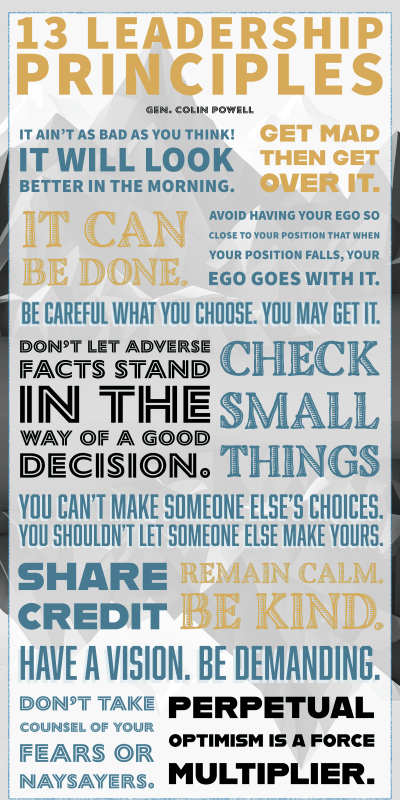
If you would like a copy of the updated 13 Principles poster for your classroom.
- Just right click on this image and download a PNG.
- Click here for a access to a remixable Adobe Express Template
You can order his book on leadership It Worked For Me by following this link. (Amazon)

 BFWClassroom
You must be logged in to post a comment.