How Bismarck’s Early Death Could Have Changed the Course of European History
The Franco-Prussian War of 1870-71 reshaped the map of Europe, but what if the architect of German unification hadn’t lived to see his masterpiece completed? This alternate history explores how the death of Otto von Bismarck in the early weeks of the conflict could have transformed a limited war into a catastrophic European conflagration.
The Point of Departure: September 1870
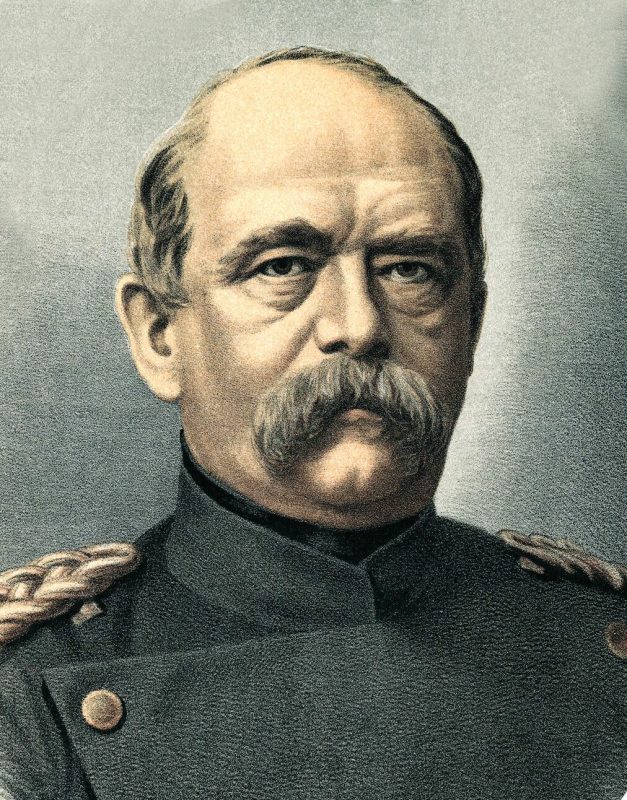
In our timeline, the Battle of Sedan on September 1-2, 1870, marked the decisive moment of the Franco-Prussian War. Napoleon III surrendered with 83,000 French troops, effectively ending the Second French Empire. But imagine if, during the chaos of battle, a stray artillery shell had found Otto von Bismarck among the Prussian observers. The Iron Chancellor, who had orchestrated this war through careful diplomacy and calculated provocations, lies dead in the mud of Sedan.
With Bismarck gone, the delicate balance of his war aims dies with him. The Prussian Chancellor had envisioned a quick, limited conflict that would unite the German states under Prussian leadership while avoiding the intervention of other European powers. His death removes the one man capable of restraining Prussian military ambitions and maintaining the diplomatic isolation of France.
Moltke Unleashed
Field Marshal Helmuth von Moltke the Elder, architect of Prussian military strategy, suddenly finds himself without political oversight. Where Bismarck would have counseled restraint and careful diplomacy, Moltke sees only military objectives to be achieved with characteristic Prussian efficiency.
Without the Chancellor’s moderating influence, Moltke orders an immediate advance on Paris, bypassing the traditional siege approach. Simultaneously, he authorizes the bombardment of Strasbourg in early September, weeks earlier than in our timeline. The ancient city, symbol of Alsatian culture, burns for three days. French civilians flee in panic as Prussian artillery reduces centuries of history to rubble.
The march on Paris begins in earnest by mid-September. Moltke, emboldened by his victories and freed from political constraints, orders the systematic bombardment of the French capital’s outer fortifications. By October, Prussian guns are shelling the City of Light itself, sending cascades of masonry from Notre-Dame’s towers and reducing entire neighborhoods to smoking ruins.
The Diplomatic Revolution
These acts of apparent barbarism send shockwaves through European capitals. Queen Victoria, initially sympathetic to her Prussian relatives, recoils in horror at newspaper reports of civilian casualties in Strasbourg and Paris. The British press, led by The Times, denounces Prussian “methods unworthy of civilized warfare.”
In St. Petersburg, Tsar Alexander II faces mounting pressure from his advisors. Russian Foreign Minister Alexander Gorchakov argues that an overly powerful Germany threatens the European balance of power that has kept the peace since 1815. The destruction of Strasbourg and the bombardment of Paris provide the perfect pretext for intervention.
The turning point comes in late October when Prussian shells strike the British Embassy in Paris, killing Ambassador Lord Lyons. Though likely accidental, British public opinion erupts in fury. Prime Minister William Gladstone, despite his preference for non-intervention, finds himself forced to act by an enraged Parliament and press.
The Widening War
On November 15, 1870, Britain and Russia simultaneously declare war on Prussia. The British Royal Navy immediately imposes a blockade on German ports, while Russian armies begin mobilizing along the eastern borders of Prussia and Austria-Hungary.
Austria-Hungary, seeking revenge for their 1866 defeat, joins the coalition within days. Franz Joseph sees an opportunity to reclaim Venetia and restore Austrian influence in Germany. French resistance, which had been crumbling, suddenly stiffens as news of the intervention reaches besieged Paris.
The war that Bismarck had designed to be swift and limited has become the general European conflict he had worked so carefully to avoid. Moltke, brilliant tactician though he is, finds himself fighting on multiple fronts without the diplomatic genius who had isolated Prussia’s enemies.
Consequences Beyond Imagination
This alternate Franco-Prussian War would likely have lasted years rather than months, with consequences rippling through the following decades:
German Unification Delayed or Derailed: Without victory against France, the southern German states might never have joined the North German Confederation. German nationalism, associated with military disaster rather than triumph, could have taken decades longer to achieve political unity.
No German Empire: Wilhelm I would never have been crowned Kaiser in the Hall of Mirrors at Versailles. The delicate balance of European power might have been maintained, potentially preventing the arms race that led to World War I.
British-Russian Cooperation: The unlikely alliance between Britain and Russia in this conflict could have reshaped global geopolitics. Without German naval competition, Britain might never have felt compelled to abandon splendid isolation, while Russia could have focused on Asian expansion without European distractions.
A Different France: Without the trauma of defeat and the loss of Alsace-Lorraine, France might have developed along entirely different lines. The Third Republic could have been more stable, without the revanchist sentiment that poisoned European relations for generations.
The Butterfly Effect
The death of one man at Sedan would have changed everything. Bismarck’s genius lay not just in starting wars, but in knowing when and how to end them. His death would have unleashed forces that his careful diplomacy had contained, transforming a limited conflict into the kind of devastating general war that Europe wouldn’t see until 1914—if indeed it ever came at all.
In our timeline, Bismarck lived to proclaim the German Empire and establish the balance of power that kept the peace for nearly half a century. But in this alternate world, the Iron Chancellor’s early death would have shattered that careful equilibrium, perhaps preventing the rise of Germany as a great power and fundamentally altering the trajectory of modern European history.
The lesson remains clear: in the delicate web of 19th-century European politics, the death of a single brilliant diplomat could have rewritten the fate of nations.
The lesson remains clear: in the delicate web of 19th-century European politics, the death of a single brilliant diplomat could have rewritten the fate of nations.
Primary Historical Evidence
- Bismarck’s Diplomatic Correspondence (1870): Letters to King Wilhelm I emphasizing the need for limited war aims and careful management of neutral powers
- Moltke’s Military Planning Documents: Strategic assessments showing his preference for total military victory over diplomatic restraint
- British Foreign Office Records: Contemporary diplomatic cables revealing Britain’s growing concern about Prussian methods during the siege of Paris
- Russian State Archives: Documentation of Tsar Alexander II’s discussions with advisors about intervention possibilities during the Franco-Prussian War
Academic Sources
- “Bismarck’s War: The Franco-Prussian War and the Making of Modern Europe” by Rachel Chrastil (2023) – Comprehensive analysis of Bismarck’s diplomatic strategy and the delicate balance he maintained to avoid European intervention
- “The Franco-Prussian War: The German Conquest of France in 1870-1871” by Geoffrey Wawro – Detailed military history showing how close the war came to expanding beyond France and Prussia
- “Bismarck: A Life” by Jonathan Steinberg – Biography emphasizing Bismarck’s unique role in restraining Prussian militarism
Reference Works
- “The Cambridge History of Germany, Volume 2”: “German Unification” – Analysis of how Bismarck’s diplomatic genius was essential to preventing European coalition against Prussia
- “Encyclopedia Britannica”: “Franco-Prussian War” – Standard reference covering the international dimensions of the conflict
- “Oxford Historical Atlas of Europe”: Visual documentation of the European balance of power in 1870-71
Historical Context Sources
- “The Concert of Europe” by René Albrecht-Carrié – Analysis of the diplomatic system Bismarck navigated to isolate France
- “The Age of Empire: 1875-1914” by Eric Hobsbawm – Broader context of European power dynamics that Bismarck’s death could have fundamentally altered
- “Queen Victoria’s Foreign Policy” by Muriel Chamberlain – Documentation of British attitudes toward German unification and the factors that kept Britain neutral
This alternative history was inspired by Rachel Chrastil’s “Bismarck’s War: The Franco-Prussian War and the Making of Modern Europe” (2023, Basic Books), which illuminated the crucial role of Bismarck’s diplomatic restraint in preventing the conflict from becoming a general European war.
While these events are not true they are based on historic fact and the possibility of one change in history. To read more of my Alternate History scenarios, be sure read here.

 BFWClassroom
You must be logged in to post a comment.