
How a Cuban Generation and Battle of Cuito Cuanavale Changed the Course of Apartheid
Fifty years later we need to reevaluate the broader Cuban geo-political power from 1970-1990. When we teach about the end of apartheid in South Africa, we typically focus on the internal resistance movement, international sanctions, and the moral leadership of figures like Nelson Mandela and Desmond Tutu. But there’s a remarkable story that rarely makes it into our textbooks—one that involves Cuban soldiers fighting thousands of miles from home in the scrubland of southern Angola, fundamentally altering the military calculations that would eventually bring apartheid to an end.
The Angolan Civil War: A Cold War Proxy Battlefield
To understand Cuba’s role, we need to back up to 1975. When Angola gained independence from Portugal, three rival movements immediately plunged the country into civil war. The Soviet-backed MPLA (People’s Movement for the Liberation of Angola) controlled the capital, while the FNLA and UNITA rebel movements received support from the United States, China, and crucially, apartheid South Africa.
South Africa had its own strategic interests in Angola. The South African Defense Force (SADF) wanted to eliminate bases used by SWAPO (South West Africa People’s Organization), which was fighting for Namibian independence from South African rule. But South Africa’s intervention went beyond counterinsurgency—it was attempting to establish a buffer of friendly states around its borders and demonstrate white minority military supremacy across southern Africa.
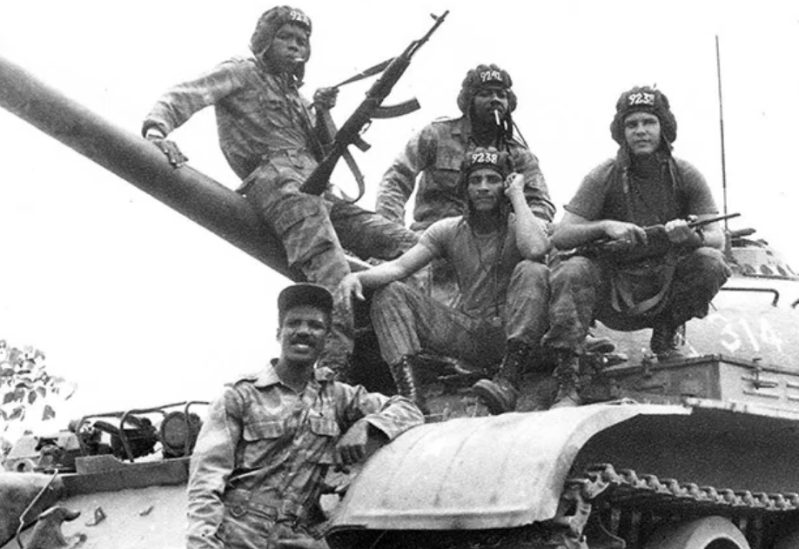
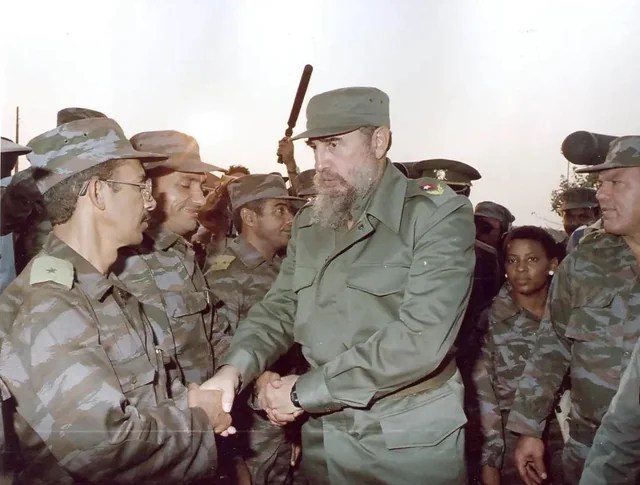
When South African forces invaded Angola in 1975, the MPLA government desperately requested assistance. Cuba answered that call, eventually sending approximately 36,000 troops—a staggering commitment for an island nation of just 10 million people.

The Battle of Cuito Cuanavale: A Turning Point
The pivotal moment came during the Battle of Cuito Cuanavale, fought between late 1987 and early 1988. UNITA rebels, heavily supported by South African forces, laid siege to this strategic town in southeastern Angola. The MPLA and their Cuban allies held the town through months of fierce fighting, with Cuban forces playing an increasingly direct combat role.
But the real shift came when Cuba moved beyond defensive operations. Cuban forces, augmented by sophisticated Soviet equipment including MiG-23 fighters and advanced air defense systems, began threatening South African forces more aggressively. Cuban troops pushed toward the Namibian border, and for the first time, South African military leaders faced the prospect of significant casualties against a well-equipped, professional opponent.
The military historian Piero Gleijeses has documented how South African intelligence reports from this period show genuine alarm. One assessment warned that Cuban forces “could inflict heavy casualties on SADF troops.” This wasn’t the narrative that the apartheid government had been selling to white South Africans—that their military was invincible and that they faced only disorganized guerrilla movements.
The Myth of Invincibility Shattered
For decades, the apartheid regime had justified its existence partly through the claim that white minority rule was necessary because only it could provide security and military strength. The sight of Cuban forces—including many Afro-Cuban soldiers—fighting the SADF to a standstill challenged this narrative at its core.
The casualties weren’t catastrophic by conventional war standards, but they were politically devastating. White South African conscripts were coming home in body bags from a war that the government couldn’t adequately explain to its citizens. Why were they fighting in Angola? How was this protecting South Africa?
Moreover, the military stalemate forced both sides to the negotiating table. The resulting New York Accords of December 1988 linked Cuban withdrawal from Angola to South African withdrawal from Namibia and an end to South African support for UNITA. Namibia achieved independence in 1990, removing one of the apartheid government’s strategic buffers.
The Ripple Effects
The symbolic impact was equally important. Cuba’s intervention demonstrated that African liberation movements could secure powerful allies and that white minority military supremacy was not inevitable. As Nelson Mandela himself said during his 1991 visit to Cuba: “The Cuban people hold a special place in the hearts of the people of Africa… The decisive defeat of the apartheid aggressors broke the myth of the invincibility of the white oppressor!”
The military reverse in Angola came at a crucial moment. By the late 1980s, apartheid South Africa faced mounting internal resistance, economic sanctions, and international isolation. The Angola debacle added military embarrassment to this list and weakened the hardliners within the South African government who argued that only continued oppression could guarantee security.
When F.W. de Klerk became president in 1989, he faced a stark reality: the military option was increasingly untenable, both domestically and regionally. The path to negotiation with the ANC looked less like capitulation and more like practical necessity.
Teaching This Story
For educators, this episode offers rich opportunities for classroom discussion. It challenges American-centric narratives of the Cold War by highlighting how a small Caribbean nation shaped events in southern Africa. It demonstrates how military conflicts can have political ramifications far beyond the battlefield. And it complicates simplistic “good guys versus bad guys” Cold War frameworks—after all, Cuba was supporting liberation movements, but as part of Soviet strategic interests.
Consider these questions for your students:
- How did Cold War proxy conflicts in Africa differ from those in Asia or Latin America?
- What motivated Cuba to commit such substantial resources to a conflict thousands of miles from home?
- How does military prestige and perceived invincibility support authoritarian governments?
- Why do you think this aspect of apartheid’s end receives less attention in Western curricula?
Conclusion: The Forgotten Front
The story of Cuba in Angola reminds us that history is full of unexpected connections. The liberation of South Africa wasn’t achieved by any single factor, but the military and psychological impact of Cuba’s intervention deserves recognition as part of that complex story.
When Mandela was released from prison in 1990 and apartheid formally ended in 1994, it was the culmination of decades of resistance from many quarters—internal opposition, international pressure, economic sanctions, cultural boycotts, and yes, a military reversal in the Angolan bush that shattered myths of invincibility and changed political calculations in Pretoria.
For our students learning about this era, understanding Cuba’s role enriches their grasp of how global politics, military power, and liberation movements intersected in surprising ways during the final decades of the Cold War. It’s a reminder that sometimes the most important historical events happen far from where we’re looking.
For Further Reading:
- Piero Gleijeses, Conflicting Missions: Havana, Washington, and Africa, 1959-1976
- Edward George, The Cuban Intervention in Angola, 1965-1991
- Vladimir Shubin, The Hot ‘Cold War’: The USSR in Southern Africa
- Ada Ferrer, Cuba: An American History
This is part of my Readings In History series. Where I try to collect resources from historical events and pop culture to talk about and discuss in my classes. To see more of these entries click here.

 BFWClassroom
You must be logged in to post a comment.