The End of Stranger Things: A Decade-Long Journey Concludes
I finished Stranger Things Season 5 not because I desperately wanted to see what happened next, but because I’d invested too much time not to see it through. That realization, more than anything else about the final season, tells you everything you need to know about how this once-groundbreaking series concluded.
There were genuine bright spots. The surprise early reveal of Kali—bringing back the criminally underused character from Season 2—offered a welcome callback that acknowledged the show’s broader mythology. More importantly, the development of Will’s psychic abilities and his growth into a true hero alongside Eleven provided the redemption arc his character deserved. After seasons of being sidelined, watching Will step into a more active role felt earned and necessary. The show benefited from expanding beyond Eleven as the sole savior; the narrative needed multiple heroes, and Will’s connection to the Upside Down made him the perfect choice.
The visual storytelling made smart choices. Using the Mind Flayer’s body as an upside-down hand maintained misdirection about the true nature of power in the Upside Down. This matters because the Mind Flayer, not Vecna, is the actual architect of everything—the genuine big bad of the entire series. Yet the storytelling emphasis on Vecna as the primary antagonist obscured this crucial truth. The misdirection worked perhaps too well, leaving casual viewers believing Vecna controlled everything when he was merely another puppet dancing on the Mind Flayer’s strings.
Where It Fell Short
The lack of the Mind Flayer’s creatures in the final episodes represents a gross miscarriage of justice to the series mythology. Where were the Demogorgons? The Demo-dogs? The Demo-bats? These biological horrors defined the Mind Flayer’s power, its ability to corrupt and create monsters from the Upside Down. Their absence in the climactic battle stripped the finale of the visceral terror that made earlier seasons work. If the Mind Flayer is the true villain, where was its army? The final confrontation should have featured waves of creatures, each one a testament to the Mind Flayer’s reach and power, but instead we got empty sets and CGI tentacles.
The season’s greatest missed opportunity, however, was Linda Hamilton’s Dr. K. Here was a character positioned to explore government overreach and the military-industrial complex of the 1980s, themes absolutely central to that decade’s anxieties. The Duffer Brothers could have crafted an honest conversation about Cold War paranoia, unchecked government power, and how fear drives policy. Instead, Dr. K remained underutilized, a waste of both Hamilton’s talent and the character’s potential.
Imagine if the season had focused on Vecna manipulating Dr. K through her fears—her terror of Soviet infiltration, her desperation to weaponize the Upside Down, her conviction that extreme measures justified any cost. This would have been authentically 1980s, reflecting the decade’s genuine anxieties about government power run amok. Dr. K could have been the season’s secondary antagonist, a human villain whose actions stemmed from recognizable motivations twisted by Vecna’s influence. The parallels to real 1980s government programs (MKUltra’s legacy, the expansion of military spending, the paranoia of the Reagan years) practically write themselves. The show fumbled a chance to say something meaningful about institutional power and how fear corrupts those who wield it.
Vecna Memes
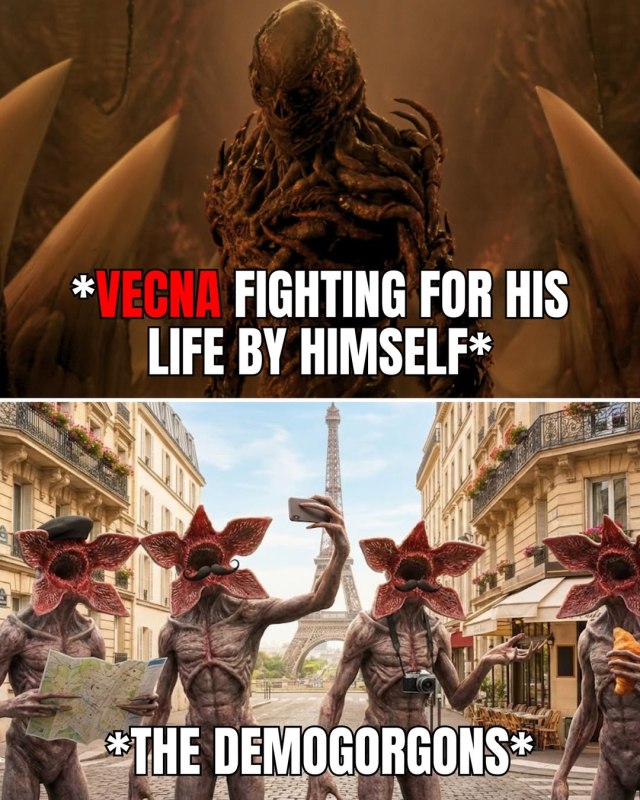
One of the great parts of all this has been seeing the different memes and comments online. I must admit I never enjoyed watching fandom tear apart Star Wars, and I don’t want to be one of those people either. I guess in the end, I enjoyed Season 1 and Season 4 greatly; as a result, the final season was never going to live up to what I wanted it to be. Some of the mid-season episodes were genuinely enjoyable, and again, I liked the government cover-up aspects. In the grand scheme of things, though, it didn’t provide the ending I hoped for—but it was entertaining.
A False Nostalgia for Language
My biggest personal gripe involves the language throughout Season 5. The profanity—particularly from the younger kids—exceeded anything in previous seasons without feeling organic to the story or characters. Holly Wheeler and her friends Derek cursing constantly felt jarring and false.
I don’t think I’ll show it to my children, at least not until they’re older. One of the most bothersome things these past couple days has been hearing young kids in the neighborhood playing and talking to each other the way Derek and the other young characters do in the show. That’s something the Duffer Brothers and others will have to reckon with as they age, knowing that’s the kind of culture they chose to spread instead of emphasizing some of the more positive aspects they could have.
I was a kid in the 1980s. We didn’t talk like that, not openly and constantly. Sure, kids swore, but not the way these characters do, not with the casual frequency the show depicts. There was still a sense that you could get in serious trouble for that language; parents, teachers, and other adults enforced boundaries that these characters seem to ignore. The younger kids especially wouldn’t have talked this way around adults or even around older teenagers. The show seems to believe that increased profanity signals maturity or realism, but it actually undermines the period authenticity the series supposedly prizes.
Those who want to argue with me can have their say, and I understand that perspective. However, I always want to point out that Lucasfilm has consistently made sure that kind of language isn’t used in their stories because it isn’t necessary to move the plot forward. You can tell compelling, mature stories without relying on profanity as a crutch—and some of the best storytellers understand that restraint often creates greater impact than excess.
This creates a barrier to rewatching; I’m not eager to revisit this season, and for a show built on nostalgia, that might be its greatest failure.
The Burden of Time and Lost Themes
Stranger Things became a victim of its own production timeline and its reluctance to fully engage with its themes. Ten years from premiere to finale is an eternity in television, particularly for a show about adolescence. The COVID-19 pandemic compounded delays, and by the time we reached the end, the cultural moment that made the show revolutionary had passed.
More troubling, though, is how the show increasingly avoided the harder questions its premise raised. A series that began by interrogating government experimentation on children, the ethics of weaponizing the unknown, and the cost of secrecy should have concluded by addressing these themes head-on. Instead, the final season gave us spectacle without substance, choosing visual effects over the moral complexity that made early seasons resonate.
The Mind Flayer’s true nature as the puppet master deserved clearer emphasis; Dr. K’s potential as a exploration of institutional evil went unrealized; the creatures that made the Upside Down terrifying disappeared when we needed them most. These aren’t minor storytelling choices but fundamental misunderstandings of what made Stranger Things work in the first place.
I’m glad I finished the series. I wanted closure for these characters, and the finale provided that. But I finished it out of obligation rather than excitement, and I likely won’t return for a rewatch. For a show built on the joy of rediscovery and the power of nostalgia, that might be the most damning assessment I can offer. Stranger Things taught us that sometimes you can’t go home again—and sometimes, when you try, you discover home wasn’t quite what you remembered anyway.
To see other movie and book recommendations and a list of resources, read more here.

 BFWClassroom
You must be logged in to post a comment.