
Alternate History | American Political History | Civil Rights | Cold War
A Note Before We Begin
The Reverend Jesse Louis Jackson Sr. died on February 17, 2026, peacefully and surrounded by his family, at the age of 84. He had been living with progressive supranuclear palsy, a rare neurological condition, for the final years of a life that had already carried more history than most people can imagine: sit-ins in Jim Crow South Carolina, the balcony of the Lorraine Motel in Memphis the day before Martin Luther King Jr. was shot, two landmark presidential campaigns, hostage negotiations on multiple continents, and more than six decades of insisting — sometimes inconveniently, often prophetically — that American democracy had not yet become what it claimed to be.
His family’s statement said it plainly: “Our father was a servant leader — not only to our family, but to the oppressed, the voiceless, and the overlooked around the world. We shared him with the world, and in return, the world became part of our extended family.”
Barack Obama, who has acknowledged that his own path to the presidency would have been unimaginable without Jackson’s pioneering campaigns, called him “a true giant.” Al Sharpton said Jackson “carried history in his footsteps and hope in his voice.” And across the country, in churches and community centers and history classrooms, people who came of age watching Jackson speak are trying to find the right words for what he meant.
One of the most honest ways I know to honor a figure like Jesse Jackson is to take seriously the question of what might have been; not as fantasy or flattery, but as a rigorous historical exercise. Because Jackson’s campaigns were genuinely close enough to success that asking “what if he had won?” reveals something true about both him and the country he spent his life trying to change. The alternate history isn’t an idealization of the man — Jackson was complicated, and this essay tries to be honest about that — but it is a way of measuring the distance between the America that existed and the America his coalition was reaching toward.
That distance is worth measuring. It is part of his legacy too.
Introduction
Few moments in modern American political history carry the weight of a genuine “almost.” Jesse Jackson’s 1988 campaign for the Democratic presidential nomination was, by nearly any measure, one of those moments. He won eleven contests, briefly held the delegate lead after a stunning victory in the Michigan caucuses, and pulled nearly seven million votes before losing the nomination to Massachusetts Governor Michael Dukakis. Then Dukakis lost to George H.W. Bush in November, and Jackson’s window closed. He never ran again.
But what if he had won?
This question isn’t merely a fantasy exercise; it forces educators and students alike to examine the structural conditions of American democracy, the dynamics of Cold War foreign policy, and the profound ways that race and coalition politics have shaped the arc of American history. A President Jesse Jackson in 1989 would have required a chain of altered circumstances so specific that mapping them reveals as much about what did happen as about what might have.
The Point of Divergence: What Had to Change?
Historical counterfactuals only work when they’re honest about the obstacles. Jackson’s path to the presidency faced three distinct categories of difficulty: internal Democratic Party resistance, the “Bradley effect” suppressing his polling numbers among white voters, and the structural advantages that accrued to Dukakis as the “safe” establishment choice.
For Jackson to win the 1988 nomination, the most plausible divergence point comes in Wisconsin. After his stunning Michigan victory, Jackson’s polling lead in Wisconsin appeared formidable; but the actual vote fell well short of expectations, a discrepancy widely attributed to the Bradley effect (named after Los Angeles Mayor Tom Bradley, whose 1982 California gubernatorial race revealed a pattern of white voters telling pollsters they supported a Black candidate but voting differently in the booth). If we imagine a version of 1988 in which Jackson’s team had better anticipated and countered this gap through aggressive ground operations and last-minute turnout drives in Milwaukee and Madison, his Wisconsin numbers hold close to his polling, and Dukakis never builds the momentum to consolidate the field.
A second required change is the resolution of the ongoing questions about Jackson’s electability with Jewish voters, which had been damaged by his widely publicized 1984 reference to New York City as “Hymietown.” In our alternate timeline, a more sustained and genuine process of reconciliation with Jewish Democratic leaders before 1988 — perhaps accelerated by his diplomatic work negotiating the release of hostages in Syria and Cuba — creates enough of a détente that key urban machines in New York and Illinois offer him a more neutral posture rather than actively working against him.
With Wisconsin narrowed and his Jewish voter coalition showing modest improvement, Jackson survives the Super Tuesday consolidation and heads into the California primary as a genuine contender. In this scenario, he wins California (he came close in reality), secures the nomination on the first ballot at the Democratic convention in Atlanta, and then faces a general election against Vice President George H.W. Bush.
The general election is the harder hurdle to clear. Jackson would almost certainly have needed a national crisis or economic shock to overcome the structural disadvantages facing a progressive Black candidate in 1988. And here, the alternate history finds a plausible accelerant: the S&L crisis, which was already festering in the Reagan years but whose full collapse hadn’t yet become a public emergency. If even modest reporting on the scale of the savings and loan disaster reaches mainstream audiences before November 1988, the incumbent administration takes a credibility hit precisely where Jackson’s economic populism has the most resonance. Combined with a sharp drop in consumer confidence — easily imagined given the real volatility of late 1988 markets — and Bush’s well-documented awkwardness as a retail politician, an energized Jackson coalition built on historic Black turnout plus labor, environmental, and young voter enthusiasm becomes credible.
Jackson wins with roughly 52% of the popular vote and a narrow but decisive Electoral College majority, carrying states like Michigan, Pennsylvania, Ohio, and Illinois while holding the South’s Black-majority districts and sweeping the West Coast.
Who Is President Jackson, and What Does He Carry Into Office?
Jesse Louis Jackson was born in 1941 in Greenville, South Carolina, the son of a teenage mother and a married neighbor. He grew up in conditions of real poverty and navigated the particular cruelties of Jim Crow South Carolina, earning his way to the University of Illinois and then to North Carolina A&T, where he became a student leader of sit-in protests. His theological training at Chicago Theological Seminary shaped the prophetic, sermonic register that became his political signature; and his years with the Southern Christian Leadership Conference, including his presence alongside Martin Luther King Jr. in Memphis on April 4, 1968, made him a figure of singular historical weight before he was forty years old.
By 1989, he would bring to the Oval Office a biography unlike any president before him, and a political coalition unlike any the Democratic Party had assembled since FDR. His Rainbow Coalition was, at its core, a bet that the Democratic Party’s majority lay not in moving toward the center but in activating the unmobilized: Black voters in the South who still faced suppression in the voting booth; Latino farmworkers in California who had never felt the party speak directly to them; white working-class families in the Midwest who had drifted toward Reagan but whose union roots still ran deep.
He would also bring complications. His foreign policy positions were sharply heterodox, favoring negotiations with adversaries rather than confrontation, and critics on the right and within his own party had spent years questioning his judgment on Israel, Cuba, and South Africa. His economic platform represented the most explicitly redistributive vision offered by a major party nominee since George McGovern. And the question of governing would immediately confront him with a Washington establishment — including many Democrats — who had never fully accepted him.
The Cold War’s Final Act, Rewritten
Here is where a President Jackson becomes genuinely transformative, because 1989 and 1990 were precisely the years when the Cold War unraveled in ways that no American president fully controlled but every American president profoundly influenced.
In our real timeline, Mikhail Gorbachev’s reforms were well underway by the time Bush took office, and the fall of the Berlin Wall on November 9, 1989 caught Western governments largely by surprise. Bush’s response was notably restrained, almost passive; he resisted the triumphalist impulse that Reagan would have indulged, and most historians credit that restraint with allowing the transitions in Eastern Europe to proceed without Soviet military intervention.
A President Jackson would have arrived in office already in communication with Gorbachev in ways his predecessors had not been. Jackson had met with Soviet officials and traveled internationally throughout the 1980s as part of his hostage-release diplomacy; he had a comfort with direct personal engagement that crossed ideological lines. His instinct would almost certainly have been toward acceleration: pushing harder and earlier on nuclear arms reductions, offering economic incentives for Soviet liberalization, and framing the end of the Cold War not as American victory over communism but as a shared transition toward a more just global order.
This framing matters enormously, because one of the most contested questions about the real Cold War’s end is whether the triumphalist American narrative — captured in the idea that Reagan “won” the Cold War — foreclosed possibilities for a more stable post-Soviet settlement. A Jackson administration would have spoken a different language to the newly liberated states of Eastern Europe and to the Soviet republics seeking independence; his rhetoric of self-determination and economic justice would have resonated differently in Warsaw, Prague, and Vilnius than the conventional American celebration of market capitalism.
On South Africa, Jackson’s presidency would have been transformational. He had been an outspoken advocate for sanctions against the apartheid regime throughout the 1980s, and his administration would have accelerated the economic and diplomatic pressure that eventually forced the unbanning of the ANC and Nelson Mandela’s release in February 1990 (which occurred in our timeline under international pressure anyway, but likely faster and with more American institutional support under Jackson). The symbolism of a Black American president standing alongside Mandela in 1990 would have carried a cultural and geopolitical weight difficult to overstate.
In Central America, where Reagan’s covert wars in Nicaragua and El Salvador had poisoned American credibility throughout Latin America, Jackson would have moved swiftly toward negotiated settlements. His opposition to the Contra program was longstanding and genuine; a Jackson administration would have ended military aid to the Contras immediately, and the resulting diplomatic opening might have accelerated the peace processes that did eventually come to fruition — but only in the early 1990s, and only after enormous additional bloodshed.
The Domestic Transformation and Its Limits
Governing is always harder than campaigning, and a President Jackson would have faced structural obstacles that his rhetorical gifts could not dissolve. The Democratic Congress, while nominally aligned with him, contained powerful conservative Southern Democrats (the “Boll Weevils”) who had long resisted the party’s progressive wing. His most ambitious proposals — a federal jobs program reminiscent of the New Deal’s WPA, restructured drug sentencing policies, expanded voting rights enforcement — would have faced fierce resistance, and the reality of 1989 budgetary politics would have forced him to prioritize.
What he almost certainly would have achieved in his first term: stricter enforcement of existing civil rights and voting rights law; faster action on the S&L crisis and its bank executives; early movement on South Africa sanctions; and, perhaps most significantly, a transformation of the Democratic Party’s identity that might have forestalled the Clintonite “Third Way” shift of the 1990s.
That last point deserves dwelling on. In our timeline, the 1988 Dukakis loss convinced a generation of Democratic strategists that the party had to abandon its progressive economic commitments and move rightward to recapture the white middle class. Bill Clinton’s 1992 candidacy was, in large measure, an argument that Jesse Jackson’s style of politics had made the party unelectable. A Jackson presidency would have rendered that argument impossible; it would have been living evidence that a coalition built from the bottom up could actually govern.
Whether it could have governed well — whether Jackson’s administration could have translated movement energy into durable policy — is the harder and more honest question. The constraints of the American system on any reform presidency are real, and Jackson’s relationship with Washington’s institutional culture would have been combative from the start.
What This Scenario Teaches Us
The “what if Jesse Jackson had won” thought experiment is valuable not because it flatters anyone’s politics, but because it exposes the mechanics of American democracy with unusual clarity. His campaigns showed both the extraordinary mobilizing power of a candidate who speaks directly to the dispossessed and the equally extraordinary structural resistance that the American political system brings to bear on candidates who challenge the existing order.
The Bradley effect he encountered in 1988 is now a documented phenomenon that shaped polling methodology for a generation. The superdelegate system that disadvantaged him, by giving party establishment figures disproportionate convention influence, was eventually reformed — in part because of pressure Jackson applied after 1988. The voter registration drives his campaigns sparked created the infrastructure that Barack Obama’s campaign later harvested.
In other words: Jesse Jackson may have lost the presidency, but the alternate history in which he won is less distant than it appears, and the actual history he made while losing turns out to have been quietly enormous.
For students examining the end of the Cold War, the arc of civil rights after the 1960s, or the evolution of the Democratic Party, Jesse Jackson’s campaigns offer one of history’s most instructive near-misses: a window into the choices that nations make, not just the ones that get made for them.
Discussion Questions for the Classroom
- The “Bradley effect” describes a gap between what voters tell pollsters and how they actually vote regarding candidates of a different race. What does the persistence of this phenomenon in 1988 suggest about the relationship between expressed attitudes and behavior in a democracy?
- Jackson’s Rainbow Coalition deliberately bridged racial, economic, and social categories that American politics usually kept separate. What historical examples can you find of other political coalitions that tried to bridge similar divides, and what determined whether they succeeded or failed?
- How might a Jackson foreign policy approach to the Soviet Union in 1989 have differed from Bush’s approach, and what consequences — positive and negative — can you imagine following from those differences?
- The alternate history in this essay requires a series of small changes that compound into a large outcome. What does this suggest about historical causation and the role of contingency versus structural forces in shaping events?
- Jackson himself said that his campaigns helped pave the way for Obama’s election in 2008. Do you agree? What is the relationship between a political movement that doesn’t win and a political movement that comes later and does?
Recommended Readings and Resources
- Abby Phillip, A Dream Deferred: Jesse Jackson and the Fight for Black Political Power, (2025)
- Manning Marable, “Jackson and the Rise of the Rainbow Coalition,” New Left Review, 1985
- Adolph Reed Jr., The Jesse Jackson Phenomenon (1986)
- Primary source: Jesse Jackson’s Democratic Convention speeches via C-Span
- Bob Faw and Nancy Skelton, Thunder in America: The Improbable Presidential Campaign of Jesse Jackson (1986)
- For broader Cold War context:
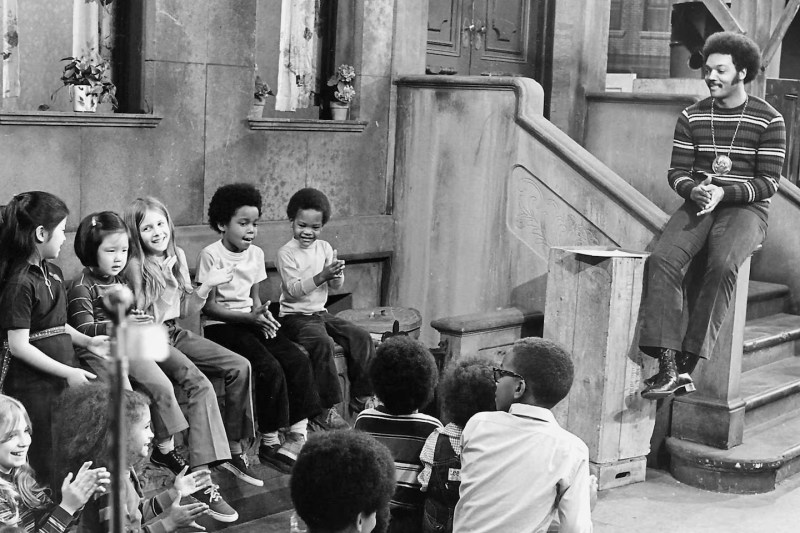
Rev. Jackson “I am Somebody” Sesame Street
This post is part of an ongoing alternate history series exploring the roads not taken in American and world history. Each scenario is grounded in real historical evidence and designed to help readers think more clearly about causation, contingency, and the structures that shape political possibility.

 BFWClassroom
You must be logged in to post a comment.