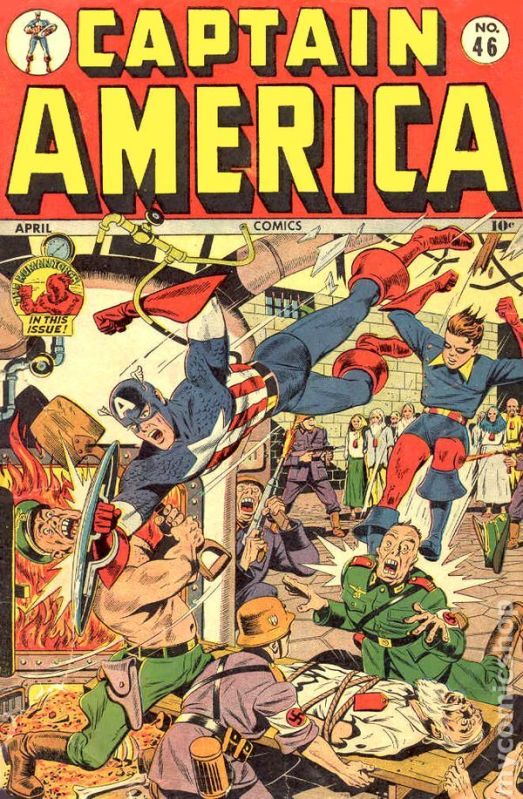
Some artifacts don’t just belong in a museum; they explain why museums exist. On March 3, 2026, the United States Holocaust Memorial Museum announced the acquisition of two extraordinary pieces of American cultural history: original copies of Captain America Comics No. 1 and Captain America Comics No. 46, both donated by Riot Games co-founder Brandon Beck.
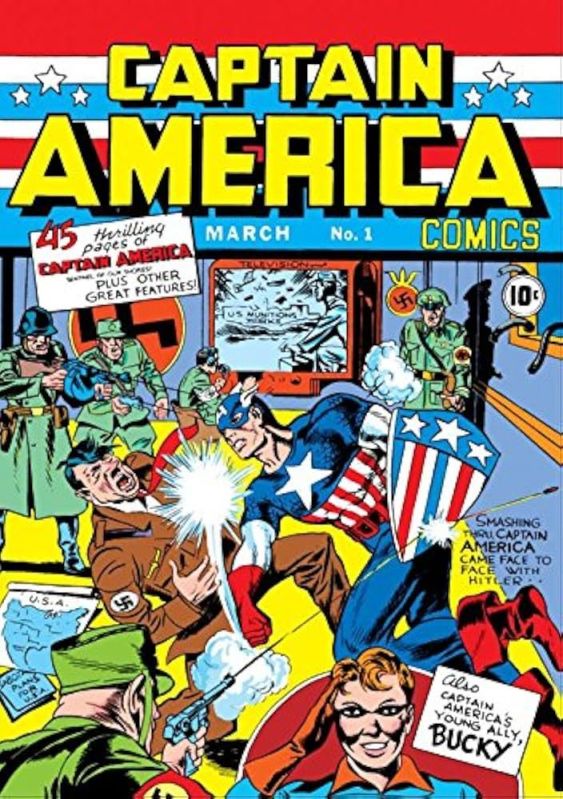
The first issue, published in December 1940, arrived on newsstands nearly a full year before America entered World War II. (ushmm) That timing matters enormously. Created by Joe Simon and Jack Kirby, the cover features Kirby’s now-iconic image of Captain America driving his fist into Adolf Hitler’s face, a direct visual rebuke of the isolationist sentiment that dominated American public life at the time. (ushmm) This wasn’t escapism; it was argument. Kirby, the son of Austrian-Jewish immigrants, would go on to serve in the U.S. Army during the war, and his anti-Nazi message in that comic helped bring attention to the growing threat the Nazi regime posed to Europe. (ushmm)
The museum’s own curatorial director put it plainly. Zachary Levine, director of Curatorial Affairs, noted that at a time when many Americans disapproved of the Nazis but remained reluctant to fight another European war, Kirby (an American Jew) used a symbol of America itself to raise awareness of what was happening overseas. (ushmm)
The second acquisition is, if anything, even more historically striking. Captain America Comics No. 46 features a graphic cover of Cap and Bucky confronting Nazis in the act of committing atrocities inside a concentration camp, making it among the earliest depictions of a concentration camp in American popular culture. (ushmm) For those of us who use comics as primary sources in the classroom, this is a jaw-dropping piece of documentary evidence about what American creators knew, and were willing to say, years before the full scope of the Holocaust became widely understood.
Both volumes are currently being examined and documented by experts in the Museum’s David and Fela Shapell Collections, Conservation, and Research Center, with plans to digitize them and make them available for research. (ushmm)
That last part is what I’m most excited about for educators. The USHMM already produces some of the finest Holocaust education resources available, and the promise of digitization opens the door to these comics becoming genuine classroom tools, not just museum curiosities. For those of us who already bring graphic novels and comic books into our history and humanities courses as legitimate primary texts, having the institutional backing of the Holocaust Museum behind this medium feels like a long-overdue affirmation.
Comics have always been capable of moral seriousness. Kirby and Simon proved that in 1940, when it was neither safe nor popular to do so. It’s fitting that their work now lives alongside the testimony of survivors and the artifacts of one of history’s darkest chapters; because that’s exactly where it always belonged.
You can read the full press release at the USHMM website.
This is part of my Comics in the Classroom series where I look at the importance of the comic book industry and how to use them as resources in the classroom. To read more check out my other posts. (Link)

 BFWClassroom
You must be logged in to post a comment.