
The Short Answer
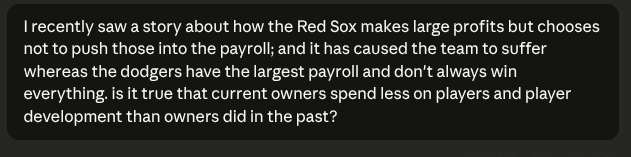
This claim is mostly true, but it is more complicated than it first appears. Many current MLB owners do prioritize profit over payroll, and some franchises have cut spending significantly; however, a few teams like the Dodgers and Mets spend more than ever before.
The Bigger Picture
Major League Baseball has no salary cap, which means teams can spend as much or as little as they want on players. This creates a massive gap between big-market teams (like Los Angeles or New York) and small-market teams (like the Cincinnati Reds or Pittsburgh Pirates, both relatively close to Kentucky fans).
In the past, owners often treated their teams as a kind of passion project; they wanted to win and saw spending on players as part of that goal. Today, many franchises are owned by investment groups or billionaires who view the team primarily as a business asset. The goal shifts from “win championships” to “grow the franchise’s value.”
A strategy called “tanking” became common in the 2010s. Teams would deliberately field a losing roster, collect bad records, earn high draft picks, and then rebuild slowly using cheap young players. The Houston Astros famously did this before winning the World Series in 2017. Some fans see this as smart; others see it as a betrayal.
The Red Sox situation fits a broader pattern. Their ownership group, Fenway Sports Group, also owns Liverpool FC and other properties. Critics argue they treat the team like a stock portfolio rather than a community institution. Meanwhile, the Dodgers spent over $300 million on their 2024 payroll and won the World Series, suggesting money still matters.

Where People Disagree
Some analysts argue that smart drafting and player development matter more than raw payroll spending; the Tampa Bay Rays regularly compete with one of the lowest payrolls in baseball. Others argue that low spending is simply ownership greed dressed up as strategy, and that fans and players both lose out.
Think About This
If a sports team plays in your city and depends on public support, loyalty, and sometimes public funding for its stadium, does its owner have a responsibility to spend money trying to win, or is it purely a private business decision?

 BFWClassroom
You must be logged in to post a comment.