
Every four years, FIFA promises the same thing: football unites the world. It is a beautiful slogan, and it occasionally comes close to being true. Then the politics show up.
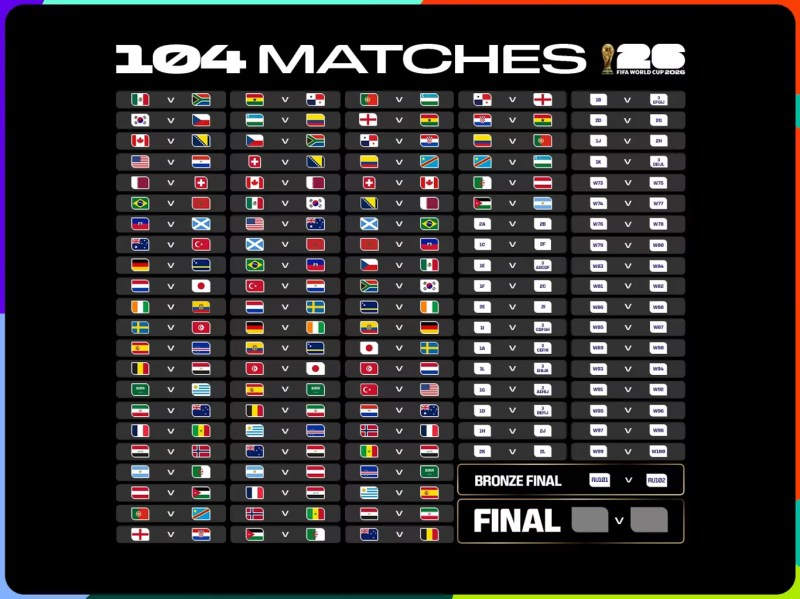
The 2026 FIFA Men’s World Cup (co-hosted by the United States, Canada, and Mexico) is supposed to be the largest sporting event in human history, featuring a record 48 national teams playing 104 matches across three countries and sixteen cities. The opening match kicks off at Mexico City’s Estadio Azteca on June 11. And already, before a single ball has been struck, the tournament has become a case study in how the geopolitical posture of a host nation can reshape the meaning of an international sporting event. The questions swirling around the 2026 World Cup deserve serious attention: How does this moment compare to previous times the United States has hosted? How does it compare to the last three World Cups held elsewhere? And does any of this connect to the well-documented phenomenon known as sportswashing?
The answers are uncomfortable, and they cut in more than one direction.
The United States as Host: Then and Now
The last time the United States hosted the Men’s World Cup was 1994, a moment that feels, in retrospect, almost impossibly optimistic. The 1994 FIFA World Cup took place at nine venues across the country from June 17 to July 17, drawing overall attendance of 3,587,538 and an average of 68,991 per game, figures that remain unsurpassed through at least 2022. The world was, broadly, invited. The Cold War had ended, the United States was at the height of its post-Soviet cultural confidence, and the principal controversy surrounding the 1994 tournament was not about who could attend but whether Americans would care about soccer at all.
There were political complications that year, to be sure. Yugoslavia was barred from participating due to United Nations sanctions imposed as a result of war crimes committed in Bosnia-Herzegovina. That exclusion, however, came from an international multilateral body rather than from unilateral American immigration policy, and it targeted a government engaged in active ethnic cleansing. The distinction matters. The outside world, particularly Latin America, expressed doubt about the hosting decision, and most Europeans were indignant and downright hostile to the very idea of the United States hosting the world’s most popular sport; but that skepticism was about American soccer culture, not about whether foreign fans could physically enter the country.
The 1999 Women’s World Cup, also hosted by the United States, unfolded in a similarly open environment. The Clinton administration’s foreign policy, for all its complications, did not include blanket travel bans based on national origin. Fans from virtually every corner of the globe could attend. The tournament became a cultural landmark, remembered for the joy of the host team and a genuinely international crowd that filled stadiums from New Jersey to Pasadena.
The contrast with 2026 is stark.
What Is Different This Time
On June 4, 2025, President Donald Trump issued a proclamation restricting or limiting the entry of nationals from 19 countries, mostly from the Middle East and Africa. On December 16, 2025, the administration expanded the list to 39 nations. The administration has steadily added travel restrictions since, with the most recent decree in January 2026 halting immigrant visa processing for 75 countries.
Haiti, Iran, Senegal, and Cote d’Ivoire are the four teams that have qualified for the 2026 World Cup and are included in the travel bans. In each case, B-2 tourist visas, which is how most fans would attend the World Cup, are prohibited. Haiti qualified for the tournament for the first time in over 50 years. Yet due to the travel ban, most fans from the island will not be able to watch their team play in the U.S.
The player exemptions exist, but they are narrow. The US State Department has extended an exemption from the travel restrictions to officials, teams, and support staff for the national football teams from these nations, but it has not granted an exemption to fans or other visitors. The exemption covers athletes, coaches, people in a “necessary support role,” and the immediate relatives of athletes. It does not cover spectators, journalists, corporate sponsors, or extended family.
The financial barriers compound the legal ones. The US Department of State has expanded its Visa Bond Pilot Program, imposing new financial obligations on certain visa applicants, with consular officers able to require certain B1/B2 applicants to post a refundable bond of $5,000, $10,000, or $15,000 as a condition of visa issuance. Countries under full US travel ban total 39 (19 full suspension, 20 partial), and visa bond requirements apply to 50 nations. US inbound tourism fell 5.4% in 2025.
In addition, 12 World Cup-qualified countries, including Algeria, Brazil, Cape Verde, Colombia, Egypt, Ghana, Guatemala, Jordan, Morocco, Tunisia, and Uruguay, face extended visa delays even without an outright ban, creating a slower-burning uncertainty for tens of thousands of fans who have already purchased tickets.
Beyond these travel restrictions, the tournament will take place in the context of aggressive immigration enforcement in major cities. Federal officials have conducted large-scale operations in Los Angeles (a World Cup host city) along with Chicago, Charlotte, New Orleans, and the Twin Cities. During last summer’s FIFA Club World Cup, also hosted in the US, Customs and Border Protection published (and then deleted) a social media post signaling that it would have a presence at the tournament.
The Math of the Problem
The geography of the tournament makes the American restrictions disproportionately consequential. Of the tournament’s 104 games, 78 will take place in US cities, including the two semifinals and the final, compared to 13 each in Canada and Mexico. A fan who cannot enter the United States is effectively locked out of the heart of the tournament, not merely inconvenienced by a logistical detour. The final round of the bracket, the matches that matter most to the widest audiences, will be held in American stadiums. Being excluded from those venues is not a minor inconvenience; it is exclusion from the event itself.
The administration at first said that athletes, coaches, and support staff for those tournaments would be exempt from travel restrictions. However, the State Department later clarified that “only a small subset of travelers” would qualify for such an exemption, suggesting that groups which would not qualify could include fans and foreign spectators, media, and corporate sponsors from countries restricted by the Trump administration’s travel policies.
Canada and Mexico: The Other Side of the Border
Here is where the co-hosting model reveals something genuinely instructive. The United States is not hosting this World Cup alone, and its partners are handling the moment very differently.
Unlike the United States, which has imposed full entry bans on citizens from 19 nations and partial bans on 20 others, Canada is offering a more welcoming alternative for fans affected by these restrictions. Canada has introduced several expedited visa measures aimed at streamlining the process for fans and FIFA-accredited personnel, strategically positioning itself as the most accessible and secure co-host in North America. Canada has also, according to reporting, temporarily waived work permit requirements for FIFA-accredited foreign professionals, from referees and broadcast crews to technical staff, clearing the path for the tens of thousands of essential workers who keep the tournament running.
Canada’s visa policies are generally more inclusive than the US, and Mexico has long been a popular travel destination for soccer fans attending major international tournaments. Mexico faces its own challenges, particularly security concerns in some regions, but its entry requirements are not structured around national-origin bans that exclude entire populations of qualifying nations.
The practical result: fans from Haiti who cannot enter the United States to watch their national team make its historic first appearance in over half a century may still be able to watch group-stage matches in Mexico or Canada, if their team’s draw lands them there. For fans from travel-banned countries, the most realistic alternative is to focus on matches in Canada and Mexico, where national teams may also be playing and where entry requirements are significantly more accessible. This is a Cold Comfort solution; it means the architecture of a single, unified World Cup tournament is being fractured by one host nation’s domestic political posture.
The relationship between the United States and its co-hosts adds another layer of complexity. Under the second Donald Trump administration, US relations with its two fellow host countries have shifted dramatically since co-hosting was first planned in 2017. Canada and Mexico have both experienced shifting postures with the United States during Trump’s second presidency that are affecting trade and cross-border travel, underscoring the effect that geopolitics can have on the games.
Russia 2018, Qatar 2022, and the Sportswashing Ledger
To understand where 2026 sits in the longer arc of World Cup controversy, it helps to look at the three most recent tournaments.
Russia 2018 was held under the shadow of Moscow’s illegal annexation of Crimea, its support for separatist militias in eastern Ukraine, anti-LGBT legislation that effectively criminalized public acknowledgment of gay identity, and documented deaths of workers during stadium construction. Russian President Vladimir Putin emerged as the big winner, using the games to sportswash his rule, legitimizing it by hosting a sporting mega-event. FIFA adopted a Human Rights Policy in 2017, pledging to “go beyond its responsibility to respect human rights,” but from Russia’s escalating crackdown on peaceful critics to its unwelcoming anti-LGBT laws to workers dying to build new stadiums, this World Cup did little to counter Russia’s many rights abuses. FIFA failed to uphold its own human rights standards for the World Cup it granted to Russia in 2018, leading to 21 workers dying during Russia stadium construction, according to Building Workers International.
Despite Russia’s gruesome human rights record, anti-LGBT laws, war crimes committed in Syria, occupation and annexation of Ukraine’s Crimea, brutal treatment of political dissidents, and widespread corruption, the criticism of Russia during the 2018 tournament amounted to, in the view of many analysts, a mere slap on the wrist. The West largely attended, watched, and moved on.
Qatar 2022 generated the loudest sustained controversy in World Cup history. Sportswashing refers to attempts on the part of authoritarian regimes to improve their tarnished global reputations through sports, a phenomenon that began with Hitler and the 1936 Nazi Olympics and has over the past two decades become a serious diplomatic tactic for oppressive governments. Qatar fit the framework almost perfectly: when Qatar was awarded the World Cup in 2010, only one of the eight stadiums required to host the tournament existed. Qatar knew it could construct the other seven stadiums through forced migrant labor. Human Rights Watch documented more than 2 million migrants working in Qatar at any one time building stadiums, roads, and hotels during the decade leading up to the tournament. The Kafala sponsorship system bound workers to employers in conditions that human rights organizations characterized as forced labor.
According to comparative data from the Varieties of Democracy project at the University of Gothenburg, Qatar was the second most authoritarian host country of a World Cup; only fascist Italy in 1934 was less democratic.
The 2023 Women’s World Cup, hosted by Australia and New Zealand, brought its own complications. FIFA’s decision to award Saudi Arabia’s state tourism authority sponsorship of the 2023 Women’s World Cup showed, in the view of Human Rights Watch, shocking disregard for the suffering and repression of Saudi Arabia’s women’s rights defenders. Even a tournament celebrated for its openness was entangled in the logic of sportswashing through its commercial partnerships.
Does the “Sportswashing” Framework Apply to the United States in 2026?
The standard sportswashing model runs like this: an authoritarian or rights-abusing government uses a major sporting event to rehabilitate its international image, drawing attention away from repressive policies by presenting a welcoming, festive face to the world. The Russian and Qatari cases fit this template with depressing precision.
The United States in 2026 presents a genuinely different and arguably more complicated case. The Trump administration has not tried to soften its immigration policies for the occasion; it has doubled down on them, even as the tournament approaches. FIFA President Gianni Infantino awarded Trump the FIFA Peace Prize last year for his “tireless efforts to promote peace” in various global conflicts. Infantino has met with Trump at least a dozen times and attended White House task force meetings in the lead-up to the games. Trump has openly discussed the World Cup’s potential for sports diplomacy.
Trump expressed interest in revoking a ban on Russia playing in the World Cup that was implemented in 2022 after its invasion of Ukraine, saying it could be a “good incentive” for Moscow to end the war, a stance FIFA’s president has agreed with. FIFA, in other words, has demonstrated extraordinary willingness to accommodate the political wishes of the host nation’s leader, which raises a different set of questions about institutional independence and integrity.
Global sporting events have always carried political weight, from Olympic boycotts to controversies over host nations. But the 2026 World Cup represents something different. It is not just the host country under scrutiny; it is the entire system of global mobility.
One might argue the United States is engaged in a kind of reverse sportswashing: using the tournament’s guaranteed international attention not to present a softer face but to project power, signal restrictiveness, and demonstrate that even the world’s most beloved sporting event does not override domestic political priorities. Whether that represents a foreign policy statement, a domestic political performance, or simply the collision of two policy agendas that were never reconciled is a question worth taking seriously.
Sport, once seen as an escape from geopolitics, is now one of its most visible stages.
An Uneven Standard
Many of the European countries that are currently protesting over various aspects of the 2026 World Cup were not equally outspoken during the 2018 games in Russia, which were under the shadow of Moscow’s illegal annexation of Crimea and its abuses against LGBTQ communities. The criticism applied to host nations has never been entirely consistent; the volume and intensity of condemnation has historically tracked with Western geopolitical relationships more reliably than with the actual severity of human rights abuses.
The concept of sportswashing, in exposing how states or corporations use sporting events to cleanse their images on international stages, draws attention to human rights abuses, labor conditions, political repression, and the regulation of social behavior. Yet this critique is unevenly deployed, most frequently applied to non-white countries from the Global South. That observation does not excuse Russia or Qatar; it adds a layer of analytical honesty that the conversation often lacks.
The United States in 2026 provides an opportunity to apply the same scrutiny to a Western democracy that has historically been among the loudest voices criticizing other nations’ human rights records at tournament time. Amnesty International has weighed in, calling for a resolution to the visa issues, noting that the restrictions go against the very spirit of global unity that FIFA strives to promote during its premier event. Human rights organizations have emphasized that such barriers might not only affect individual fans but could also exclude entire communities from participating in the global celebration of soccer.
As one observer noted, “There’s something about having your fans in the stadium, rooting for you, shouting their heads off. At the end of the day, sports is just a spectacle. And part of that spectacle is the people in the stands. If you don’t have those people in the stands, it’s not the same thing.”
What This Means for How We Watch
For educators trying to help students think clearly about international events, the 2026 World Cup offers a rare real-time case study in several overlapping questions: How does foreign policy shape access to cultural events that are theoretically universal? What does “hosting the world” actually mean when the host sets conditions on who the world can be? How have previous hosting nations navigated the intersection of national interest and international obligation? And when we criticize nations like Russia or Qatar for using sport as a political tool, are we willing to apply the same framework to ourselves?
The historical record is clear enough. In 1994, the United States hosted with genuine openness, its controversies rooted more in cultural skepticism about American soccer enthusiasm than in governmental restrictions on entry. In 2026, restrictions rooted in domestic immigration politics are shaping who can witness history being made. Whether you view those restrictions as legitimate security measures, political theater, or a fundamental contradiction of the tournament’s stated values, the contrast with America’s own hosting past is real, and the comparison with recent host nations raises questions that demand honest engagement rather than convenient amnesia.
The ball goes into play on June 11. The world is watching; just not all of it.
days
hours minutes seconds
until
World Cup 2026 Opening Match
Notes on Sources: This post draws on reporting from the Council on Foreign Relations, the American Immigration Council, the National Immigration Forum, Human Rights Watch, Amnesty International, Fragomen immigration law, and academic sources examining image projection and sportswashing in Russia 2018 and Qatar 2022. All factual claims about travel restrictions reflect policies as of April 2026; immigration policy is subject to rapid change and readers should verify current conditions through official government and FIFA sources.

 BFWClassroom
You must be logged in to post a comment.