
Teaching Labor History Through Science Fiction
In the two-part Star Trek: Deep Space Nine episode “Past Tense,” the crew finds themselves transported back to 2024 San Francisco, where the unemployed and impoverished are segregated into walled “Sanctuary Districts.” These episodes, while set in a fictional future, offer remarkable parallels to the labor struggles of the late 19th century that gave birth to International Workers’ Day on May 1st.
Historical Echoes in Science Fiction
The “Bell Riots” depicted in DS9 mirror the social conditions that led to the Haymarket affair of 1886. Just as the sanctuary residents faced dehumanizing conditions and lack of basic services, Chicago’s industrial workers in the 1880s endured dangerous working conditions, 12-16 hour workdays, and poverty wages.
Both historical moments feature a working class pushed to breaking point, culminating in protests met with violence. The fictional character of B.C. Day, who ultimately sacrifices himself for the cause, parallels the Haymarket martyrs whose execution galvanized the international labor movement.
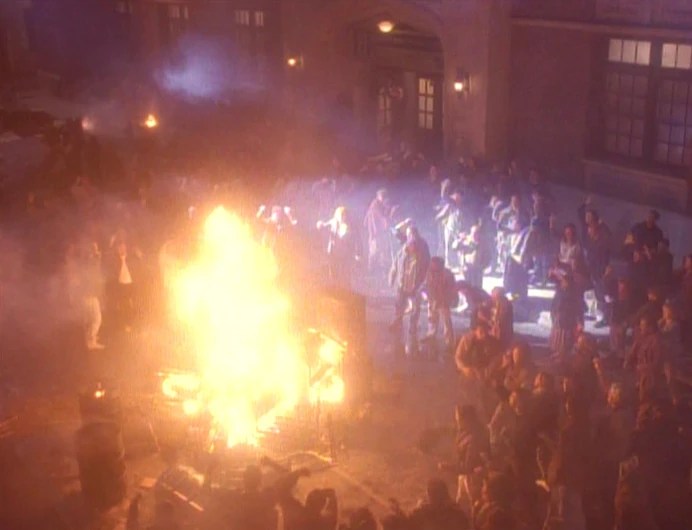
Images from the episode are reminiscent of the violence from the Haymarket events in 1886 Chicago and the Worker riots in NYC during the 1893 banking Crisis.
The Rise of Organized Labor (1880-1930)
The period from 1880-1930 saw tremendous growth in organized labor in response to the harsh conditions of industrialization. The American Federation of Labor (AFL), founded in 1886 under Samuel Gompers, represented skilled craft workers while various industrial unions sought to organize factory workers regardless of skill level.
This era saw the development of different organizing philosophies. Some unions focused on “bread and butter” issues like wages and hours, while others promoted more radical transformation of the economic system. The fictional solidarity that eventually formed among the diverse residents of DS9’s Sanctuary Districts parallels how workers from different backgrounds united during strikes in this period.
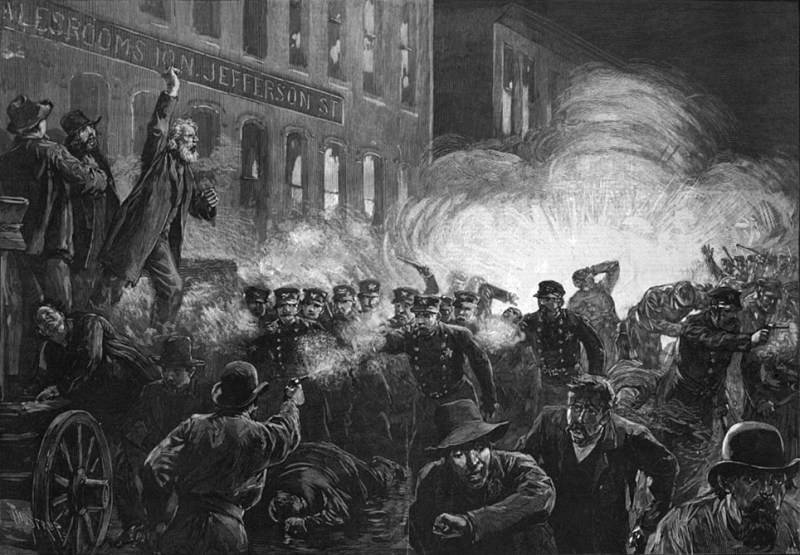
This ink drawing from Harper’s Weekly was the most widely reproduced image from the event and shows some of the events from multiple days, including the bombing, police attacking protesters, and speakers on top of barricades.
Victories and Setbacks
The labor movement of this period achieved significant victories despite fierce opposition. The campaign for the eight-hour workday—”Eight hours for work, eight hours for rest, eight hours for what we will”—gained momentum after Haymarket. By 1916, the Adamson Act established an eight-hour day for railroad workers, and other industries gradually followed.
However, these decades also saw violent suppression of labor organizing. The Ludlow Massacre of 1914, the steel strike of 1919, and numerous other conflicts demonstrated how employers and government frequently responded with force. This repression mirrors the initial violent response to the Bell Riots in the DS9 episodes.
The Great Depression and New Deal
By the 1930s, the Great Depression created conditions similar to those portrayed in DS9’s Sanctuary Districts—mass unemployment, homelessness, and desperation. Just as the Bell Riots led to reforms in the Star Trek timeline, the real-world crisis of the Depression led to the New Deal and a wave of successful labor organizing. The Congress of Industrial Organizations (CIO) organized millions of previously unorganized workers, and landmark legislation like the National Labor Relations Act established new rights for workers.
Teaching Opportunities
When using these episodes in the classroom:
- Have students identify the parallels between the fictional 2024 social conditions and those of 1880s-1930s industrial America
- Explore how both periods featured “othering” of vulnerable populations—immigrants and ethnic minorities in the early labor movement, the homeless and unemployed in DS9
- Discuss the role of violence in social movements and how both the Haymarket affair and the Bell Riots were catalyzed by violence from authorities
- Compare media coverage of labor issues then and now, using the character of Bernardo from “Past Tense” as a starting point
As we celebrate International Workers’ Day on May 1st, these episodes provide a compelling framework for understanding labor history as an ongoing struggle for dignity and human rights—one that continues to resonate in our contemporary world.
You can also use my viewing guide to develop your own plan for the classroom. I recommend it for a high school history or current events class.
This is part of my Politics in the Classroom series, where I look at the importance of political campaigns, pop culture, sports, music, and geopolitics of the last 50 years and how to use them as resources in the classroom. To read more, check out my other posts in the series. (Link)


You must be logged in to post a comment.