
There is a principle that has quietly governed American public lands for more than a century: that the wild places, the forests, the mineral-rich watersheds, and the vast open acreage held in trust by the federal government belong to all of us, including the generations who have not yet been born. Theodore Roosevelt staked his presidency on that idea. He and his chief forester, Gifford Pinchot, built an entire administrative framework around it; and for more than a hundred years, the U.S. Forest Service, the National Park Service, and the Bureau of Land Management have operated under its guiding logic. What is happening in the 119th Congress right now is not a revision of that framework. It is, in many ways, an attempt to dismantle it.
The number of active bills and resolutions is significant enough to warrant careful attention, so let me walk through the key pieces before turning to the larger argument.
The Bills and Resolutions You Should Know
The most aggressive piece of legislation currently in the House is H.R. 7458, the Domestic Opportunities for Resource Exploration Act (marketed as the “Domestic ORE Act”), sponsored by Rep. Harriet Hageman of Wyoming. Under current law, mining companies can explore for minerals on up to five acres of BLM lands without submitting a mining plan of operations or conducting an environmental review. H.R. 7458 would expand this loophole to 25 acres on both BLM and U.S. Forest Service lands, and companies would only have to submit a notice 15 days before exploration work begins. Center for Western Priorities Twenty-five acres is roughly the size of twenty football fields. It can sit in the middle of a hiking trail, a recreation corridor, or a watershed; and under this bill, the surrounding community would have no formal opportunity to weigh in.
In the Senate, S. 544, the Mining Regulatory Clarity Act, would expand the number of mill sites mining companies can establish on public lands Congress.gov, meaning the waste rock, tailings disposal sites, and processing infrastructure that follow hardrock mining operations. The bill would bypass the existing validity requirement under the 1872 Mining Law and grant mining companies, including foreign companies, the statutory right to permanently occupy and use public lands upon approval of a company’s self-written plan of operations. Center for Biological Diversity
Congress has also been deploying the Congressional Review Act (CRA) in ways that no previous Congress has attempted. Until recently, management plans for public lands were not considered subject to congressional review; federal agencies have issued well over a hundred such plans without ever submitting one to Congress. Stateline That changed under the current political environment. In late 2025, Congress passed two CRA resolutions to reopen hundreds of thousands of acres of public lands in the Powder River Basin to new coal leasing, rescinding resource management plans that had ended new leasing in Montana and Wyoming. In December 2025, President Trump signed two CRA resolutions opening Alaska’s Arctic National Wildlife Refuge Coastal Plain and most of the Western Arctic to oil and gas development. Earthjustice
The situation growing most urgent right now involves the Boundary Waters Canoe Area Wilderness in northeastern Minnesota. H.J. Res. 140 would nullify Public Land Order 7917, which withdrew approximately 225,504 acres of National Forest System lands in Cook, Lake, and Saint Louis Counties from mineral and geothermal leasing for 20 years. The order was issued to protect the Rainy River Watershed, the Boundary Waters Canoe Area Wilderness, and the 1854 Ceded Territory of the Lake Superior Chippewa from the potential adverse effects of mineral exploration and development. Congress.gov The resolution relies on an unprecedented use of the Congressional Review Act to overturn a 20-year mineral withdrawal. Outdoor Life The Senate passed the initial procedural motion on H.J. Res. 140 by a vote of 51-49 on April 15, with Senators Collins and Tillis joining Democrats in opposition. The final passage vote is expected April 16. 5 Calls
Meanwhile, for the first time ever, the CRA is being used to attack a national monument; Utah lawmakers have introduced a joint resolution to eliminate the management plan protecting Grand Staircase-Escalante National Monument, setting a dangerous precedent for monuments nationwide. Earthjustice
Perhaps the most sweeping of all the recent legislative actions came through the budget reconciliation process. The so-called “Big Beautiful Bill” makes over 200 million acres of public land available for oil and gas drilling by mandating quarterly lease sales and requiring the BLM to offer up at least 50 percent of all public land nominated by oil and gas companies. It also gives the logging industry a significant boost by requiring the Forest Service and BLM to increase the amount of timber cut by 250 million and 20 million board feet, respectively, each year through 2034, an increase of roughly 80 percent. The bill also requires both agencies to enter into dozens of long-term timber contracts locking in logging for at least 20 years. Center for Western Priorities
Why Theodore Roosevelt Would Not Recognize This

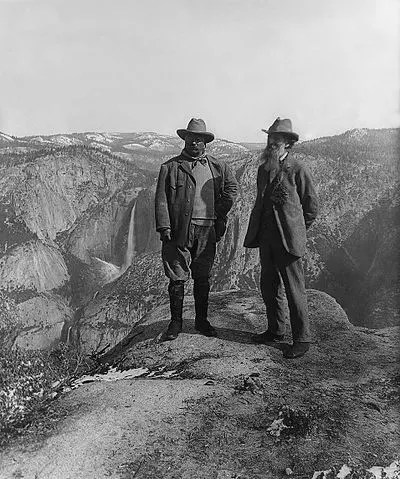
It is worth taking a moment to be precise about what Roosevelt and Pinchot actually built, because the word “conservation” has been muddied in our current political vocabulary. Roosevelt was not a preservationist in the strict Muir tradition; he believed in the managed, sustainable use of natural resources. What he opposed, with considerable force of will, was the unregulated transfer of public wealth into private hands. Between 1901 and 1909, his administration established 150 national forests, 51 federal bird reserves, four national game preserves, five national parks, and 18 national monuments, protecting nearly 230 million acres from unregulated extraction. The Antiquities Act of 1906, which Roosevelt used to protect places including the Grand Canyon, was explicitly designed to allow the executive branch to act quickly when Congress could not or would not protect significant landscapes.
The Forest Reserve Act, the Antiquities Act, and the later Federal Land Policy and Management Act of 1976 all share a common architecture: they invest expertise in federal agencies (eventually the USFS, NPS, and BLM), they require science-based management planning, and they create processes through which the public has a voice. The bills moving through the 119th Congress are not simply adjusting that architecture; they are reversing its foundational logic. Conservation advocates say Congress is recklessly throwing out detailed plans that are created after years of research, public meetings, and local collaboration, and that lawmakers’ intervention could upend the long-standing management system that governs hundreds of millions of acres of public lands. Stateline
The framing offered by the current administration is worth examining on its own terms. Secretary of the Interior Doug Burgum frequently refers to public lands as “America’s balance sheet” and has pledged to increase returns by extracting more resources like oil, minerals, and timber. Stateline This is, to put it plainly, a fundamentally different philosophy than the one that created the public land trust. A balance sheet is a private accounting instrument; it measures what a business owns and what it owes. Public land is not a business asset. It is, as Roosevelt understood it, a civic inheritance, and the accounting language that surrounds extraction-first policy choices obscures the broader ledger of ecological, recreational, cultural, and Indigenous values that those lands carry.
It is also worth noting what the polling data suggests about the gap between this legislative agenda and the preferences of the people who live closest to these lands. According to the Colorado College State of the Rockies Project 2026 Conservation in the West poll, 70 percent of Western voters oppose fast-tracking mining and other projects on national public lands by limiting environmental reviews and local input, and 65 percent oppose building industrial roads in undeveloped areas of national public lands for new mines and other projects. Center for Western Priorities A 2025 survey of Western voters found that 72 percent oppose removing public lands protections for mining and other extractive uses. Center for Biological Diversity
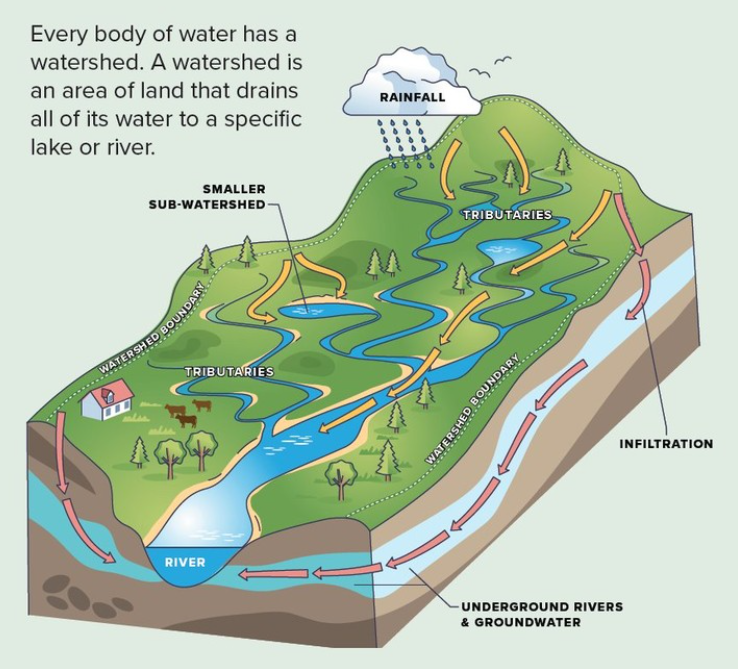
The Boundary Waters situation crystallizes all of these tensions into a single, urgent case. The 1.1 million-acre Wilderness in northeastern Minnesota is the most-visited Wilderness in the country. The proposed copper-nickel sulfide mining operation that H.J. Res. 140 would enable is owned by a Chilean corporation (Antofagasta), and the pollution from sulfide mining operations flows downstream; it does not stay within property lines. Sulfide mining produces sulfuric acid that is poisonous to wildlife, puts mercury in the water, and kills wild rice MPR News, a plant of deep cultural and subsistence significance to the Ojibwe communities whose 1854 treaty rights extend across this landscape.
A Note for Educators
I want to close with something that matters to me as a social studies teacher. The history of American public lands is, at its core, a story about a democratic argument: Who owns the commons? What do we owe to one another across time? How do we weigh immediate economic gain against long-term ecological health? Roosevelt and Pinchot did not have unanimous support; the timber and mining industries of the early 1900s pushed back against conservation policies with the same “economic development and energy dominance” language we hear today. What is different in this moment is the procedural creativity being used to bypass the deliberative processes that, over a century, replaced that raw political conflict with something more durable.
Using the Congressional Review Act to attack Public Land Order 7917 creates a reckless precedent that would allow Congress to retroactively target virtually any public land action as a “rule,” meaning no established land management decision would be safe from politicized attack and nullification. Save the Boundary Waters That is not a partisan observation; it is a structural one. The management planning framework that governs our public lands was built to be insulated from short-term political pressure precisely because ecosystems operate on timescales that election cycles do not.
Roosevelt once wrote that the nation behaves well if it treats natural resources as assets which it must turn over to the next generation increased, and not impaired, in value. By that standard, the bills moving through the 119th Congress deserve serious, sustained public attention, because the inheritance they are disposing of belongs not only to us, but to every student sitting in a classroom right now who has not yet had the chance to vote on any of it.


You must be logged in to post a comment.