Every summer, educators take a breath. We catch up on family life, find time to reflect, and — if we’re being realistic — spend more hours than we planned rebuilding curriculum, attending conferences, and working through professional development that the school year never quite leaves room for. Here’s a look at what I have planned for this summer and what new material I hope to produce for the site.
2026 KEDC Grants
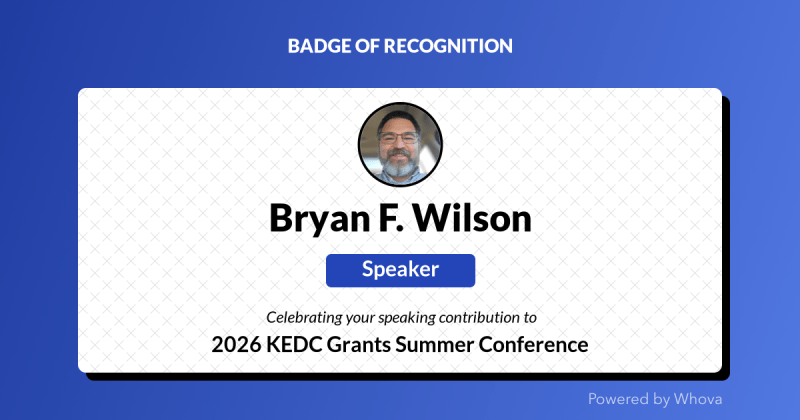
I want to start with a thank-you to the Kentucky Educational Development Corporation for inviting me to present last week. I had the privilege of sharing some of my classroom practices around developing AI bots in Google Gemini for classroom workflows, and why the rapid development of AI image generators makes teaching propaganda techniques to students more urgent than ever.
One of the biggest side quest takeaways I want for all educators is the Adobe Podcast app and how it works in Adobe Express. Even though the conversations were about Propaganda and content creation in Adobe Express or other AI generators, using the Podcast app is a huge part of Oral histories (future post in late June) and capturing students thoughts.
The conference itself was built around the America 250 theme, and that framing carried through the sessions I was able to attend. One highlight was a lecture on the enduring legacy of George Washington; the presenter, Gary L. Gregg II (who holds the Mitch McConnell Chair in Leadership at the University of Louisville), was generous enough to share a copy of his new biography, George Washington: Citizen, Soldier, Statesman. It’s sitting on my summer reading stack, and I expect I’ll get to it sometime in July.
I also had the chance to hear Dr. Paul A. Tenkotte, Professor of History at Northern Kentucky University, deliver a lecture on the 14th Amendment. It was a timely session for me, given the curriculum work I’m planning this summer. I took the opportunity to ask Dr. Tenkotte about something I’ve been thinking through for a while: how to explain to students the phenomenon of cases that were deliberately designed to test laws and force shifts in legal precedent — Dred Scott and Brown v. Board of Education being two of the most consequential examples. It’s the kind of question that tends to reframe how students understand the courts, not as neutral arbiters, but as arenas where legal strategy and social change have always intersected.
For links and resources from my presentations click here.
TOLI Summer Institute
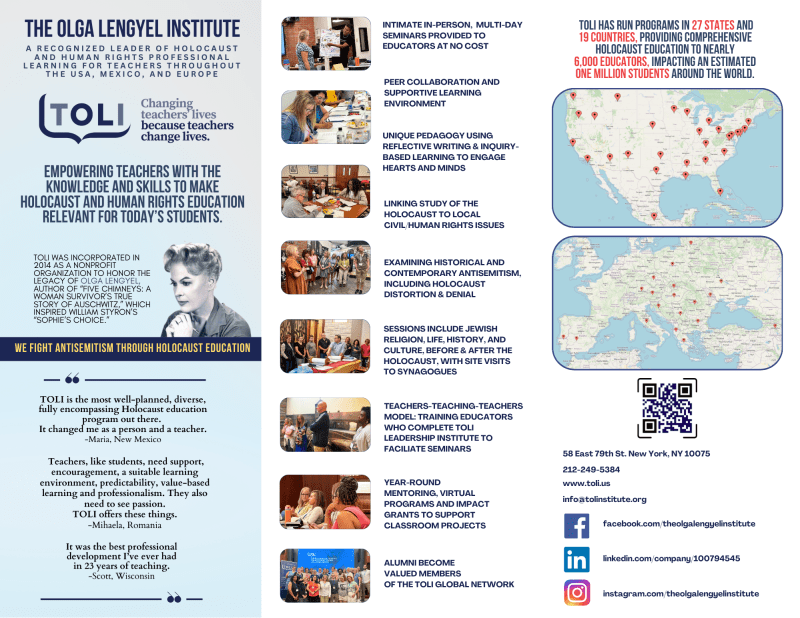
My curriculum development work this summer will be focused on expanding resources to accompany They Called Us Enemy (TCUE), and I’ll be building those materials through my participation in The Olga Lengyel Institute for Holocaust Studies and Human Rights Summer Institute at Berea College. A former colleague has been encouraging me to apply for years; this is finally the summer I have the scheduling flexibility to participate in the local institute. (See below for information on how to apply for one of their events.)
The Berea institute’s theme this year is “We Hold These Truths to be Self-Evident: Teaching the Holocaust and Human Rights,” and that framing connects directly to something I’ve been working toward — reshaping several of my Civics units around the idea that the 14th Amendment represents the core principle of American democracy, even as its full promise has struggled, across generations, to be recognized and applied.
Arthur and Rochelle Belfer National Conference for Holocaust Education
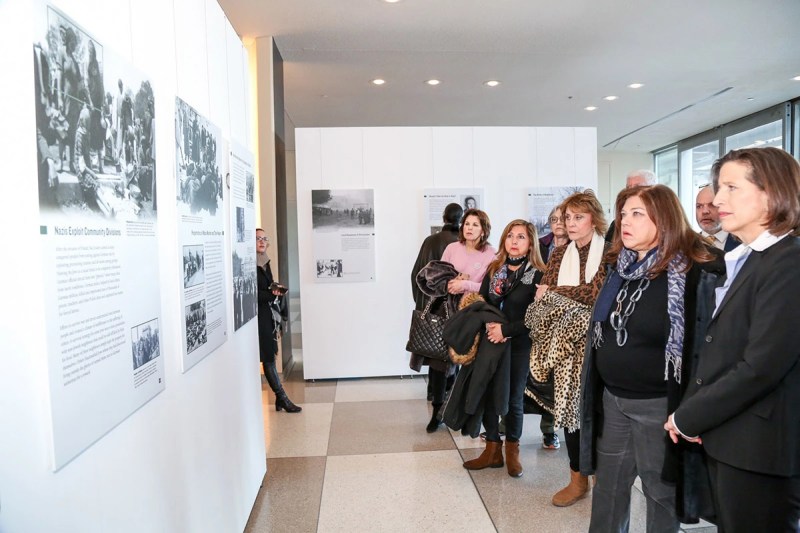
I’ll also be virtually attending the USHMM Conference this summer. After visiting the museum in person last year for the first time in more than fifteen years, I came away genuinely motivated to rebuild some of the activities and curriculum I’ve used in the past. My plan is to find and develop ways to integrate the Some Were Neighbors poster and curriculum set into how we teach students to recognize a pattern that appears across histories: that hatred, the separation of people into “us” and “them,” and the erosion of empathy tend to precede violence and the codification of discrimination.
It occurred to me somewhere between Dr. Gregg and Dr. Tenkotte’s lectures and the long drive home from a campus visit (its time for my oldest to slect a college) that these three summer commitments are, underneath the surface differences, asking the same question: what does it actually mean to live up to the principles we say define us? Washington built a republic and then, remarkably, stepped away from it; the 14th Amendment codified a promise that the country has spent a century and a half arguing about in its courtrooms and its streets; and the Holocaust education work is, at its core, a study in what happens when communities stop asking that question altogether. I don’t think that convergence is accidental — it’s probably why this particular combination of summer work feels meaningful rather than just busy.
Summer for educators is rarely as restful as it looks from the outside, and I’ve made my peace with that. The best professional development I’ve ever experienced has come from getting out of my own classroom and into conversations with historians, researchers, and colleagues who are wrestling with the same questions I bring to my students every fall. This summer is shaping up to be one of those. Look for new curriculum materials built around They Called Us Enemy before school starts, along with reworked Civics resources centered on the 14th Amendment as an organizing framework for the course. If July cooperates, a book review of the Gregg Washington biography will follow. As always, everything here is free to use and adapt under CC BY-SA 4.0.
Opinions expressed are solely my own and do not represent the views or opinions of my employer.


You must be logged in to post a comment.