
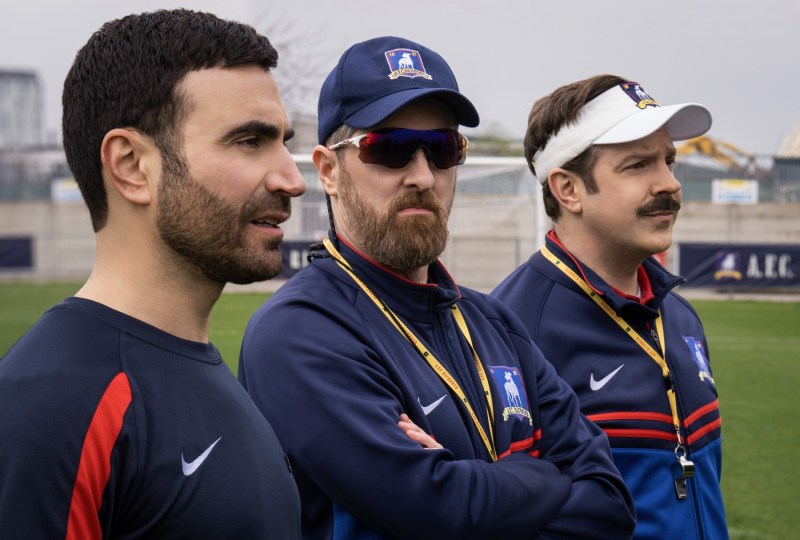
There’s a pattern in Ted Lasso that most leadership models get exactly backwards. Ted doesn’t wait for people to prove themselves before he makes them belong. He creates belonging first, and then leadership emerges from that belonging.
Watch how it works with Roy. Roy doesn’t see himself as a leader; he sees himself as an aging player being phased out. Ted hands him A Wrinkle in Time and treats Roy like someone whose thinking matters. He doesn’t demand Roy prove he’s ready to lead; he creates the condition where Roy discovers he’s a leader and steps into it because he feels seen and trusted first.
Nate wants credit and recognition. He starts the show insecure, resentful that Ted takes credit for his ideas. Ted’s response isn’t to ignore that hurt or to tell Nate to earn recognition. Instead, he makes Nate belong to the team in a way that his contributions are woven into something larger than individual credit. When Nate complains, Beard offers the forest metaphor; trees don’t succeed by fighting for more sunlight. They succeed by being part of a system where they’re supported and where they support others. Nate belongs first. Leadership emerges later.
Jamie is arrogant and selfish, not ready to be a good teammate. But Ted gives Jamie The Beautiful and the Damned by F. Scott Fitzgerald—a book about wealth and moral decline, about the emptiness of getting what you thought you wanted. Jamie initially throws it in the trash, rejecting the mirror. But the book, and Ted’s act of giving it, treats Jamie like someone worth developing. That belonging creates the space where Jamie can actually change. He’s not grinding himself to prove he deserves it; he’s becoming better because he’s in a system that expects better and assumes he’s capable of it.
What’s remarkable is what happens next. Roy, who learned to lead through belonging, becomes Jamie’s mentor and older brother figure. Roy doesn’t haze Jamie or make him earn his place. Roy teaches him what Ted taught Roy; that belonging comes first, and from that belonging, you figure out who you want to become. Roy’s mentorship of Jamie is the natural extension of what Ted did for Roy.
But there’s a crucial counterpoint. Nate starts out learning this lesson; he belongs, his ideas matter. But Nate misunderstands. He thinks belonging means credit; he thinks it means recognition and individual achievement. When Beard offers the forest metaphor—trees don’t compete, they collaborate—Nate should learn that his contribution matters because it’s part of a larger system. Instead, he interprets it as not getting enough credit. He feels invisible and resentful, and decides he needs to leave, to prove himself somewhere else.
Nate leaves for West Ham thinking he needs to establish himself independently, to prove his worth elsewhere. But what he’s actually doing is rejecting the belonging he had. Without that foundation, everything falls apart. Without the system that trusted and supported him, Nate spirals into revenge fantasies and bitterness. He becomes the thing that destroys him—someone trying to prove himself, fighting for recognition, trying to make people see him. The path leads to toxicity and regret because Nate never really understood that belonging comes first, and everything else flows from there.

The Opposite of Achievement Culture
This is a radical pivot from how most institutions work, especially schools. We’re used to a model that says: prove yourself first, and then you can belong. Get good grades, demonstrate you’re college material, and then you belong in the advanced class, the honors track. For underrepresented students, for kids who’ve been told they don’t belong in certain spaces, this model is devastating. They’re expected to prove themselves while simultaneously doubting whether they belong. It’s an impossible ask.
Ted’s model inverts this. It says: you belong here. Now, from that place of belonging, what can you become? It’s a fundamentally different question. Roy doesn’t have to grind himself into the mold of what he thinks a leader should be. He becomes a leader because Ted treats him like someone with something to offer. Nate doesn’t have to hustle for recognition or prove he’s capable; he finds his role because he’s already part of a system that values him. Jamie doesn’t have to become completely different to be accepted; he becomes better because he’s in a culture that assumes he can be better.
This matters enormously for students who’ve internalized the message that they don’t belong. For students who are the first in their families in a particular space, or who come from backgrounds they’ve been told don’t prepare them for academic success, or who are entering spaces where they don’t see people who look like them—the message of belonging changes everything.
Developing Thoughtfulness, Not Just Achievement
But there’s something else happening in this pattern. Ted isn’t just creating belonging; he’s developing thoughtfulness. He’s creating space for people to think about something beyond themselves.
Roy reads A Wrinkle in Time and discovers what leadership actually feels like—the burden and the responsibility. That’s not about achievement; that’s about understanding what you’re actually choosing when you choose to lead. Nate learns through Beard’s forest metaphor that success isn’t zero-sum. His thinking expands beyond “how do I get credit” to “how do we all grow together?” Jamie learns that being part of something matters more than being the star. He learns to think about the team’s needs, not just his own advancement.
These aren’t students being ground down to achieve externally-defined success. They’re students developing capacity to think about themselves in relation to others, to systems, to something larger than individual achievement. This is the inverse of so much educational pressure. We spend a lot of energy trying to motivate students through external markers—grades, test scores, college prospects. We tell them to prove themselves. We grind them. And some students thrive under that pressure, but many don’t. Many internalize the message that they’re not good enough, that they have to constantly prove themselves, that belonging is something to earn rather than something fundamental.
What This Looks Like in a Classroom
So what does this actually mean for teaching? How do we create belonging before we ask students to prove themselves? How do we develop thoughtfulness alongside achievement?
First, we treat students like they belong before they’ve demonstrated they do. This doesn’t mean lowering standards or pretending someone can do something they can’t. It means assuming they’re capable. It means treating their thinking as worth taking seriously. It means not making students who don’t see themselves in a particular space prove they deserve to be there. Roy didn’t think he could be a leader; Ted treated him like one. That’s what we do.
Second, we create space for students to think beyond themselves. Roy’s book wasn’t assigned to make him a better student. It was given to help him think differently about what he actually wanted to become. In classrooms, this means helping students think beyond immediate achievement. What does this knowledge connect to? How does this way of thinking change how you understand yourself or others?
Third, we make belonging visible through how we build community. Ted builds systems where belonging is structural. Everyone has a role. Everyone’s thinking matters. In classrooms, this means being intentional about who talks, who leads, who gets opportunities to contribute. It means making sure that certain students don’t feel like they have to earn participation while others assume they belong.
Fourth, we’re honest about the difference between grinding and growing. Grinding is when we push students to achieve external markers at the expense of their wellbeing. Growing is when students are working toward something they care about, from a place of belonging, supported by people who believe in them. These feel completely different. One is exhausting and soul-crushing. The other is challenging and energizing.
Fifth, we’re careful not to inadvertently teach the opposite. This is the Nate cautionary tale. Nate had belonging, but he misunderstood what it meant. He thought it meant individual recognition. Without clarity that belonging is the foundation—not a reward for achievement—Nate spiraled. In classrooms, this means being explicit about what we value. Are we saying “you belong here because you’re part of this community” or “prove yourself and maybe you’ll belong”? The difference is everything. Students like Nate are vulnerable to misunderstanding. If we’re not crystal clear that belonging comes first, we risk creating students who leave to prove themselves, who become bitter and vengeful, who spiral because they never felt genuinely secure in the first place.

Leading From Belonging
What’s remarkable about Season 3 is watching the people who learned belonging become the people who create it for others. Roy didn’t just learn to lead for himself; he’s now helping develop other leaders. These are leaders who understand, from lived experience, that belonging comes first and leadership emerges from it.
That’s what we’re trying to do as educators. We’re trying to create classrooms where students belong first, where they’re trusted with real thinking and real responsibility, where achievement and growth emerge from that foundation of belonging rather than being prerequisites for it. We’re trying to develop leaders who understand, from their own experience, that sustainable excellence comes when you’re part of something that believes in you.
We’re trying to build systems where the question isn’t “can you prove you belong here?” but rather “now that you belong, what are you capable of?”
The shift from proving to belonging isn’t just nicer; it’s more effective. Students who feel they belong, who are trusted before they’ve demonstrated they’re “ready,” who see themselves reflected in leadership around them—these students reach further, think more deeply, and sustain their effort over time. They’re not grinding to prove something. They’re growing because they’re part of something that matters.
Note on Images and Video Content: All images and video content featured in this post are the intellectual property of Warner Bros. Entertainment and Apple TV+. These materials are used for educational and critical commentary purposes only. Ted Lasso is an Apple TV+ original series developed by Jason Sudeikis, Bill Lawrence, Brendan Hunt, and Joe Kelly.

 BFWClassroom
You must be logged in to post a comment.