
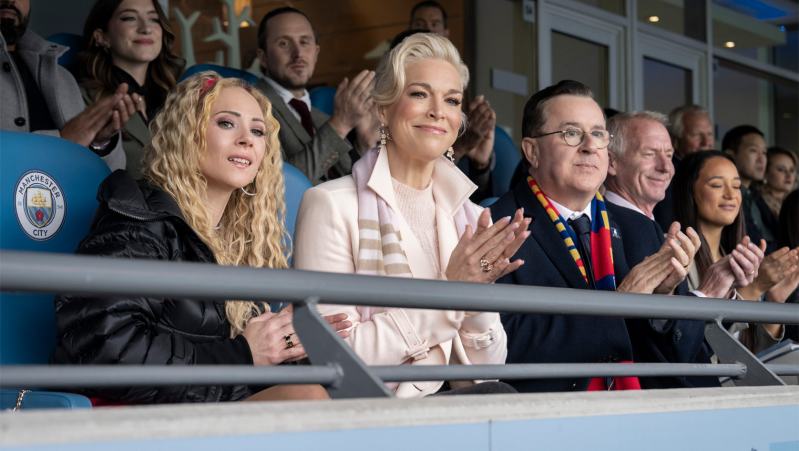
The women’s team in Season 3 of Ted Lasso isn’t just a sports storyline. It’s the natural evolution of the show’s philosophy about belonging, leadership, and what sustainable excellence actually looks like. And it’s asking a question our education systems desperately need to hear: How do we support people reaching their full potential without sacrificing them in the process?
The Women’s Arc
Keeley doesn’t see herself as someone who belongs in sports leadership. She’s been told her whole life that her value comes from her appearance, her willingness to be small, her ability to make other people comfortable. When she enters the world of women’s sports, she could be told what she’s heard all along: prove yourself; earn your place; show that you deserve to be here. Instead, something different happens. She’s treated like she belongs. Her thinking is valued. Her vision for what women’s sports could become matters.
Rebecca has power, but she’s spent so long chasing that power through revenge and control that she hasn’t built real belonging. She’s been isolated at the top. Now, in Season 3, she’s discovering what it means to lead from a place of genuine connection with the team, to be part of something rather than above it. She’s not grinding anymore; she’s building.
The new coach is entering a space where she might feel like she has to prove herself—that she has to out-coach the men, out-work everyone, demonstrate through sheer force of will that women deserve to be in leadership. But the system being built around her—by Rebecca, by Keeley, by Ted’s influence—creates something different. She’s trusted. She belongs.
And the athletes themselves are at the center of all this. They could be told the story we’ve told women athletes for generations: grind harder, prove your worth, sacrifice more, be grateful for scraps. The show is asking if there’s a different possibility. What if women athletes are valued not because they have to fight to make themselves legitimate, but because they’re worth valuing?
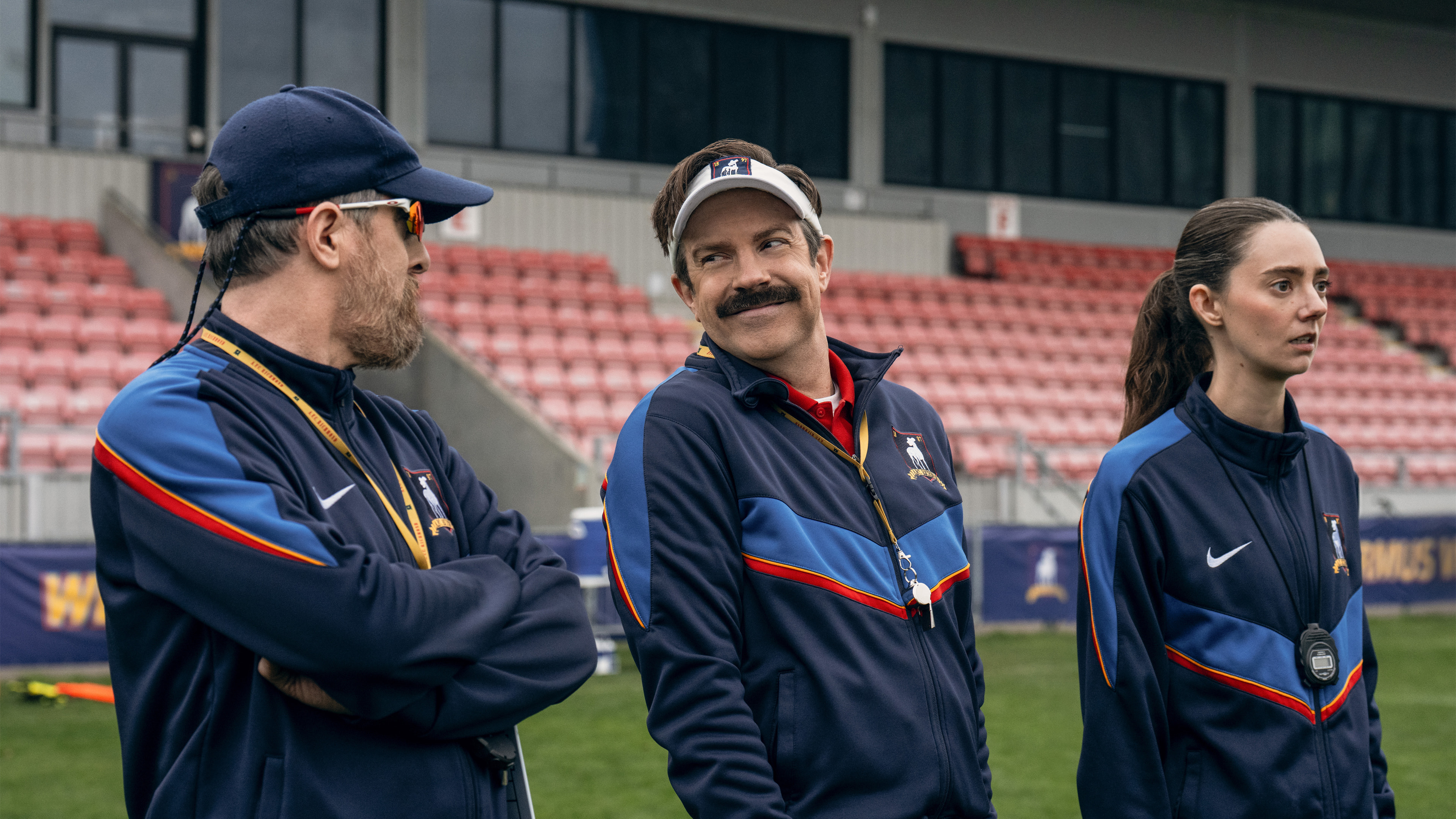
Brendan Hunt, Jason Sudeikis and Tanya Reynolds in “Ted Lasso,” now streaming on Apple TV. 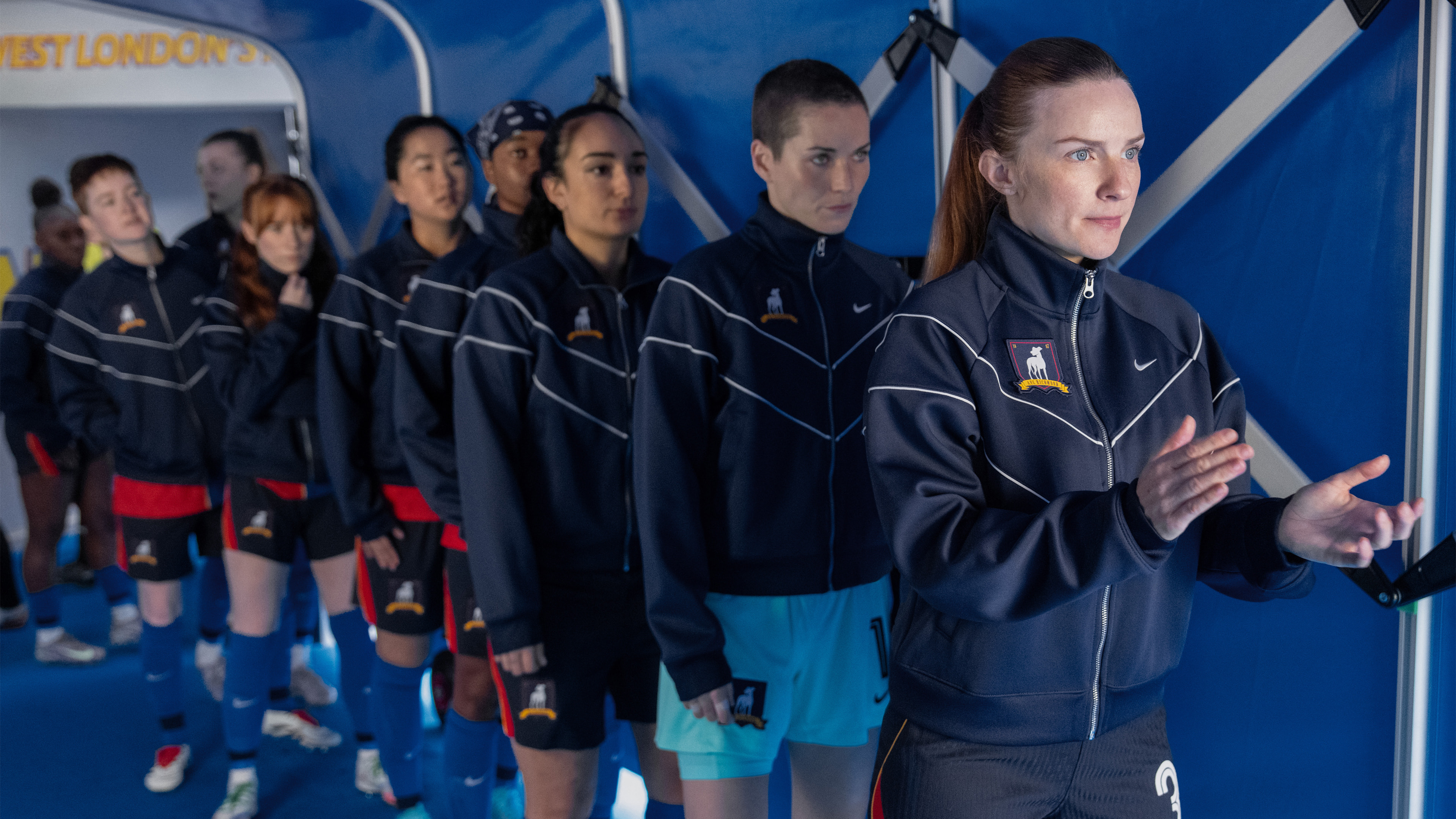
Faye Marsay, Jude Mack, Mercedes Assad, Gabrielle Dieujuste, Annelise Heywood, Aisling Sharkey, Rex Hayes, Terri Olejnik and Karesha Iton in “Ted Lasso,” now streaming on Apple TV. 
Jill Scott and Rebecca Lowe in “Ted Lasso,” now streaming on Apple TV. 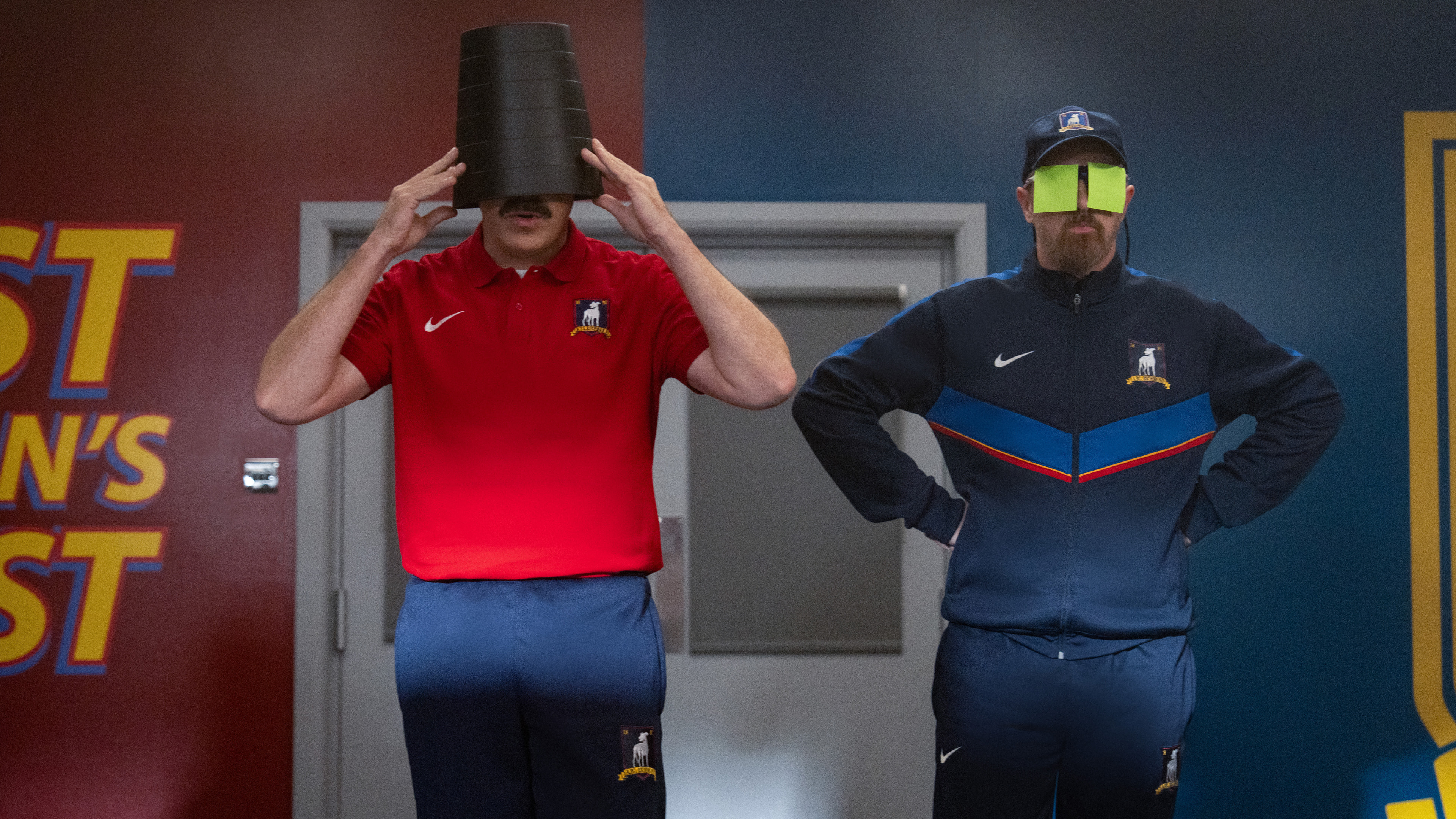
Jason Sudeikis and Brendan Hunt in “Ted Lasso,” now streaming on Apple TV.
The Exploitation Question
This is where the women’s storyline gets urgent. Women’s sports have been systematically devalued, underfunded, and exploited. Female athletes are asked to work for less money, compete with fewer resources, prove more, be more grateful. They’re asked to do it all—be elite athletes, be marketable, be photogenic, smile for the camera—while their male counterparts focus on playing their sport. The weight of representation falls on women; every woman athlete becomes responsible for proving that women’s sports “matter.”
That’s exploitation, even when it’s dressed up in the language of inspiration and progress. It’s the grinding that destroys.
Season 3 is asking whether there’s an alternative. What if women’s sports don’t have to prove their legitimacy through women athletes sacrificing themselves? What if the question isn’t “how hard are you willing to work to make people believe women’s sports matter” but rather “how do we build systems where women’s sports are valued because they’re worth valuing”?
This connects directly to the belonging-before-proving framework. Keeley, Rebecca, and the athletes aren’t being asked to prove women’s sports are legitimate. They’re being invited into a system that already assumes women’s sports are legitimate. From that foundation of belonging, excellence emerges—but excellence that’s sustainable, that doesn’t require grinding yourself to nothing.
What This Means for Education
This matters beyond sports. In schools, we have parallel systems of exploitation. Underrepresented students are asked to prove their place. First-generation college students are told to work twice as hard. Students of color are expected to represent their entire community. Girls in STEM are asked to prove they belong in spaces that have historically excluded them. Students with disabilities are told to “overcome” their circumstances through sheer will.
We dress this up in the language of motivation and high expectations. But often, it’s just grinding. It’s asking students to sacrifice their wellbeing, their mental health, their sense of safety, to prove themselves. And we do it most intensely to students who are already carrying the most weight.
What if, instead, we created conditions where these students belong first? Where their presence is assumed to be valuable before they’ve demonstrated anything? Where excellence emerges from belonging, not from proving worthy of belonging?
For girls entering STEM fields, this would mean something radically different from what many currently experience. It wouldn’t mean they have to work harder than boys to be taken seriously. It would mean they’re taken seriously from the start. It wouldn’t mean they’re responsible for being the representation. It would mean they’re free to just be students, learning in spaces built for them.
For students of color entering predominantly white spaces, it would mean their belonging doesn’t hinge on their performance. It would mean they’re part of a community that values them not because they’ve proven something, but because they’re there.
For first-generation students, it would mean they don’t have to grind themselves into exhaustion to prove they belong in college. It would mean the institution makes space for them, supports them, assumes they can succeed.
The women’s team storyline in Ted Lasso is modeling this. Not perfectly—the show is still exploring what this looks like—but intentionally. These women aren’t grinding to prove women’s sports matter. They’re part of a system that values them, supports them, and expects them to reach their potential.
What I Hope For This Season and Beyond
We’re halfway through Season 3, and the women’s storyline is still unfolding. I know there are likely multi-season arcs ahead. But I want to name what I’m hoping for, both in the show and in the world it reflects.
I want to see women athletes coming into their own. Not proving themselves to people who’ve decided they’re not worth watching. Not grinding themselves into injury and exhaustion to justify their existence in spaces they never should have had to fight so hard to enter. I want to see them step into sports and into themselves because they belong there, and because someone created the conditions where their belonging was assumed from the start.
I want to see their sport come into its own. Women’s sports have been systematically devalued, underfunded, and exploited. The athletes have been asked to work for less, to prove more, to be grateful for scraps. The show is asking if there’s a different way. What if women’s sports are valued not because women have to fight to make them legitimate, but because they’re worth valuing?
I want to see the show push back against exploitation, in all its forms. Against the pressure to grind. Against the message that women have to do it all—be perfect athletes, be marketable, be grateful, smile for the camera, prove your worth every single day. Against the systems that have told women athletes they’re less-than for generations. Against the idea that success requires sacrificing your body, your mental health, your humanity.
I want to see Keeley continue to shape what women’s sports leadership looks like—not by becoming like the men in power, but by bringing her own vision and values. I want to see Rebecca lead from a place of genuine connection and sustainability, not from the toxic drive that nearly destroyed her. I want to see the athletes themselves set the terms for what their sport is, not have terms imposed on them.
The women coming into their own isn’t just a sports story. It’s about belonging. It’s about what becomes possible when we stop asking people to prove they deserve space and start creating space for them to discover who they can become. It’s about sustainable excellence instead of exploitation. It’s about seeing people fully—not just for what they produce, but for who they are.
That’s what I’m hoping for this season and beyond.
The shift from proving to belonging isn’t just nicer; it’s more effective. It applies to athletes and students alike. People who feel they belong, who are trusted before they’ve demonstrated they’re “ready,” who see themselves reflected in leadership around them—these people reach further, think more deeply, and sustain their effort over time. They’re not grinding to prove something. They’re growing because they’re part of something that matters.
Note on Images and Video Content: All images and video content featured in this post are the intellectual property of Warner Bros. Entertainment and Apple TV+. These materials are used for educational and critical commentary purposes only. Ted Lasso is an Apple TV+ original series developed by Jason Sudeikis, Bill Lawrence, Brendan Hunt, and Joe Kelly.

 BFWClassroom
You must be logged in to post a comment.