This is one of several articles in my brief history series about the US Civil War and its ever evolving place in American history. What began in 2010 as a blog series about the 150th anniversary has evolved into so much more.
Introduction:
Cinco de Mayo, celebrated annually on May 5th, has become a vibrant fiesta, yet its origins are rooted in a pivotal moment in Mexican history. This blog post unravels the historical backdrop of Cinco de Mayo, where the Mexican Army’s triumph in the Battle of Puebla against French forces symbolized resilience in the face of international intrigues. (This holiday is not Mexican Indpendence Day which is celebrated on Sept. 16.)
Napoleon III’s Ambitious Vision:
In 1862, France was facing economic woes as a result of Napoleon III’s costly military campaigns in Crimea and Italy, extensive Parisian infrastructure projects, and the American Civil War’s embargo on cotton. Simultaneously, conservative factions in Mexico were attempting to regain power following their failed efforts to topple President Benito Juarez’s new government under La Reforma. President Lincoln’s suspension of loan payments to European governments added to the economic strain.
The Coalition and Napoleon III’s Plan:
A coalition of foreign powers, including Great Britain, Spain, and France, with support from the Habsburg throne in Austria, convened in London with a daring objective: to invade Mexico and establish a puppet government that would serve their interests. Napoleon III’s grand scheme envisioned a new French colonial empire in Central America. France, backed by Great Britain and Spain, would install Maximilian I, a relative of the Habsburg, as the ruler of a French-occupied Mexican throne. The timing for the invasion coincided with intense fighting during the US Civil War, which meant that President Lincoln would not be able to mobilize forces against European interventions in the Americas even though the Monroe Doctrine was still US foreign policy at the time.
The Battle of Puebla and Unexpected Resistance:
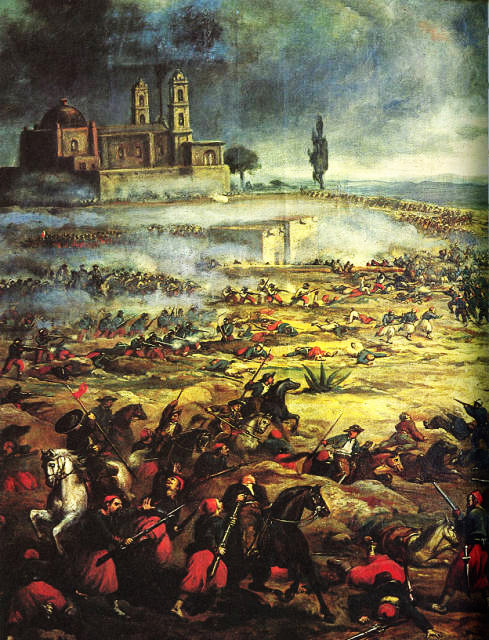
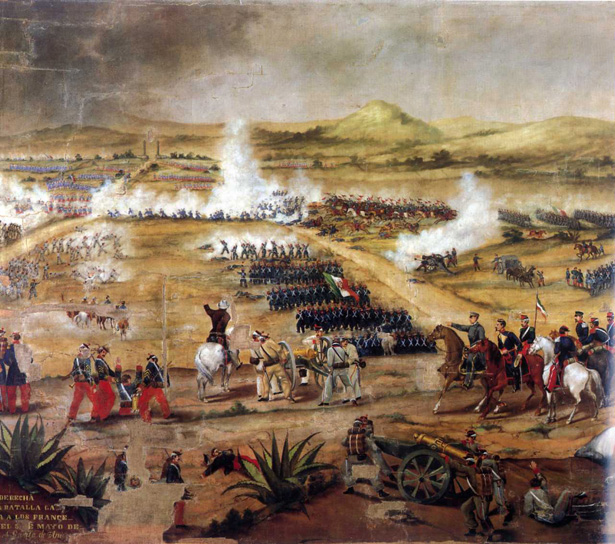
The coalition expected a swift victory, with French and Mexican resistance armies converging in Veracruz and marching toward Mexico City. However, the siege of Puebla, lasting two months, ended with the Mexican Republican forces defeating a larger French contingent on May 5. This unexpected resistance extended the French commitment, leading to the deployment of additional troops and a quick dissolution of European support for the venture. France found itself militarily stretched and now politically isolated, with only the Austro-Hungarian Empire supporting the invasion.
The Beginning of the End:
By 1867, mounting pressure from a 50,000-strong U.S. force along the border compelled French forces to withdraw from Mexico. General Ulysses S. Grant, leading the Federal Occupation of Southern states, gathered troops along the border, demanding the French exit. The U.S. Army would not invade Mexico, and Maximilian I met his fate at the hands of Republican forces. President Juarez returned to office, initiating a decade of reforms.
Global Implications:
The failed Trent Affair and early French setbacks were cited as factors influencing Great Britain’s decision not to openly support the Confederate States of America (CSA) and break the blockade with its navy. By the end of 1862, battles like Shiloh and Antietam in the American Civil War indicated a protracted conflict. The Emancipation Proclamation loomed, shifting the narrative from a debate over states’ rights to a moral struggle against slavery.

Cinco de Mayo’s Legacy:
Today, Cinco de Mayo is celebrated to commemorate the Battle of Puebla, a moment of Mexican resilience against foreign forces. However, it is essential to remember that this day does not mark Mexican Independence, which falls on September 16. Instead, it signifies the triumph over European neo-colonialism, a testament to Mexico’s enduring spirit.
Conclusion:
Cinco de Mayo’s historical roots reveal a remarkable chapter in Mexican history where a small but determined army defied overwhelming odds. This commemoration serves as a testament to the enduring spirit of the Mexican people and their struggle against foreign intervention. Cinco de Mayo, beyond the festive celebrations, carries a profound historical significance rooted in resilience and the fight against European Imperialism.
Information for the article and additional resources:
- NPS: General Grant and the Fight to Remove Emperor Maximilian from Mexico
- Wikipedia: Second French intervention in Mexico
- Wikipedia: Cinco de Mayo
- NYTimes: The History of Cinco de Mayo and How It’s Celebrated

 BFWClassroom
You must be logged in to post a comment.