
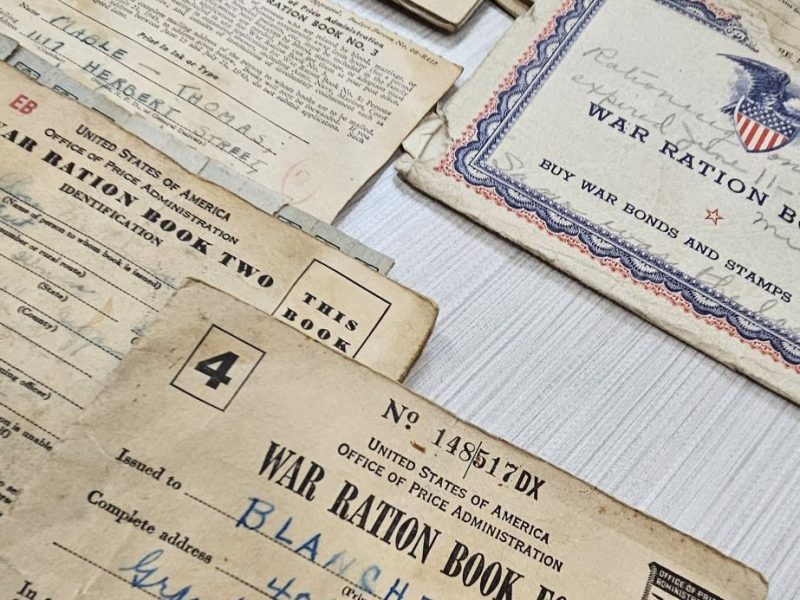
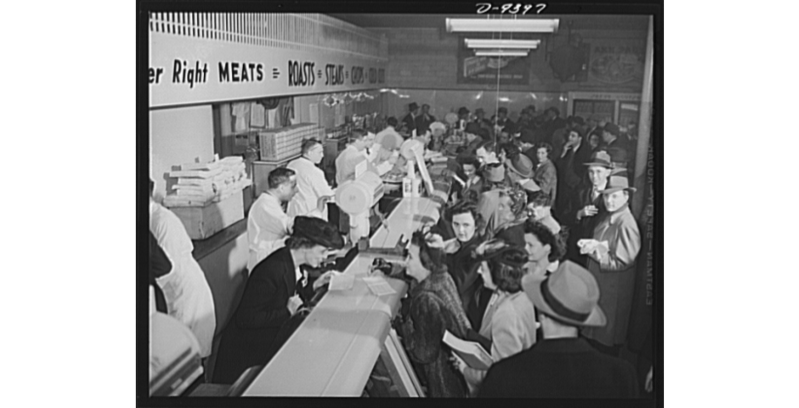
Every year, as part of the history curriculum, I make it a point to share the ration books with my class when we delve into the topic of how World War 2 significantly altered daily life in the United States. It’s always fascinating to witness the students’ intrigue, but inevitably, questions arise regarding the constitutionality of the rationing system. I find this an excellent opportunity to engage in a dialogue about the balance between individual freedoms and the collective good during times of crisis. The relevance of this topic has only become more pronounced, especially given the recent experience of rationing during the COVID-19 pandemic. It’s remarkable to consider that while the pandemic only led to a relatively short-lived period of rationing, my mother and her family endured this reality for nearly a decade. In light of this, I often ponder whether today’s students, having encountered a taste of rationing during COVID-19, would be more empathetic to the challenges of prolonged rationing as experienced by prior generations.

Lesson Plan: War Rationing in United States History
Grade Level: High School
Subject: U.S. History / World History
Lesson Objectives:
- Knowledge: Students will understand the concept of war rationing and its impact on American society during different historical periods (World War I, World War II, and the Cold War).
- Skills: Students will analyze primary and secondary sources related to war rationing.
- Understanding: Students will evaluate the effectiveness and consequences of war rationing policies.
Standards:
- Common Core Standards for Literacy in History/Social Studies:
- CCSS.ELA-LITERACY.RH.9-10.1: Cite specific textual evidence to support analysis of primary and secondary sources.
- CCSS.ELA-LITERACY.RH.9-10.2: Determine the central ideas or information of a primary or secondary source.
SMART Goals:
- Specific: Students will analyze three primary sources on war rationing from World War I, World War II, and the Cold War.
- Measurable: Students will complete a comparative analysis chart with at least 80% accuracy.
- Achievable: With guided instruction and differentiated materials, all students will be able to identify key elements of war rationing.
- Relevant: Understanding war rationing helps students grasp the broader impacts of war on civilian life.
- Time-bound: The lesson will be completed within two 60-minute class periods.
Materials:
- Primary source documents (ration cards, government posters, personal letters)
- Secondary source readings (textbook excerpts, articles)
- Comparative analysis chart
- Differentiated reading materials
- Graphic organizers
- Projector and computer for multimedia presentations
- Exit tickets
Lesson Activities:
Day 1: Introduction and Context
- Bell Ringer (10 minutes):
- Question: “What do you think life would be like if you had to limit your use of everyday items?”
- Discussion: Briefly discuss students’ responses to activate prior knowledge.
- Lecture and Multimedia Presentation (20 minutes):
- Provide an overview of war rationing during WWI, WWII, and the Cold War.
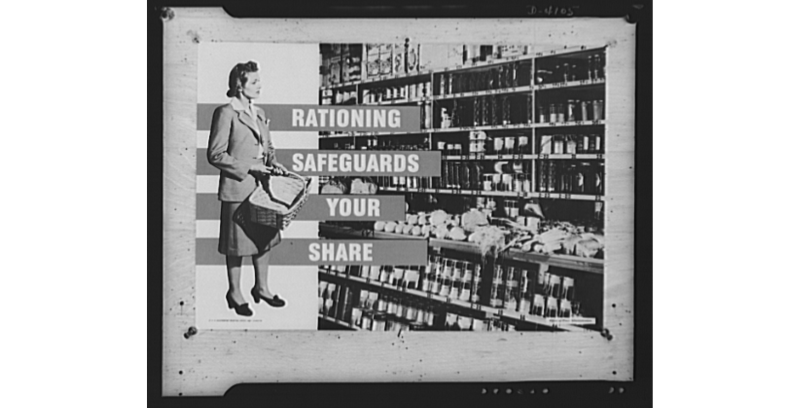
- Show clips or images of rationing posters and government propaganda.
- Primary Source Analysis (20 minutes):
- Distribute primary source documents to students.
- Model how to analyze one document as a class.
- Students work in pairs to analyze additional documents using a graphic organizer.
- Exit Ticket (10 minutes):
- Question: “What is one key difference you noticed between rationing during WWI and WWII?”
Day 2: Deep Dive and Assessment
- Bell Ringer (10 minutes):
- Review exit ticket responses from the previous day.
- Question: “How do you think rationing affected families differently during each war?”
- Differentiated Reading and Group Work (30 minutes):
- Split students into groups based on reading levels.
- Provide differentiated readings and tasks:
- Upper-level: Analyze the long-term economic impacts of rationing.
- Lower-level: Identify key items rationed and reasons behind rationing.
- Comparative Analysis Chart (15 minutes):
- Students fill out a comparative chart based on their readings and primary source analysis.
- Class Discussion and Reflection (10 minutes):
- Share findings from the comparative analysis.
- Discuss how rationing policies reflect the broader context of each war.
- Assessment and Exit Ticket (5 minutes):
- Students complete an exit ticket evaluating the effectiveness of war rationing in one war of their choice.
Assessment:
- Formative:
- Participation in class discussions.
- Completion of graphic organizers and comparative analysis charts.
- Summative:
- Exit tickets from both days.
- A short reflective essay comparing war rationing across different periods (graded on a rubric).
Differentiation:
- Reading Levels:
- Provide simplified texts and summaries for lower-level readers.
- Offer extension activities and deeper analysis for advanced students.
- Learning Styles:
- Visual: Multimedia presentations and posters.
- Auditory: Class discussions and lectures.
- Kinesthetic: Group work and interactive primary source analysis.
- Support:
- One-on-one assistance and guided notes for students who need additional help.
Online Resources for Teaching War Rationing in U.S. History
Primary Sources:
- National Archives:
- World War II Rationing – Primary source documents and lesson plans on rationing during World War II.
- Library of Congress:
- American Memory: War Rationing – Collection of WWII posters and propaganda.
- Digital Public Library of America (DPLA):
- Rationing during WWII – A primary source set focused on rationing during World War II.
Secondary Sources:
- History.com:
- World War II Rationing – Articles and videos explaining the concept and impact of rationing during WWII.
- PBS LearningMedia:
- The War: Rationing on the Home Front – A series of videos and resources on rationing during WWII.
- Smithsonian Magazine:
- The Rationing System – Detailed articles on the rationing systems during various wars.
By following this lesson plan, students will gain a comprehensive understanding of war rationing and its impact on American society, developing critical thinking and analytical skills essential for their historical studies.

 BFWClassroom
You must be logged in to post a comment.