
It’s All-Star week and as we begin to enjoy the last 45 days of summer here are some of my thoughts about Baseball on film because baseball has always been more than just a sport. It’s a metaphor for American dreams, second chances, and the poetry of everyday life. The best baseball movies understand this fundamental truth, using the diamond as a stage for stories that resonate far beyond the ninth inning. These films became the soundtrack of rain delays, the comfort food of cable television, and the shared language of a generation that grew up believing in the magic of the game.
What separates truly great baseball cinema from mere sports entertainment is the ability to balance the drama of competition with the comedy of human nature. These movies don’t just show us athletes; they show us ourselves—flawed, hopeful, and eternally optimistic that this might be the year everything changes.
The Literary Roots of Baseball Cinema
Many of the greatest baseball films began their lives on the page rather than the screen. This literary foundation gives these movies their depth and emotional resonance. Bernard Malamud’s “The Natural” (1952) explored themes of American mythology and fallen heroes long before Robert Redford stepped into Roy Hobbs’ cleats. W.P. Kinsella’s “Shoeless Joe” became the source material for “Field of Dreams,” transforming a story about redemption and father-son relationships into cinematic gold.
Hollywood’s fascination with baseball stems from the sport’s unique position in American culture. Unlike football’s militaristic precision or basketball’s urban poetry, baseball operates in a timeless space where past and present converge. The sport’s leisurely pace mirrors the rhythm of storytelling itself, making it perfect for character development and emotional crescendos.
The Top 5 Baseball Movies That Defined a Generation
5. Moneyball (2011)
The Revolution Will Be Statistical
Based on Michael Lewis’s groundbreaking non-fiction book, “Moneyball” transforms the 2002 Oakland Athletics’ season into a meditation on value, tradition, and the courage to think differently. Brad Pitt’s Billy Beane isn’t just rebuilding a baseball team; he’s challenging an entire system of how we measure worth.
The film’s genius lies in how it makes statistics feel emotional. When Beane trades away his star players and replaces them with “damaged goods” identified by sabermetrics, we’re not just watching baseball strategy—we’re witnessing the American dream being redefined. The movie understands that for every player who gets overlooked because they don’t “look the part,” there’s a human story of perseverance and second chances.
What makes “Moneyball” both a sports drama and a life comedy is its gentle mockery of baseball’s hidebound traditions while celebrating the game’s capacity for reinvention. The film finds humor in the old scouts’ reliance on intuition (“he’s got an ugly girlfriend, which means he’s got no confidence”) while treating their dedication with respect. It’s a movie about fathers and sons, about the pain of being discarded, and about finding new ways to win when the old ways no longer work.

4. The Sandlot (1993)
Forever Summer
“The Sandlot” captures something that no other baseball movie quite manages: the pure, uncomplicated joy of playing the game. Set in the summer of 1962, the film follows Scotty Smalls as he discovers both baseball and friendship in equal measure. What begins as a simple story about a kid trying to fit in becomes a meditation on childhood, community, and the legends we create.
To this day, “The Sandlot” remains the most quotable baseball movie ever made. “You’re killin’ me, Smalls!” has become shorthand for exasperated affection in my vocabulary. “Heroes get remembered, but legends never die” still gives me chills. Ham Porter’s elaborate insults during the Fourth of July game have become the gold standard for creative trash talk. The movie’s dialogue has woven itself into the fabric of how I talk about baseball, how I talk about friendship, how I talk about the moments that define us.
The film’s enduring quotability speaks to its understanding of how kids actually talk—not the sanitized, adult-written version of childhood speech, but the authentic mix of bravado and vulnerability that defines pre-adolescence. When Squints finally kisses Wendy Peffercorn, it’s not just a romantic triumph; it’s a master class in boyhood mythology, the kind of story that gets better with each telling.
The movie’s heart lies in its understanding that baseball, for kids, isn’t about winning or losing—it’s about belonging. When Smalls finally connects with Ham Porter’s fastball, it’s not just a hit; it’s acceptance. The film treats each member of the sandlot crew as a fully realized character, from the know-it-all Ham to the mysterious Benny “The Jet” Rodriguez, who becomes a local legend.
“The Sandlot” balances comedy and drama by treating childhood with the seriousness it deserves. The Beast behind the fence isn’t just a dog; it’s every childhood fear made manifest. When the boys finally confront their monster, they discover that most of our fears are based on stories we tell ourselves. The film’s narration, delivered by an adult Smalls looking back, gives the entire movie the feeling of a cherished memory—imperfect but irreplaceable.

3. Major League (1989)
The Misfits Inherit the Earth
“Major League” takes the underdog sports formula and injects it with a cynicism that somehow makes the eventual triumph even sweeter. When Rachel Phelps inherits the Cleveland Indians and deliberately assembles a team of has-beens and never-weres to justify moving the franchise, she creates the perfect setup for rebellion.
Growing up, I knew “Major League” as the sanitized television version that aired during afternoon movie blocks. The TV edit transformed Charlie Sheen’s Wild Thing from a foul-mouthed convict into a merely eccentric pitcher, and Pedro Cerrano’s voodoo practices seemed more quirky than crude. It wasn’t until I watched the uncut version as an adult that I realized just how raunchy and profane the original was—and how much the television censors had created an entirely different movie. The sanitized version I grew up with was almost a different film entirely, one where the rebellion felt more playful than desperate, where the language was colorful but not colorfully blue.
This revelation was both jarring and enlightening. The cleaned-up version had allowed me to fall in love with the characters without the edge that made them truly dangerous. When I finally heard Cerrano’s uncensored prayers to Jobu or caught the full force of Lou Brown’s locker room speeches, I understood that these weren’t just lovable losers—they were genuinely rough around the edges, which made their transformation all the more meaningful.
The film’s cast of characters—from the aging catcher with bad knees to the speedster who can’t hit the broad side of a barn—represents every workplace misfit who’s ever been written off. Charlie Sheen’s Rick “Wild Thing” Vaughn, with his prison record and 100-mph fastball, embodies the kind of raw talent that traditional baseball scouts both covet and fear.
What makes “Major League” more than just a sports comedy is its understanding of class and economics in professional sports. The players aren’t just fighting for wins; they’re fighting for their livelihoods, their dignity, and their city’s identity. The film treats Cleveland itself as a character, a rust-belt town that sees its baseball team as a reflection of its own struggles and potential for renewal.
The movie’s balance between drama and comedy comes from its willingness to let its characters fail spectacularly before they succeed. When Vaughn walks batter after batter, it’s genuinely painful to watch. When he finally finds his control, the celebration feels earned rather than inevitable.
2. Field of Dreams (1989)
Faith, Family, and the Impossible
“Field of Dreams” transforms W.P. Kinsella’s “Shoeless Joe” into something approaching religious experience. Kevin Costner’s Ray Kinsella doesn’t just build a baseball field in his corn; he builds a bridge between the living and the dead, between dreams deferred and dreams fulfilled.
My relationship with “Field of Dreams” deepened when I discovered the source material—both Kinsella’s novel and the broader world of his baseball fiction. Reading “Calico Joe” years later, I found myself drawn back to that same magical realism, that same understanding that baseball operates in a space where the impossible becomes inevitable. The short story that inspired the film, “Shoeless Joe Jackson Comes to Iowa,” revealed the crystalline perfection of Kinsella’s vision—how a simple premise could contain entire universes of meaning.
“Field of Dreams” has become my annual pilgrimage film, watched religiously in the week before Opening Day each year. It’s become as much a part of my spring ritual as checking the weather forecast and digging out my glove. There’s something about Ray’s leap of faith that feels essential to baseball fandom itself—the willingness to believe that this year might be different, that the impossible might just be possible. Every March, as winter finally loosens its grip, I watch Ray mow down his corn and remember why I fell in love with the game in the first place.
The film’s central metaphor—that America is haunted by its unfulfilled promises—resonates on multiple levels. The 1919 Black Sox scandal serves as a stand-in for every moment when innocence met corruption, when pure love of the game was contaminated by money and cynicism. Shoeless Joe Jackson and his teammates aren’t just ballplayers; they’re symbols of talent wasted and reputations destroyed.
What makes “Field of Dreams” both deeply dramatic and surprisingly funny is its commitment to taking magical realism seriously. When Ray’s father appears as a young catcher, the film doesn’t wink at the audience or explain away the impossibility. Instead, it treats the supernatural as simply another part of baseball’s magic. The movie understands that baseball fans are already believers in the impossible—in curses and streaks, in the idea that this year might be different.
The film’s exploration of father-son relationships gives it its emotional weight. Ray’s journey isn’t just about building a field; it’s about healing a wound that began with harsh words and ended with a father’s death. When he finally gets to play catch with his dad, it’s not just reconciliation—it’s resurrection.
1. The Natural (1984)
The American Myth in Flannel
“The Natural” stands as the greatest baseball movie ever made because it understands that baseball is America’s mythology made manifest. Based on Bernard Malamud’s novel, the film transforms Roy Hobbs into a modern-day Arthurian legend, complete with a magical bat (Wonderboy) and a quest for redemption.
This was the first sports I ever remember owning, a taped from TV copy that would be watched during the fall and winter days. During those long months when baseball was dormant, when the snow covered the diamond and the hot stove league was the only game in town, I’d slip that worn cassette into the player and transport myself to a world where baseball never ended. The movie became my seasonal ritual, as reliable as spring training and twice as magical.
My summer school PE teacher, understood the power of “The Natural” on rainy days. When the South Carolina weather turned the gymnasium into our reluctant classroom, he’d wheel in the ancient TV cart and we’d settle in for Roy Hobbs’ journey. Those rainy afternoons in that echoing gym, surrounded by the smell of rubber and old basketballs, watching Robert Redford create lightning with his bat—those moments taught me that baseball wasn’t just a game, it was poetry in motion.
Robert Redford’s Hobbs carries the weight of unfulfilled potential and second chances. Shot down in his prime by a mysterious woman in black, he returns to baseball sixteen years later as a middle-aged rookie with a past he can’t escape. The film treats his supernatural hitting ability not as fantasy but as the natural result of pure talent finally unleashed.
What makes “The Natural” transcendent is its understanding that baseball operates in mythic time. The Pop Fisher’s Knights aren’t just a struggling team; they’re a representation of every organization that’s forgotten how to win. When Hobbs arrives and begins performing miracles, he’s not just improving their record—he’s restoring their faith in the possible.
The film’s visual language elevates baseball to the level of art. The crack of Hobbs’ bat doesn’t just sound like thunder; it actually creates lightning. When he hits a home run, the lights explode in showers of sparks. These aren’t just special effects; they’re the external manifestation of the internal magic that baseball fans feel when everything goes right.
The movie’s balance between drama and comedy comes from its willingness to embrace both the nobility and the absurdity of athletic competition. The corrupt Judge and the seductive Memo Paris represent the dark forces that threaten to corrupt the game, while Glenn Close’s Iris Gaines embodies the pure love that can redeem it. When Hobbs finally chooses between money and integrity, between the easy path and the right path, his decision reverberates beyond baseball into the realm of American values.
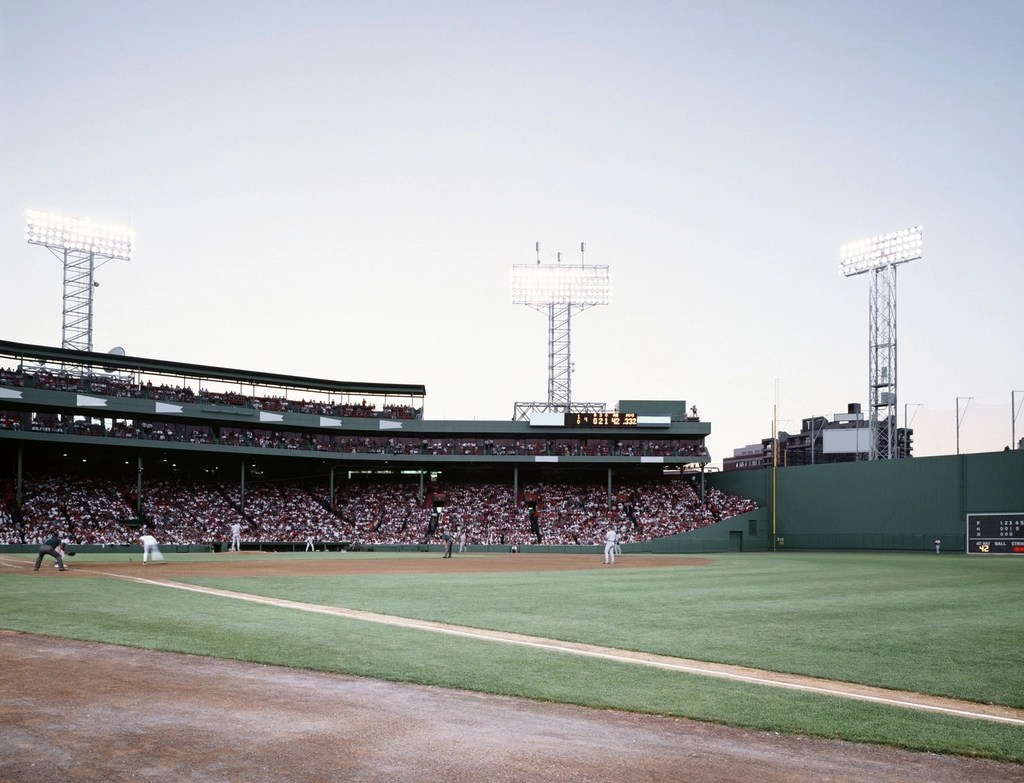
Honorable Mentions: Love Letters to the Game
For Love of the Game (1999)
Kevin Costner’s second great baseball film finds him playing aging Detroit Tigers pitcher Billy Chapel, who must decide whether to retire during what might be his final game. The film’s real-time structure, intercutting between Chapel’s perfect game and his relationship with Kelly Preston’s Jane Aubrey, creates an intimate portrait of a man facing the end of his career and the love of his life simultaneously.
What makes “For Love of the Game” special is its understanding that athletic greatness requires a kind of selfishness that often destroys personal relationships. Chapel’s ability to “clear the mechanism”—to block out everything except the task at hand—has made him a great pitcher but a difficult partner. The film treats both his baseball genius and his emotional limitations with equal sympathy.
Trouble with the Curve (2012)
Clint Eastwood’s Gus Lobel represents the old school of baseball scouting, relying on instinct and experience rather than statistics. When his eyesight begins to fail, his daughter Mickey (Amy Adams) accompanies him on what might be his final scouting trip. The film becomes a meditation on tradition versus innovation, on the value of human intuition in an increasingly data-driven world.
“Trouble with the Curve” serves as a perfect counterpoint to “Moneyball,” arguing that while statistics can reveal hidden truths, they can’t capture the intangible qualities that separate good players from great ones. The film’s father-daughter relationship provides its emotional center, showing how the game can both divide and unite families.
The Rain Delay Generation
These films became the default programming for a generation that grew up in the cable television era. When weather postponed games, when nothing else was on, when you needed comfort food for the soul, these movies were always there. They became part of the rhythm of American life, as reliable as the seventh-inning stretch and as comforting as the crack of the bat.
The repetitive viewing that came with rain delays and lazy afternoons allowed these films to burrow deep into our consciousness. We learned their dialogue by heart, anticipated their plot beats, and found new details with each viewing. They became part of our shared cultural vocabulary, a common language that connected baseball fans across generations and geography.
Beyond the Diamond
The greatest baseball movies understand that the game is never really about the game. It’s about fathers and sons, about dreams deferred and dreams fulfilled, about the possibility of redemption and the pain of failure. These films use baseball as a lens through which to examine American values, American dreams, and American disappointments.
They remind us that in a world of increasing complexity and cynicism, there’s still something pure and hopeful about the idea that this might be the year, this might be the game, this might be the moment when everything changes. They understand that baseball, at its best, is a metaphor for life itself—full of failure and frustration, but always holding out the possibility of magic.
In the end, these movies don’t just capture the game of baseball; they capture the game of life, with all its comedy and drama, all its heartbreak and hope. They remind us why we fell in love with the game in the first place, and why we keep coming back, season after season, year after year, believing that this time might be different.
Play ball.

 BFWClassroom
You must be logged in to post a comment.