With Ted Lasso back on Apple TV+, there’s something worth talking about beyond the football field and the redemption arcs. Beneath the show’s narrative charm sits an intentional, thoughtful collection of literary references that reveals something crucial about good teaching, good coaching, and the power of matching the right book to the right person at the right moment.
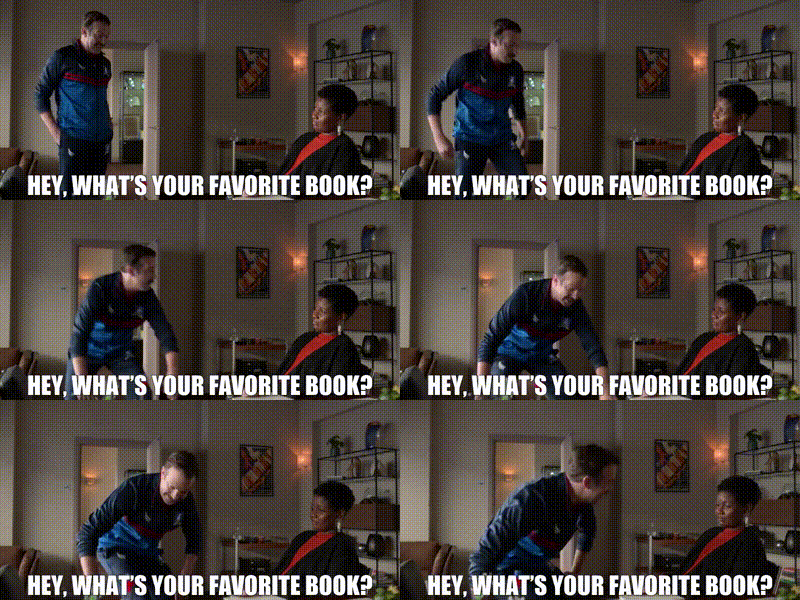
The show isn’t subtle about this. In Season 1, Ted doesn’t just hand out books because he’s quirky; he gives each player a carefully selected text. Roy receives A Wrinkle in Time because he needs to understand leadership; Sam gets Ender’s Game because he needs permission to step out of the shadows; Jamie receives The Beautiful and the Damned because he desperately needs a reckoning with wealth, status, and moral consequence. Ted understands what every good educator knows; reading is never just about transferring information. Reading is about holding up a mirror, asking difficult questions, and offering a protagonist whose struggles echo our own. This makes Ted Lasso’s approach to literature worth examining from an educational perspective.
Reading as Relationship
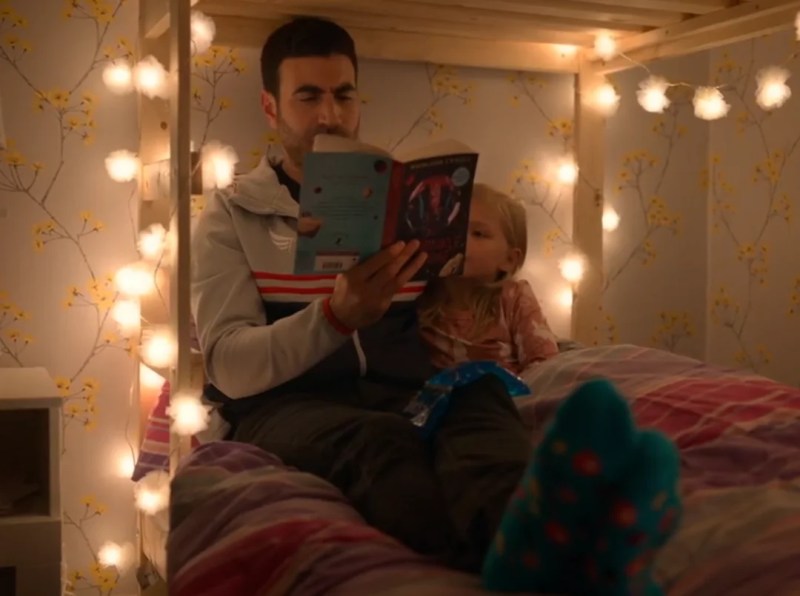
One reason Ted Lasso’s literary references land so effectively is that the show never treats books as mere decoration. A book is not a prop; it’s a relationship between reader and text. When Roy sits down with A Wrinkle in Time, we watch him struggle through passages about a girl’s burden of leadership. His niece asks him to read aloud, and he encounters this line: “What do you understand? That it has to be me. That it can’t be anyone else.” Roy’s response isn’t theatrical; it’s visceral. He recognizes himself in Meg, in that resistance and reluctance and the terrible weight of being needed.
For teachers, this is the animating principle we chase every time we teach a text; that moment when a student sees themselves in the pages. Not all students find themselves in the same book, which is why the show’s diversity of selections matters. Sam gets science fiction about underestimation; Roy gets fantasy about reluctant heroines; Jamie gets modernist fiction about moral decline; Coach Beard becomes a voracious reader of sports psychology, memoirs, and ecology. The reader determines what sticks.
In our classrooms, we’re not trying to make all students love the same books; we’re trying to help each student find a book that sees them, that asks them to think differently, that offers them a character or an idea they can’t un-encounter. Ted Lasso models this beautifully, and it’s something we can emulate in our own classroom libraries and reading selections.
Coach Beard’s Intellectual Arc
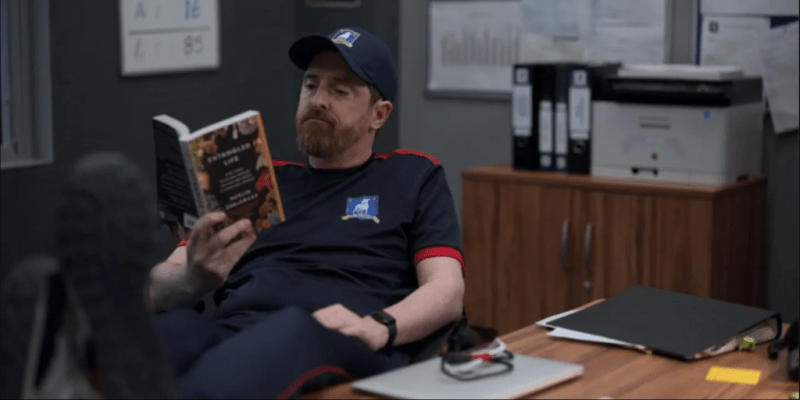
If Roy’s arc tracks his reading journey, then Coach Beard’s books tell a story about intellectual development and leadership grounded in learning. Beard reads voraciously, and his selections reveal a man committed to understanding systems, strategy, and human behavior. He studies Inverting the Pyramid (football tactics and history), Quiet Genius: Bob Paisley, British Football’s Greatest Manager (leadership through understatement), Fever Pitch (Nick Hornby’s memoir about obsession and belonging), and Entangled Life (Merlin Sheldrake on mycology and symbiosis).
What makes Beard’s reading significant is how it shapes his coaching. His books function as a professional learning pathway. He references Dr. Suzanne Simard’s field work on forest ecosystems—where trees don’t compete for light but work in harmony through underground fungal networks—to teach Nate about collaboration over competition. Later, he reads more deeply through Simard’s memoir Finding the Mother Tree and Sheldrake’s Entangled Life, building a coherent intellectual project around the idea that strength comes through connection.
For teachers, Beard’s reading life offers a model; a teacher’s reading shapes how and what they teach. The texts we’re reading in our own time, the ideas we’re wrestling with—all of that flows into our classrooms. We become more thoughtful educators when we’re engaged readers ourselves.
Literature and Character Development
Beyond what the show explicitly teaches us about reading, there’s a subtler lesson; how books function as character arcs themselves. The characters who grow the most in Ted Lasso are the characters who are reading. Jamie throws The Beautiful and the Damned in the trash upon receiving it, rejecting the mirror the book offers—a choice that reflects his resistance to self-awareness; in contrast, Roy receives A Wrinkle in Time and genuinely reads it, eventually sharing it with his niece and discovering himself in its pages. Beard moves from reference books on coaching tactics to expansive reading across sports, philosophy, and ecology; Ted constantly references literature—from Anne Lamott to Walt Whitman—which reveals a mind shaped by reading.
In contrast, Rupert lives in a sterile apartment with no books. It’s not an accident. The absence of reading signals something important about his interior life; he’s closed off, static, unable to imagine other ways of being.
For classrooms, this is a powerful cultural message we can amplify; reading changes you. It expands your capacity for empathy, opens you to new ideas, and creates connection to other people. Students who see reading as part of their identity become different people than students who see reading as an assignment. Ted Lasso makes that visible.
Matching Texts to Readers: A Lesson in Differentiation
The deliberate pairing of books with characters demonstrates something crucial about differentiated instruction. Not every student needs to read the same text to grapple with the same thematic territory. A student wrestling with perfectionism and invisibility might find their answer in Ender’s Game; another might encounter it in Miss Peregrine’s Home for Peculiar Children; a third might need The Iron Man by Ted Hughes. The theme—belonging, value, unexpected strength—persists across all three, but the narrative entry point shifts based on the reader.

This is what differentiated instruction actually looks like in practice. The show also suggests something about trust. Ted doesn’t hand Roy A Wrinkle in Time with a lecture about why Roy needs to read it; instead, he simply offers it and lets Roy discover the resonance for himself. There’s humility in that choice. As educators, we spend a lot of time being explicit about why a text matters; there’s something to be said for occasionally trusting students to find their own connections without our interpretive scaffolding.
From Classroom to Professional Community
But this philosophy of reading and character development doesn’t stop at the classroom door. What if we extended it into our professional learning communities, building leadership development around carefully chosen texts rather than compliance-focused workshops?
Consider a PLC organized around Entangled Life, Finding the Mother Tree, or Bird by Bird. Teachers read not because they’re required to, but because the book addresses something real in their practice; how to grow incrementally, how to think systemically, how to recognize interconnection. A book discussion centered on forest ecosystems and symbiosis isn’t peripheral to school culture; it’s central to how teachers understand collaboration over competition, mutual support over isolated excellence.
This is unconventional staff development, but it’s exactly what Ted Lasso models. Leaders are readers. When teachers engage with texts that explore growth, resilience, and redefined masculinity; when they discuss A Wrinkle in Time not as a student assignment but as a mirror for their own leadership struggles; when they recognize themselves in Beard’s intellectual curiosity—they become different educators. The books shape not just what they teach, but who they are in relationship to their students and colleagues.
A school library curated from Ted Lasso’s references sends a clear message; that intellectual engagement is how we develop as leaders and human beings. That character isn’t separate from competence; it’s inseparable from it. That the work of teaching, like the work of coaching, is fundamentally about connecting people to ideas and to each other in ways that help them become who they need to be.
A Complete Reading List
If you want to start exploring these titles, here’s a quick reference guide organized by theme:
For Teaching Leadership and Reluctant Heroes:
- A Wrinkle in Time by Madeleine L’Engle (Roy’s arc; burden of leadership)
- Ender’s Game by Orson Scott Card (Sam’s growth; overcoming underestimation)
- The Iron Man by Ted Hughes (challenging toxic masculinity)
- Coach Wooden’s Pyramid of Success by John Wooden and Jay Carty (foundational coaching philosophy)
For Teaching Strategy, Systems, and Interconnection:
- Inverting the Pyramid by Jonathan Wilson (tactics and sports history)
- Quiet Genius: Bob Paisley, British Football’s Greatest Manager by Ian Herbert (leadership through understated presence)
- Fever Pitch by Nick Hornby (obsession, belonging, and sports culture)
- Entangled Life by Merlin Sheldrake (symbiosis and interconnection)
For Teaching Self-Discovery and Philosophical Inquiry:
- The Dharma Bums by Jack Kerouac (solitude and spiritual seeking)
- Bird by Bird by Anne Lamott (working incrementally toward your goals)
- Leaves of Grass by Walt Whitman (curiosity and non-judgment)
- The Da Vinci Code by Dan Brown (puzzle-solving and intellectual engagement)
For Teaching Moral Consequence and Character:
- The Beautiful and the Damned by F. Scott Fitzgerald (wealth and moral decline)
- Shoeless Joe by W.P. Kinsella (dreaming and redemption)
- One Flew Over the Cuckoo’s Nest by Ken Kesey (individualism and systems)
For Teaching Community and Belonging:
- Miss Peregrine’s Home for Peculiar Children by Ransom Riggs (fitting in when you’re different)
- Calvin and Hobbes by Bill Watterson (childhood, imagination, and wisdom)
- The Princess Bride by William Goldman (true love and adventure)
Many of these titles are available in classroom-friendly editions and come with robust teaching resources. Using Ted Lasso as a cultural bridge to these texts opens new possibilities for why students might care about reading them; and once they’re in, the books themselves do the rest.
Have you watched Ted Lasso? Are there books from the show you’re adding to your classroom or professional library? I’d love to hear which titles resonate most with your teaching practice. Share in the comments below.
Note on Images and Video Content: All images and video content featured in this post are the intellectual property of Warner Bros. Entertainment and Apple TV+. These materials are used for educational and critical commentary purposes only. Ted Lasso is an Apple TV+ original series developed by Jason Sudeikis, Bill Lawrence, Brendan Hunt, and Joe Kelly.


You must be logged in to post a comment.