For the April Creative Challenge Adobe Express in your classroom, combine images from the nasa photo library to help teach Alignment + Juxtaposition to students. If you have never done this in your classroom, follow the link to see a walk thru activity for all three image options. adobe.ly/aprilchallenge26
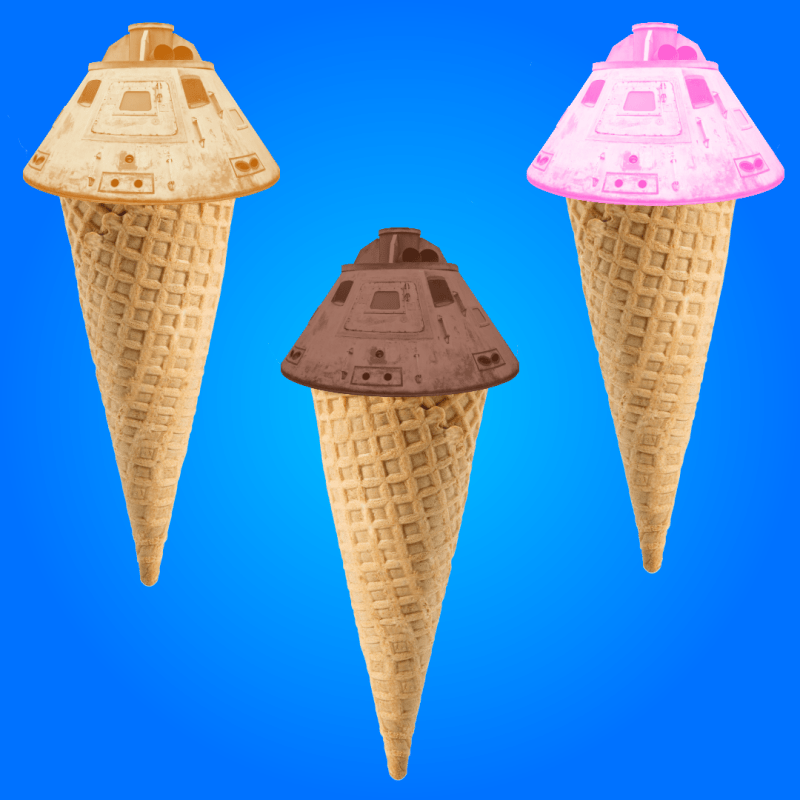
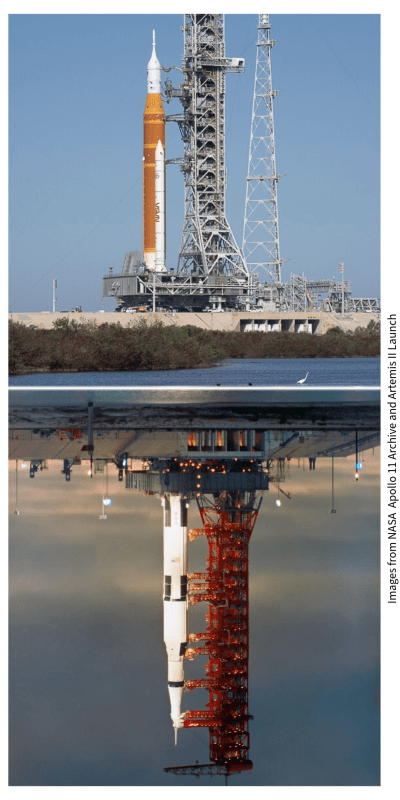
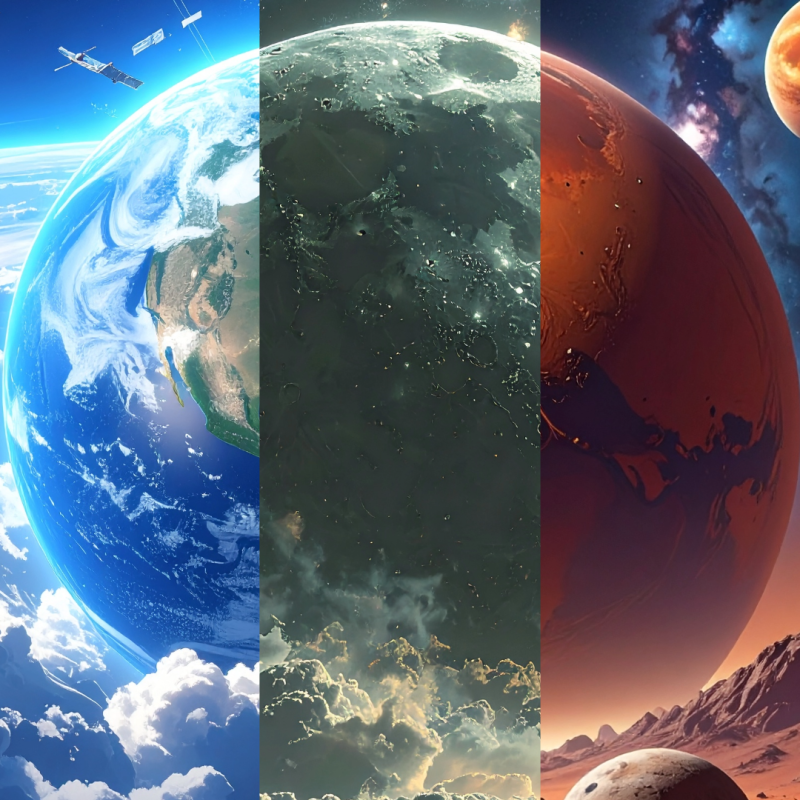
My space-themed images used a combination of resources. As always, when completing a challenge or using it in your classroom, be sure to check the Adobe Cloud Library for available images. For the Command Module cones, I simply erased the top ice cream scoops and replaced them with images of the Command Module that were color-changed. The mirror image uses NASA archive images that I downloaded and gave credit to. For the planetary triptych, I used the Generate Image tool and changed it to depict the Earth, Moon, and Mars.
Other creative ideas for the month of April
lassroom Idea Sparks for April
April arrives loud and layered. It is School Library Month and National Poetry Month; it is Earth Day and Arab American Heritage Month; and it is, if you are paying attention, one of the best months of the year to hand students a blank canvas and a reason to fill it. The ideas below are designed to remix easily across grade levels, content areas, and creative comfort zones, so take what fits and leave what doesn’t.
School Library Month
Libraries are more than buildings. They are arguments, made in paper and spine and quiet light, that knowledge belongs to everyone. These activities invite students to make that argument in their own voice.
- Design a “My Library Story” Poster: Students create a visual love letter to their school library, capturing what it means to them as a space for discovery, belonging, and creative risk. Encourage them to move beyond the literal (books, shelves) and into the emotional; the best submissions will surprise you.
- Create a Librarian Spotlight Video: Students interview and celebrate their school librarian or library staff through a short tribute video that documents their impact on the school community. This works beautifully as a paired project with your school’s journalism or media production students.
- Build a “What’s Next?” Reading Campaign: Students design bookmark sets, shelf-talkers, or social media graphics that promote their favorite reads and invite peers into new genres and stories. Consider framing this as a real campaign with a real audience: hang the finished pieces in the library itself.
- NEW — Design a “Banned but Not Gone” Display: Students research a challenged or banned book and design an informational card or digital poster that tells the book’s story, its ideas, its history, and why readers still seek it out. A powerful conversation starter for media literacy and intellectual freedom.
National Poetry Month
Poetry is the original multimedia art form; it has always been about sound, image, breath, and meaning arriving at the same moment. Adobe Express gives students the tools to make that collision visible.
- Design a Visual Poem: Students pair original or found poetry with intentional design choices (typography, color, imagery, and layout) to create a piece where the words and the visuals are doing equal work. The constraint here is the point: if you can remove the design and the poem still lands, the design isn’t finished yet.
- Create a Blackout Poetry Poster: Students transform a page of source text into visual art by selectively revealing words and designing around them. This is a perfect blend of literary analysis and design thinking, and it scales beautifully from struggling readers to AP students.
- Produce a Spoken Word Video: Students write and perform an original poem, then layer it with visuals, music, and motion to create a short film that brings their voice to life. The addition of audio and image forces revision in the best possible way; students will rewrite lines they would never touch on a worksheet.
- NEW — Build a Poet Portrait Series: Each student researches a poet from a culture, region, or time period outside their own, then designs a portrait card combining biography, a representative line or two (in their own summary), and visual choices that reflect the poet’s world. Display them as a gallery walk during the final week of April.
Earth Day (April 22)
Earth Day works best in the classroom when it moves students from awareness to agency. These activities are designed to develop argument, not just sentiment.
- Design a Campaign Poster: Students research an environmental issue they care about, local or global, and design a poster that informs, persuades, and calls their community to action. Hold them to the standard of real advocacy design: who is the audience, what do you want them to do, and does every visual choice serve that goal?
- Create an Infographic: Students visualize environmental data to tell a story that makes complex information accessible and compelling. Pair this with a sourcing requirement; students should be able to identify where every number came from.
- Build a “Future Earth” Vision Board: What does a thriving planet look like in 2050? Students design a vision board that imagines solutions rather than cataloguing problems. This is a useful counter-weight to the despair that can settle over climate conversations; good design is, by nature, an act of hope.
- NEW — Design a “Local to Global” Cause Map: Students identify one environmental issue visible in their own community (a polluted creek, a food desert, a lost green space) and design a visual that connects it to a larger systemic cause. This grounds global conversation in local observation, which is where civic action actually begins.
Arab American Heritage Month
Arab American Heritage Month is a chance to do more than surface-level spotlight work. The best projects here will push students to engage with complexity, nuance, and the full range of Arab American experience across history, arts, science, and public life.
- Create a Cultural Spotlight: Students research and celebrate the contributions of an Arab American in science, art, literature, or activism by designing a digital tribute that honors their story with the same care and craft given to any major figure. Provide a diverse list of options so students encounter people they have not seen in textbooks.
- Design a Storytelling Card: Students highlight an Arab American changemaker through a designed card that combines portraiture, key facts, and intentional visual storytelling. Consider displaying these as a set; the collection is more powerful than any single card.
- NEW — Map the Diaspora: Students research the geography, history, and culture of the Arab world and design an annotated map or visual timeline that traces Arab American immigration and community-building in the United States. This works especially well in a U.S. History or World History context as a research-to-design project.
A Note on Implementation
Every idea above works as a standalone one-day spark or as the anchor for a multi-week project. Adobe Express handles the design side cleanly, but the strongest student work will come when the design prompt is attached to a real research question, a real argument, or a real audience. Give students a reason to care about how something looks, and they will surprise you every time. And as always, thanks to Adobe Express


You must be logged in to post a comment.