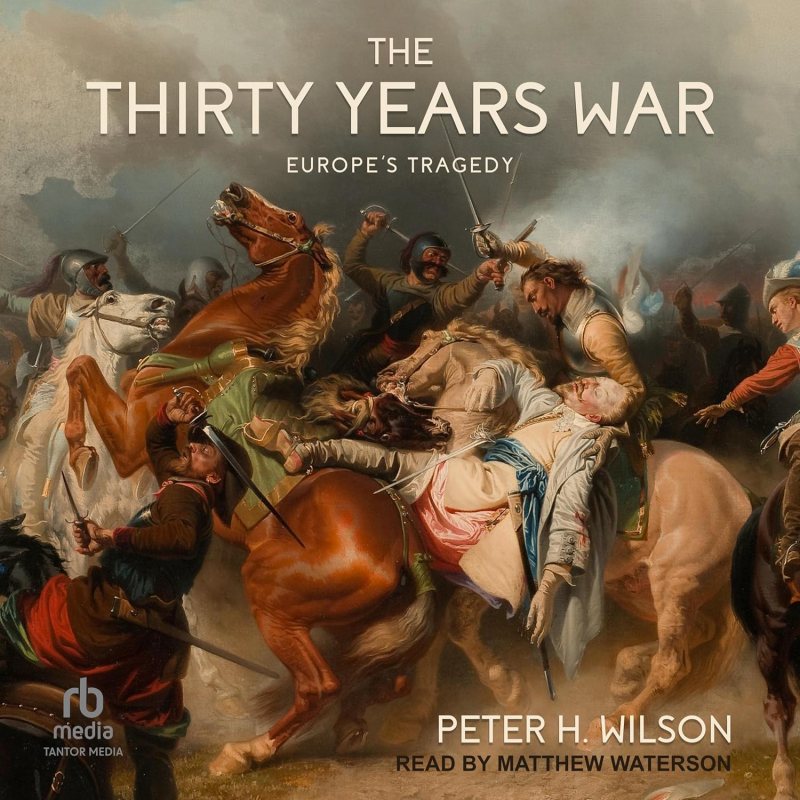
By Peter H. Wilson Publisher: Belknap Press / Harvard University Press (2009,2011) Audiobook (2023)
Rating: ★★★★★ (Historical Scholarship) | ★★★★☆ (Classroom Use)
Audience: Advanced High School to Undergraduate Level
Recommended for: AP European History, World History, and Advanced English Language Arts courses
Why This Book Matters for Social Studies Classrooms
Peter H. Wilson’s The Thirty Years’ War: Europe’s Tragedy is what historians call a “fat boy” — and proudly so. Clocking in at over thirty-three hours in audiobook format, this monumental work covers one of European history’s most consequential and misunderstood conflicts with the kind of exhaustive, nuanced analysis that serious students of history genuinely need. For educators teaching the formation of modern Europe, the development of the state system, or the roots of religious and political conflict, this book delivers something rare: a complete reckoning with a war that remade an entire continent.
Wilson’s central argument challenges nearly everything students think they know about this conflict. Most approach the Thirty Years’ War (1618–1648) as a Protestant-Catholic religious war, a simplistic frame that Wilson systematically dismantles. What he reveals instead is far more interesting and far more instructive for contemporary students: a conflict that began as a localized religious rebellion in Bohemia before devolving, through shifting alliances built on power calculations rather than faith, into a continent-wide catastrophe that killed millions and reshaped European political geography for centuries.
A Masterclass in Historical Complexity
Wilson’s greatest contribution is his insistence that the Thirty Years’ War cannot be reduced to religious ideology. Yes, the Protestant-Catholic divide provided the initial spark and continued to shape rhetoric and recruitment throughout the conflict. But Wilson demonstrates with compelling clarity that the Franco-Swedish alliance, the maneuverings of the Habsburg imperial court, the Ottoman Empire’s peripheral involvement, and the conflicts between Poland and Russia all fed into what became a cascading system of interlocking engagements. As more battlefields opened, more powers joined; as more powers joined, more grievances accumulated; and as grievances multiplied, the original religious framing became less a cause than a convenient justification.
The book is particularly strong in explaining how the papacy during this era wielded enormous symbolic influence while possessing surprisingly little actual military or political power over the war’s trajectory. This is the kind of historical nuance that textbooks flatten into a single sentence, and Wilson refuses to let it disappear. Students who arrive expecting a simple narrative of papal armies versus Protestant reformers will leave with something far more sophisticated: an understanding of how institutional authority and actual power diverge, and what happens when they do.
The Peace of Westphalia: History’s Most Misunderstood Settlement
For educators whose students encounter the Peace of Westphalia in international relations or political science courses, this book provides essential context that most treatments ignore entirely. Wilson demonstrates that the peace negotiations, which lasted more than five years, were not a clean diplomatic resolution but a constantly shifting negotiation among parties whose battlefield fortunes changed even as diplomats argued. Alliance systems that had solidified during the middle years of the war continued to fracture and reform at the negotiating table itself, meaning that the final settlement reflected not some agreed-upon principle of state sovereignty but the exhausted pragmatism of powers who could no longer afford to fight.
Wilson also delivers one of the book’s most intellectually bracing sections in his treatment of how the war’s historical memory was subsequently manipulated. He explains that European powers in the years immediately following 1648 had strong financial incentives to exaggerate the populations of their territories, since reparations and restitution payments were calculated partly on the basis of how many people lived where. As a result, the primary documents from the war’s aftermath cannot be taken at face value. Modern research suggests that a substantial portion of the deaths attributed to the war’s violence were actually caused by plague; armies moving across the continent carried disease with them into communities that had no immunity, and the resulting mortality was staggering but distinct from combat casualties. Wilson’s methodological transparency here is itself a lesson in historical thinking.
Three Phases, One Classroom Strategy
Wilson structures the war in recognizable phases; the Bohemian, Danish, Swedish, and French periods follow the entry of successive powers into the conflict. For educators, this structure offers a useful classroom scaffold, though it comes with a critical caveat: the middle sixty percent of the book, covering the war’s operational details, is dense military and diplomatic history that rewards specialists more than general high school readers. The alliances of 1630 differ substantially from those of 1640, and students who skip the middle sections will arrive at the Peace of Westphalia without understanding why the participants at the table were sitting where they were.
The practical recommendation, tested against the book’s actual content, is this: assign or excerpt the opening sections, which cover the war’s origins and the interconnected religious, dynastic, and constitutional tensions of the late sixteenth and early seventeenth centuries; then jump to the final sections on the peace negotiations and their aftermath. The opening establishes the “why,” and the conclusion establishes the “what it meant.” Together, they give students a coherent arc without requiring them to track every siege and countermarch of the middle decades.
Social History and the Unexpected Details
One of the book’s most memorable qualities is Wilson’s attention to the social fabric of the era. He documents how tobacco smoking, practically unknown in Central Europe before 1618, had become a widespread habit among soldiers by the war’s end; the habit spread through armies regardless of their religious or national identity, crossing confessional lines that theology could not. Religious communities that condemned smoking as a moral failing found themselves debating the practice in ways that revealed the war’s capacity to dissolve social norms alongside political ones.
This kind of social history is gold for classroom instruction. It gives students a human-scale entry point into an otherwise overwhelming narrative and illustrates how warfare reshapes everyday life in ways that military history alone cannot capture. These details are also excellent prompts for analytical writing: how does prolonged conflict change the culture of the societies involved, and what does that change tell us about the relationship between war and social transformation?
The Audiobook Advantage (and Its Map Problem)
I listened to this book via audiobook, and I want to be direct about both why that format works well here and where it creates genuine difficulty. The book’s roster of historical figures is enormous, drawn from Scandinavian, German, Eastern European, French, Italian, and Spanish naming traditions; hearing those names spoken consistently by a skilled narrator is genuinely helpful. The narrator handles the linguistic variety with confidence, and that consistency matters when you are tracking dozens of commanders, diplomats, and rulers across three decades of conflict.
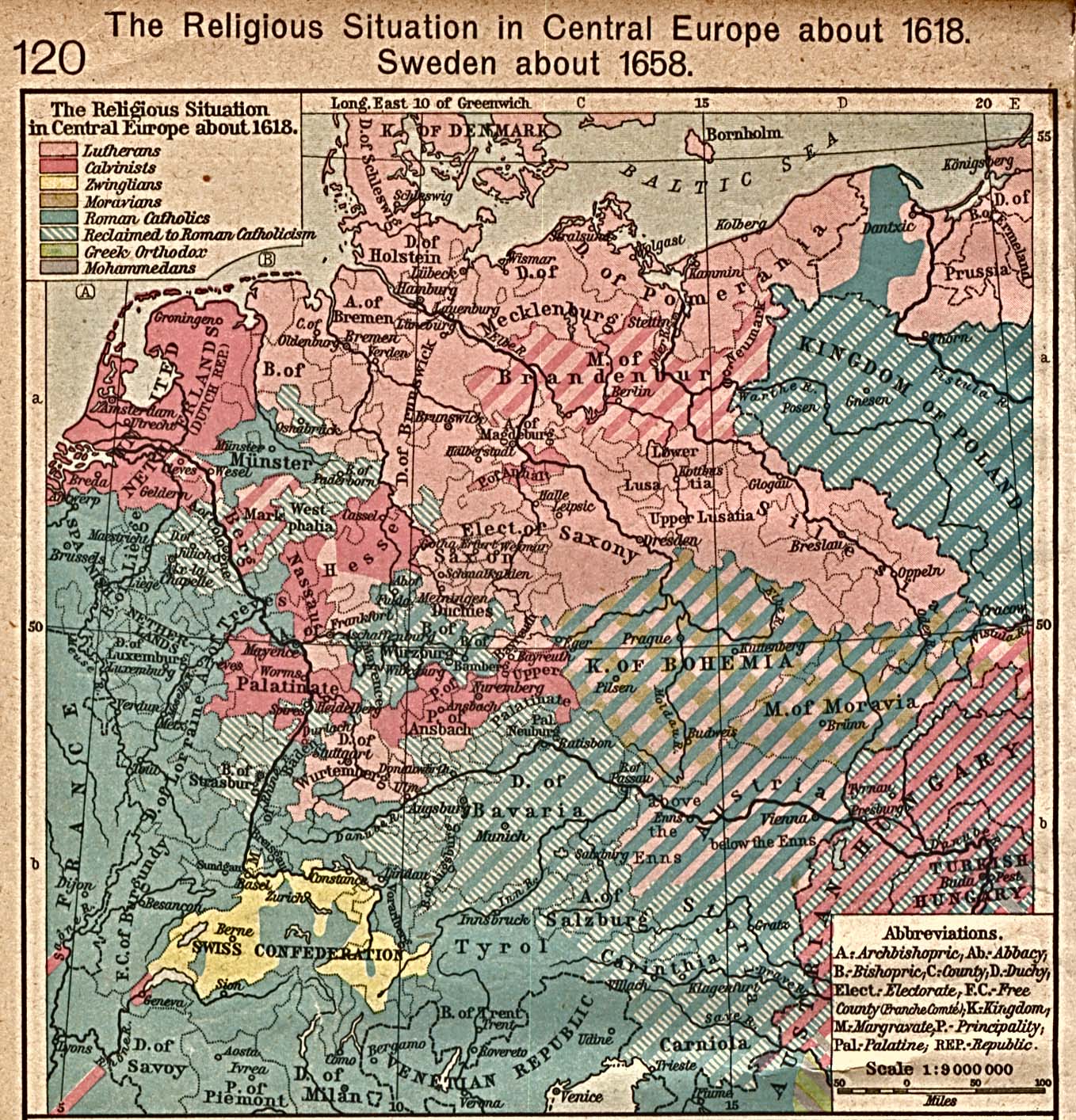
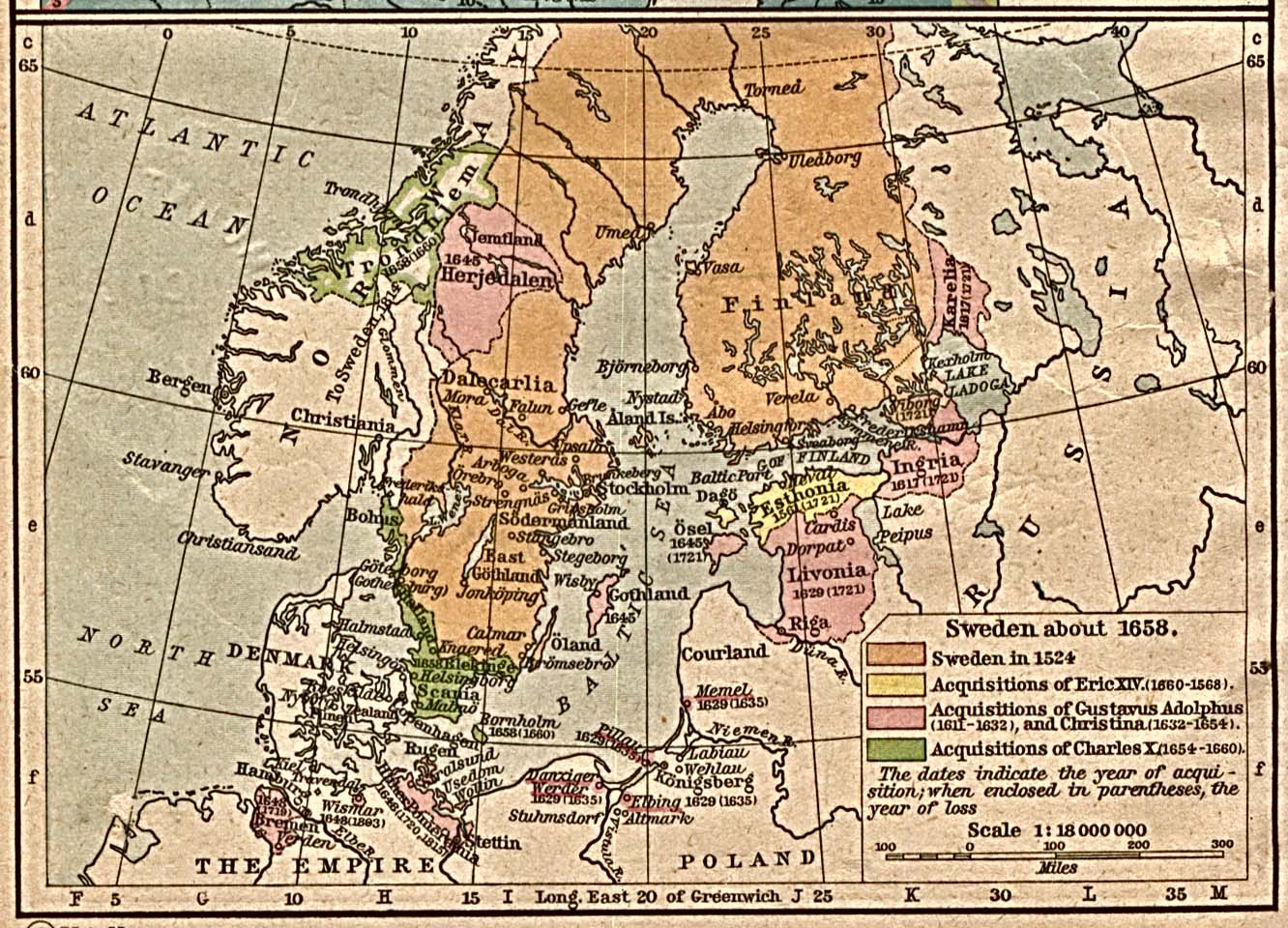
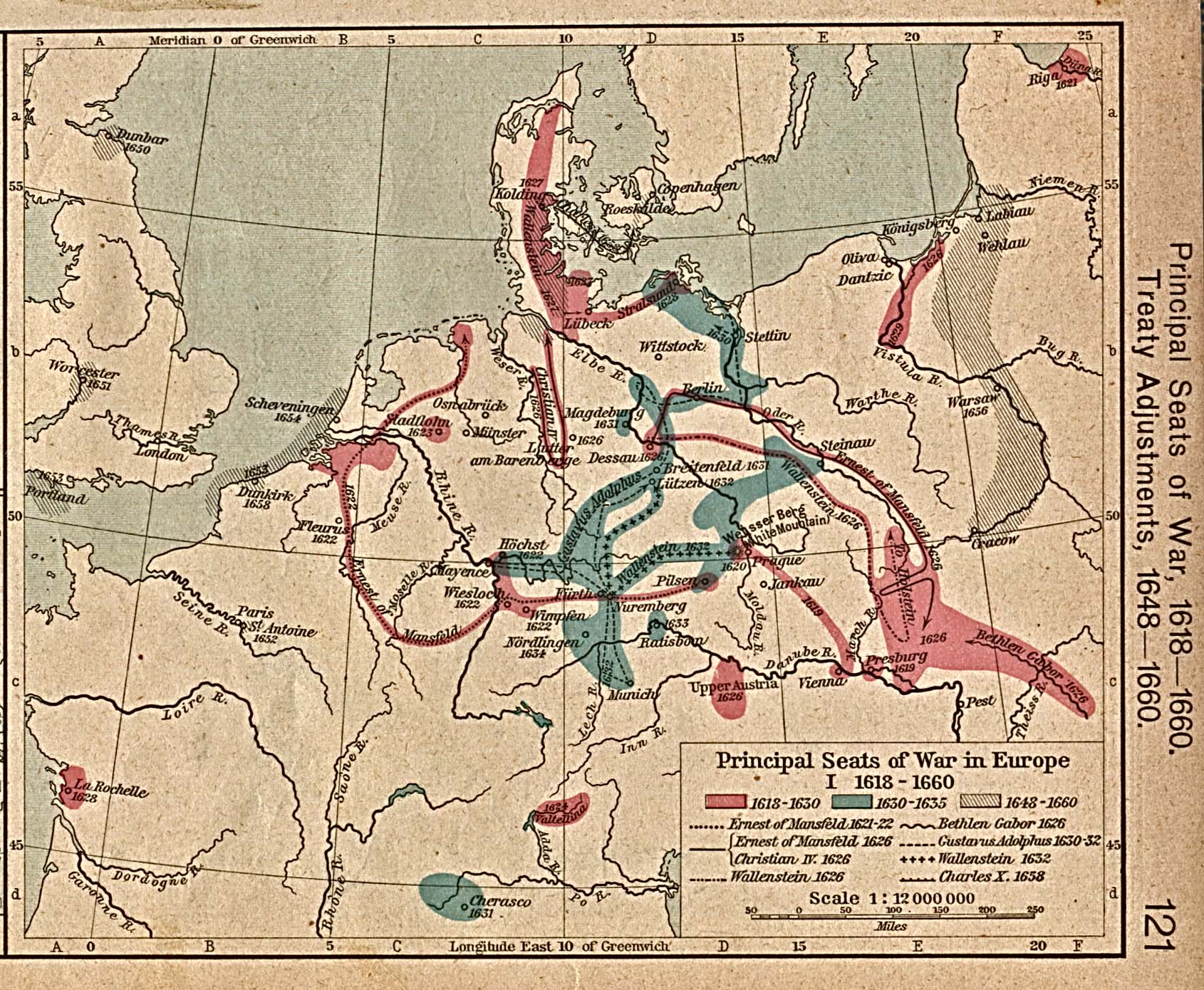
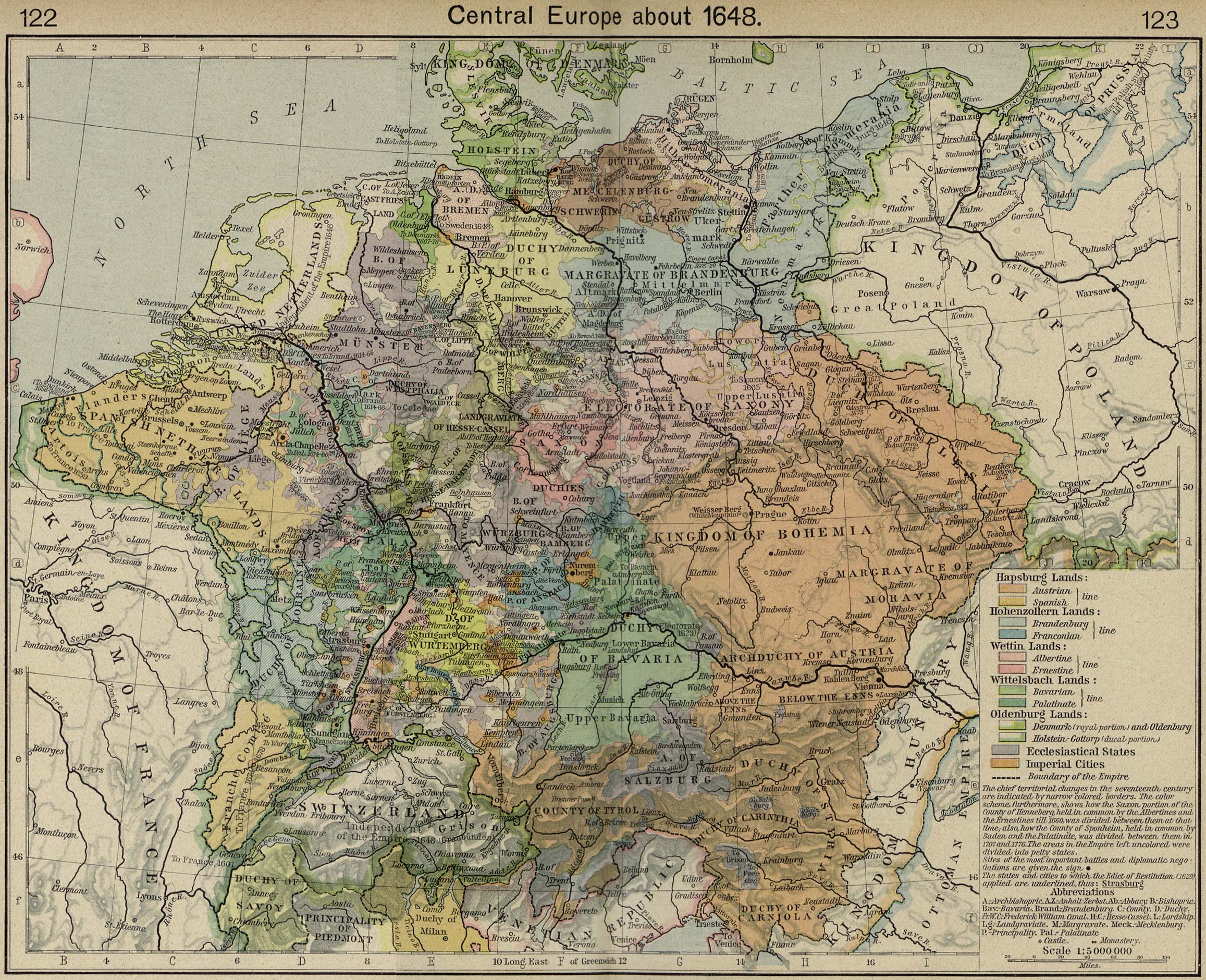
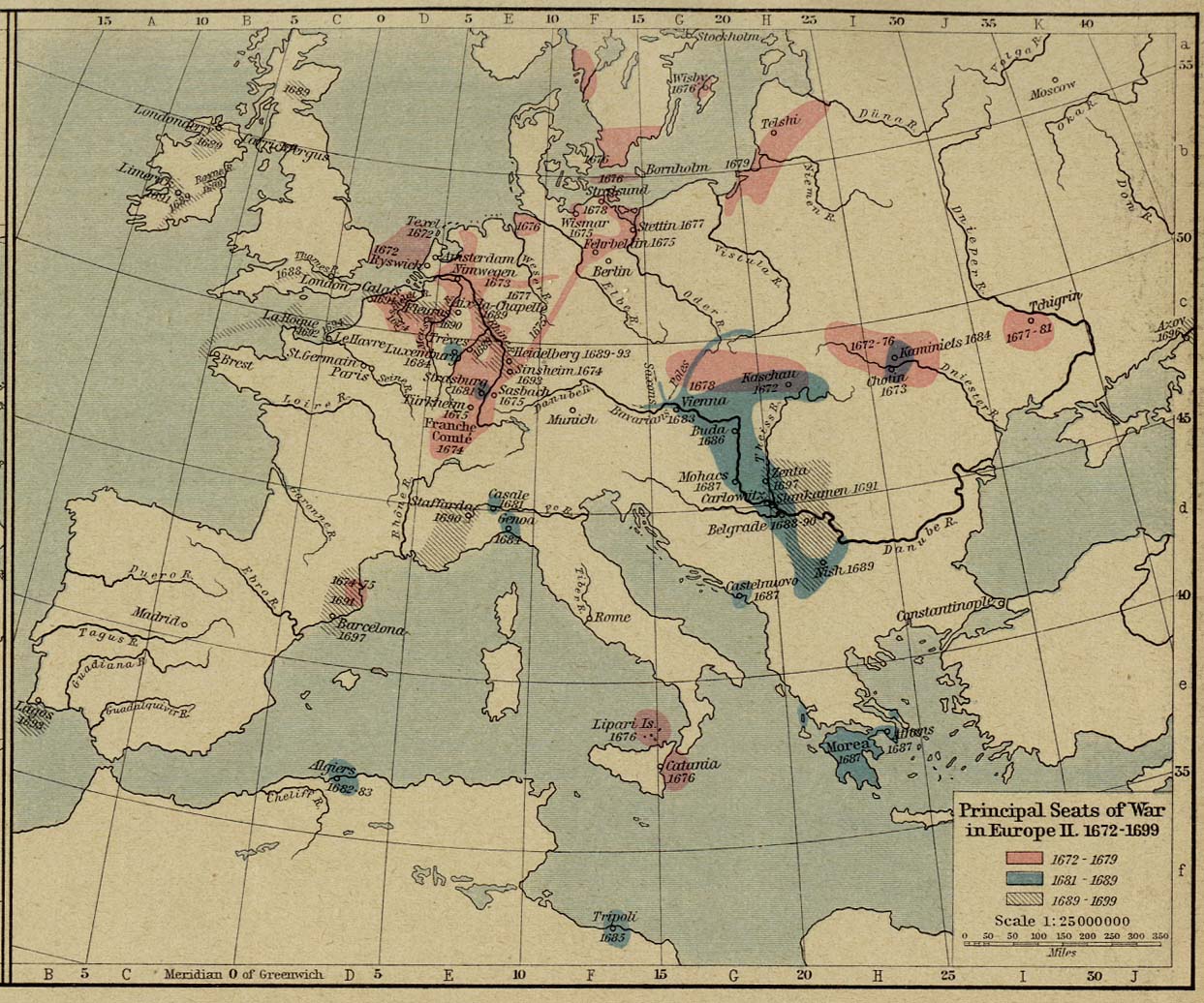
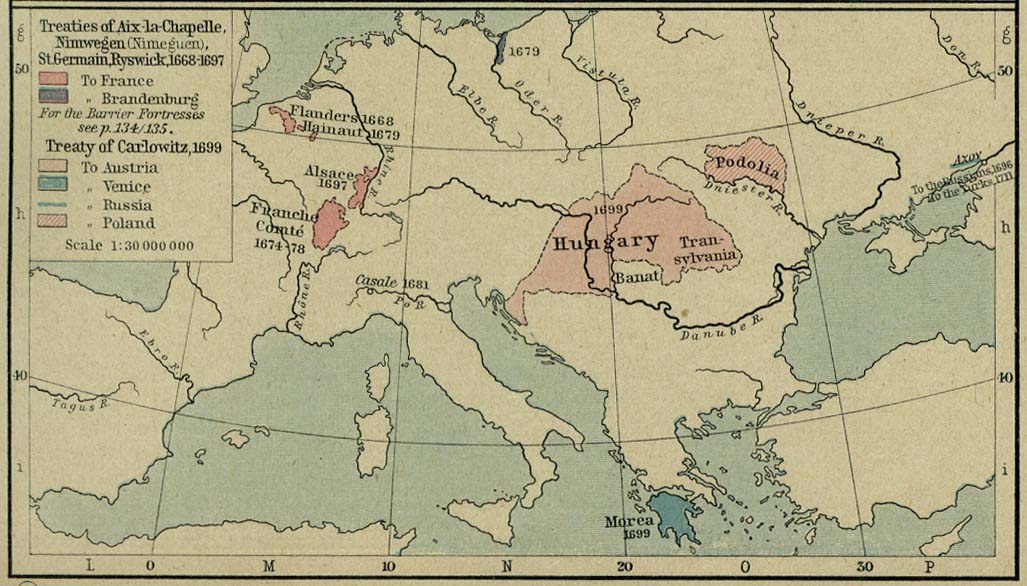
The limitation is equally real: the Thirty Years’ War was fought across a vast and shifting geographic theater, and without maps, the operational sections of the book become significantly harder to follow. Rivers serve as Wilson’s primary geographic anchors, and he uses them consistently, but listeners who do not already have a strong mental map of Central Europe will find themselves occasionally adrift. The practical solution is to maintain access to a set of period maps alongside the audiobook; maps showing the Holy Roman Empire’s political geography around 1600, the territorial changes through roughly 1635, and the final settlement of 1648 will pay dividends throughout. Free, high-quality options are available through university history departments and resources like the Perry-Castañeda Library Map Collection.
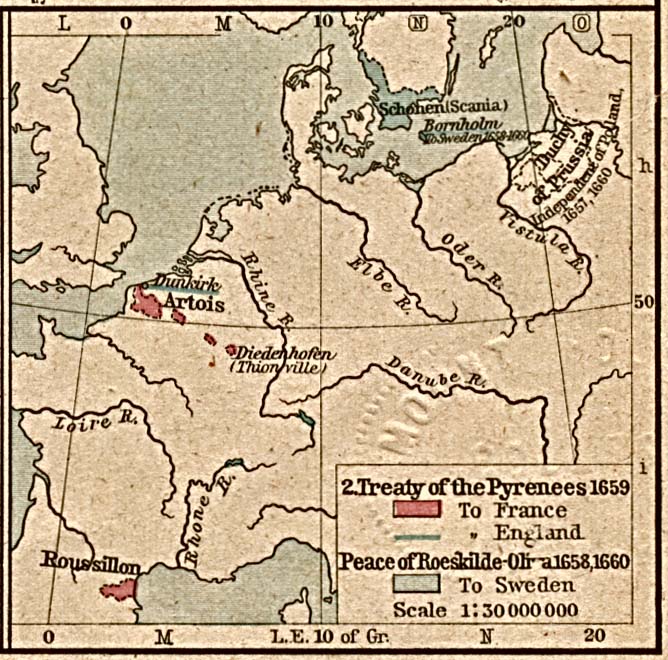
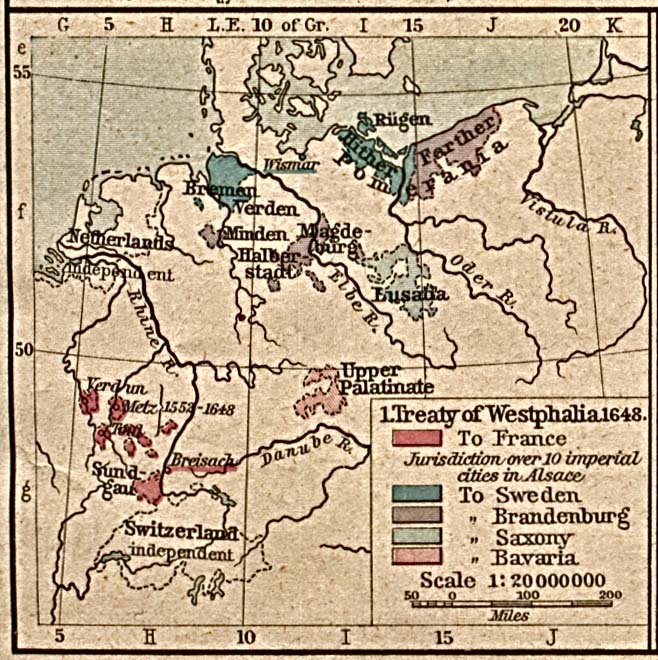
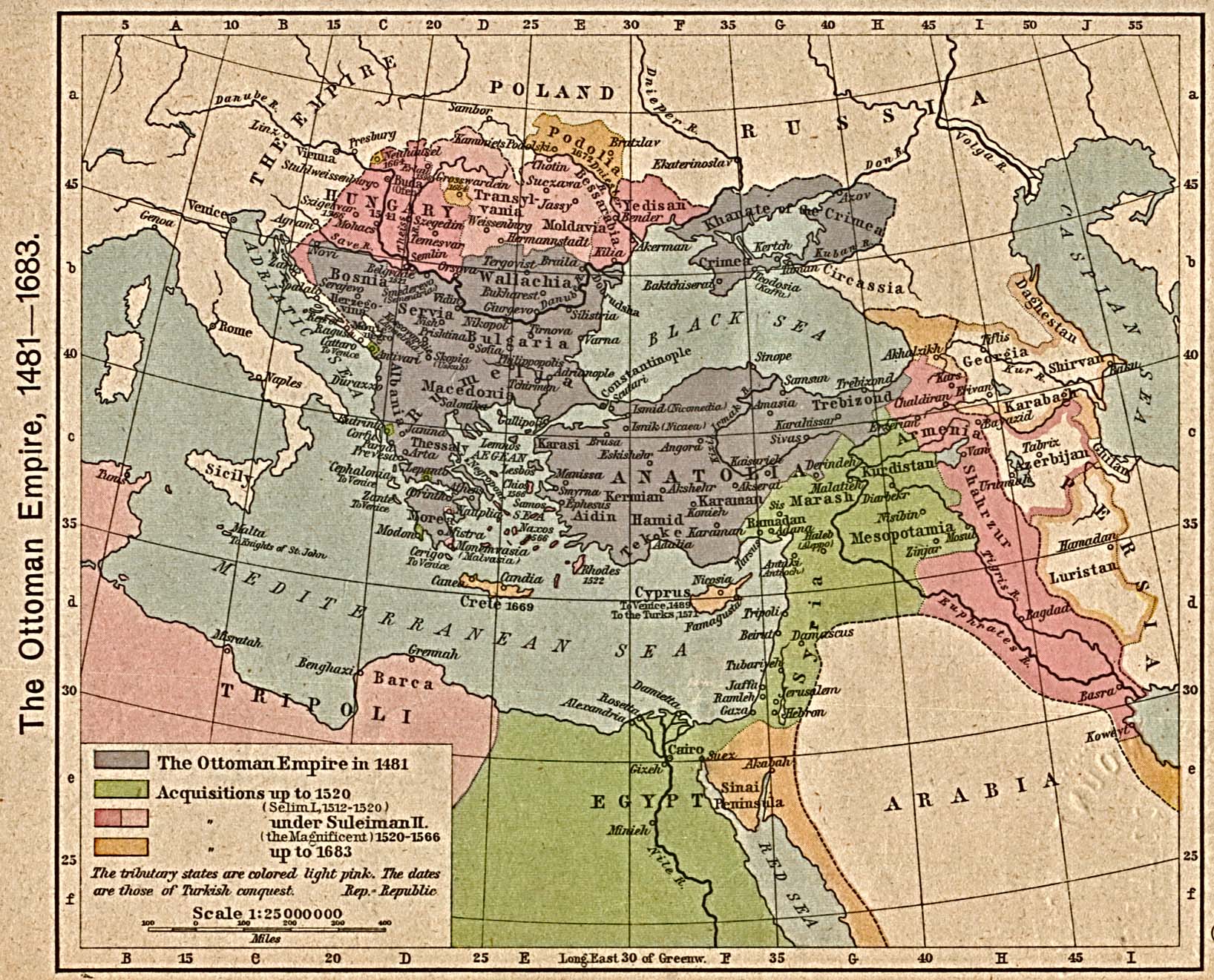
Suggested Maps from the Perry-Castañeda Library Map Collection.
The Religious Situation in Central Europe about 1618 (581K) [p.120] [1923 ed.]
Sweden about 1658 (387K) [p.120] [1923 ed.]
Principal Seats of War in Europe, I. 1618-1660 (581K) [p.121] [1923 ed.]
Treaty of the Pyrenees 1659 (194K) [p.121] [1923 ed.]Treaty Adjustments, 1648-1660. Treaty of Pyrenees, 1659; Peace of Roeskilde-Oliva, 1658, 1660
Treaty of Westphalia 1648 (258K) [p.121] [1923 ed.]Treaty Adjustments, 1648-1660. Treaty of Westphalia 1648.
Central Europe about 1648 (926K) [p.122-123] [1926 ed.]
The Ottoman Empire, 1481-1683 (581K) [p.124] [1923 ed.]
Principal Seats of War in Europe, II. 1672-1699 (276K) [p.125] [1926 ed.]
Treaty Adjustments, 1668-1699 (122K) [p.125] [1926 ed.]Treaties of Aix-la-Chapelle, Nimwegen, St. Germain, Ryswick, Carlowitz.
Classroom Applications and Discussion Opportunities
The Thirty Years’ War offers rich opportunities for advanced classroom engagement. The book’s treatment of historiography, particularly Wilson’s explanation of how and why the war’s memory was reshaped by subsequent generations, is excellent preparation for document-based question analysis. Students can examine primary sources from the war alongside Wilson’s methodological cautions and practice the critical reading skills that distinguish sophisticated historical inquiry from simple source acceptance.
The war’s alliance dynamics provide a compelling case study in realpolitik that connects naturally to later units on the Concert of Europe, World War I’s alliance system, and contemporary international relations. Wilson’s demonstration that religious ideology and power politics operated simultaneously, with neither fully explaining the war’s trajectory, gives students a model for analyzing complex historical causation that transfers across periods and topics.
For English Language Arts courses at the advanced level, Wilson’s integration of social history into military and diplomatic narrative offers a strong model for analytical writing that operates at multiple scales simultaneously. His capacity to move from the macrohistorical (why did France intervene in 1635?) to the microhistorical (what was daily life like in a besieged city?) without losing argumentative coherence is a skill worth naming and studying explicitly.
Areas for Classroom Consideration
Teachers should be candid with students about the book’s demands. The middle sections covering the war’s operational history require either strong prior knowledge of Central European geography or a committed willingness to pause and locate the places being discussed. The sheer number of historical actors, many sharing similar dynastic names across different branches of the same families, creates genuine cognitive load. These are not reasons to avoid the book; they are reasons to scaffold it carefully.
The book also assumes familiarity with the basic structures of the Holy Roman Empire, the confessional divisions established by the Peace of Augsburg in 1555, and the general contours of early modern European statecraft. It works best as a capstone text or a focused supplementary source rather than an introduction to the period.
Final Assessment
Peter H. Wilson’s The Thirty Years’ War: Europe’s Tragedy earns its reputation as the definitive English-language account of this conflict. Its five-star rating for historical scholarship is unambiguous; the depth of research, the methodological rigor, and the analytical sophistication place it in the company of the great works of European military and political history. The four-star classroom rating reflects not a weakness in the book but an honest accounting of what advanced high school students can navigate without substantial teacher support.
The book’s most lasting contribution for educators may be its insistence on complexity as a historical value rather than an obstacle. Students who work through Wilson’s argument will emerge with a genuine understanding of how religious conflict, dynastic ambition, economic desperation, and institutional collapse can combine to produce catastrophe, and why that combination has proven so durable as a pattern in modern history. From the perspective of a teacher preparing students to understand both seventeenth-century Europe and the twenty-first century world, that is exactly the right lesson.
Recommended for: AP European History students studying the formation of the modern state system; World History courses covering the religious and political conflicts of early modern Europe; advanced students seeking a model of rigorous, multi-causal historical argument; educators looking for a sophisticated treatment of the war that will anchor discussions of Westphalian sovereignty and international order.
About the Audiobook Edition
I listened to this book via Audible, and the narrator handles the book’s extraordinary linguistic variety with consistent skill. For a text covering Scandinavian, German, Eastern European, French, Italian, and Spanish historical figures, that consistency is no small achievement. My strong recommendation is to pair the audiobook with a set of period maps; the geographic dimensions of the conflict deserve visual support that audio cannot provide on its own. At over thirty-three hours, this is a serious commitment, and it rewards serious listeners in proportion.
Everything reviewed here I have personally read, screened, or listened to, and many of these resources have been part of my classroom for years. This site exists because teachers deserve practical recommendations from someone who has been in the room. That said, every school community is different; please consult your district guidelines before using any book, film, or podcast with students.
To read more of my reviews follow the link.


You must be logged in to post a comment.