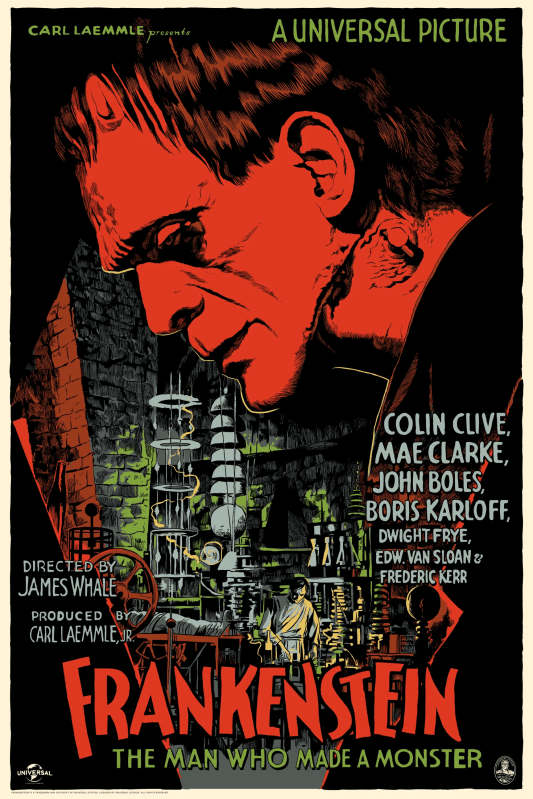
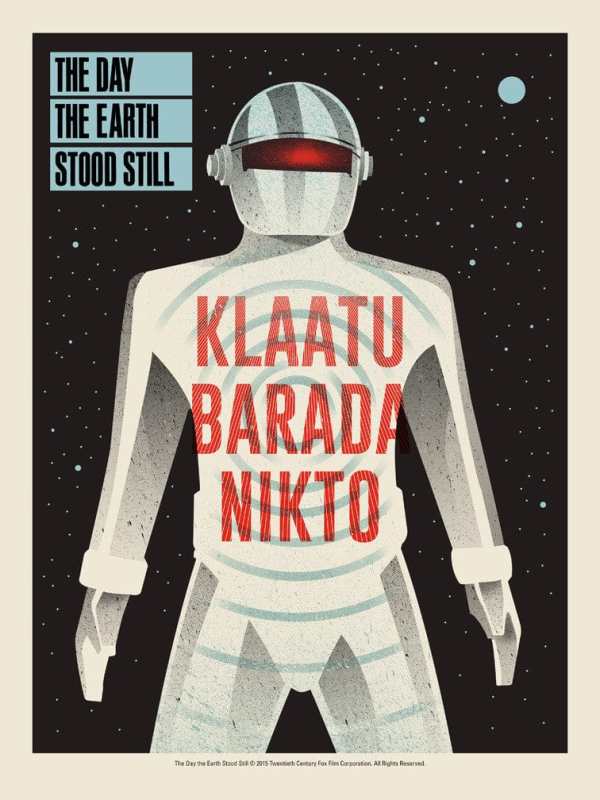
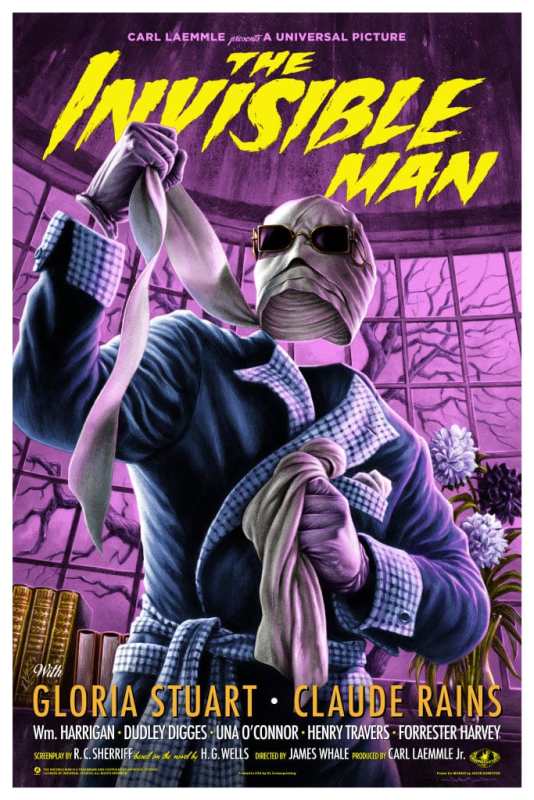
I’ve always had a soft spot for the classic monster and science fiction films of the 1930s through 1950s. There’s something about the moral complexity beneath the genre conventions that makes these films endlessly rewatchable and pedagogically rich. Over the past year, I’ve been developing a series of mock trial activities built around five classic films: Frankenstein (1931), The Invisible Man (1933), Dr. Jekyll and Mr. Hyde (1931), Invasion of the Body Snatchers (1956), and The Day the Earth Stood Still (1951). Each film offers a different lens on responsibility, justice, and the consequences of human choices; together, they create a powerful semester-long exploration of legal and ethical reasoning.
The Five-Film Series: A Progression of Responsibility
The beauty of this series lies in how it moves from individual to global questions of culpability and justice:
Frankenstein (1931) asks: Can a creator be held criminally responsible for their creation’s actions? This introduces students to questions of causation, negligence, and the duty of care. Henry Frankenstein makes something he cannot control; when it kills, who bears the guilt?
The Invisible Man (1933) explores: Is someone responsible for crimes committed while insane from a drug they chose to take? Jack Griffin’s monocane-induced madness raises questions about voluntary intoxication, the insanity defense, and power without accountability.
Dr. Jekyll and Mr. Hyde (1931) confronts: Can one personality be held responsible for another’s crimes? This is perhaps the most legally complex case in the series, touching on split personality disorders, voluntary transformation, and the limits of the insanity defense.
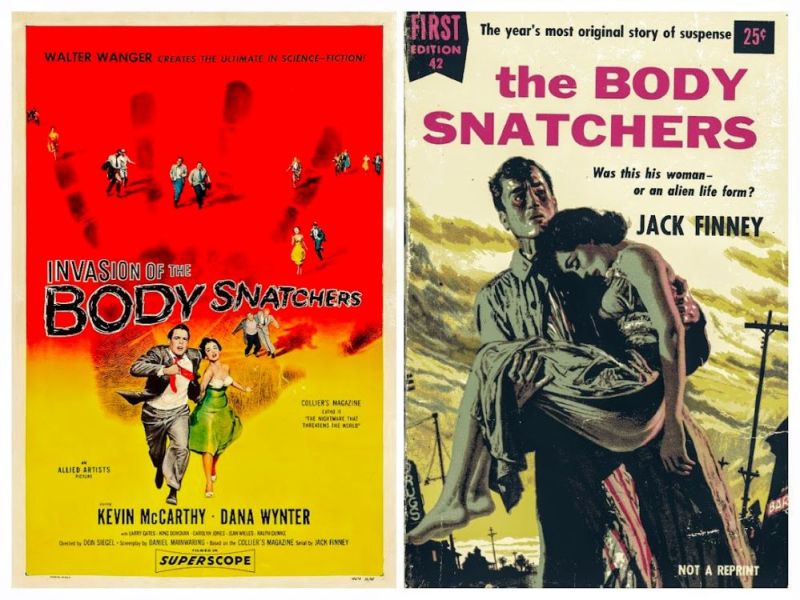
Invasion of the Body Snatchers (1956) challenges: Do pod people have legal rights, or can they be destroyed to protect humanity? This shifts from individual criminal responsibility to civil liberties, quarantine powers, and the definition of personhood itself.
The Day the Earth Stood Still (1951) escalates to: Does Earth have jurisdiction to prosecute an extraterrestrial emissary, and is Klaatu’s ultimatum terrorism or diplomacy? Students must grapple with international law, first contact protocols, and who speaks for humanity.
The progression is deliberate: we start with one person’s creation and end with the fate of the entire planet. Each film builds on concepts from earlier ones while introducing new complexities.
Why These Films Work Together
Shared Visual Language
All five films are black-and-white classics from the Golden Age of Hollywood. Three are from the early 1930s (Frankenstein, Invisible Man, Jekyll and Hyde), sharing the German Expressionist aesthetic and pre-Code sensibilities. Two are from the 1950s (Body Snatchers, Day the Earth Stood Still), reflecting Cold War anxieties. This consistency helps students focus on content rather than adjusting to wildly different filmmaking styles.
Accessible Length and Pacing
Each film runs 70-90 minutes, fitting comfortably into one or two class periods. The narratives are clear and linear, with strong cause-and-effect relationships that make evidence tracking straightforward. Students who struggle with dense reading can access these stories just as easily as advanced readers.
Format Flexibility: Beyond the Films
While the films work beautifully for this series, two of the stories offer additional media options that can diversify your classroom approach:
Frankenstein has excellent graphic novel adaptations that bring Mary Shelley’s original novel to life visually. If you want to change up media consumption or have students compare the 1818 novel’s more articulate Creature with the 1931 film’s mute Monster, graphic novel versions provide an accessible bridge. Students can track evidence from illustrated panels just as easily as from film scenes, and the visual format maintains the “shared evidence” advantage while introducing literary elements the film omits.
Dr. Jekyll and Mr. Hyde offers perhaps the most flexibility of any story in the series. Robert Louis Stevenson’s original novella is remarkably short and accessible; students can read the complete text in one to three class periods. Better yet, the text is in the public domain and freely available online, eliminating cost barriers. For classes where you want the benefits of close reading without overwhelming struggling readers, this is ideal. Additionally, several excellent audio versions exist on Audible and other platforms. Playing the audiobook in class while students follow along with the text combines listening comprehension with textual analysis, and the dramatic performances bring Jekyll’s transformation to life in ways that engage auditory learners. You could even mix formats: watch the 1931 film for evidence collection, then read selected passages from Stevenson’s novella to explore how the story changes across adaptations, or listen to key chapters on audio to compare narrative voice and perspective.
This format flexibility means you can tailor the series to your students’ needs and your instructional goals. Want to emphasize visual literacy? Use the films and graphic novels. Want to build traditional reading skills? Use the Jekyll and Hyde text. Want to support diverse learners? Combine film viewing with audio text and graphic novel excerpts. The mock trial structure works regardless of the medium, because students are still gathering evidence from a shared text and building arguments about responsibility and justice.
Contemporary Relevance
Every film connects to multiple current debates: AI liability (Frankenstein), surveillance technology (Invisible Man), addiction and criminal responsibility (Jekyll and Hyde), public health quarantines (Body Snatchers), and climate change enforcement (Day the Earth Stood Still). These aren’t dusty relics; they’re lenses for understanding today’s headlines.
The Power of Shared Evidence: Using Frankenstein as an Example
Here’s what makes using a film like Frankenstein particularly effective for mock trial activities: everyone is watching the same evidence. When students engage in this exercise, they’re not just playing roles—they’re analyzing a text they’ve all experienced together. The witnesses aren’t testifying about events they imagined or read in different ways; they’re recounting scenes they watched unfold on screen. Elizabeth, Victor Moritz, the Burgomaster—these witnesses are effectively watching themselves when they view the film, which creates a fascinating metacognitive layer to the activity.
This shared visual text levels the playing field. Students who struggle with dense reading comprehension can access the narrative just as easily as advanced readers. The film provides concrete evidence: we all saw Maria’s death, we all watched Henry’s obsessive behavior, we all witnessed the creation scene. There’s no ambiguity about what happened—only about what it means legally and morally.
Strategic Choice: The Prosecution’s Dilemma
What makes the Frankenstein mock trial (and several others in the series) even more engaging is the element of strategic choice I’ve built into the activity. The prosecuting attorney and their assistant must make a crucial decision at the outset: Do they bring charges against Dr. Henry Frankenstein, against the Monster, or against both?
This isn’t a small decision. It fundamentally shapes their entire case strategy:
- Charging only Henry Frankenstein means arguing that the creator bears sole responsibility for the deaths. The prosecution must prove criminal negligence, reckless endangerment, and that Henry’s actions directly caused harm. This approach raises questions about scientific responsibility and the duty of care.
- Charging only the Monster means treating it as a being with agency and moral responsibility. Can something created, not born, be held criminally liable? Did the Monster have free will? Was it capable of understanding right from wrong? This becomes a fascinating exploration of personhood and criminal capacity.
- Charging both defendants is the most complex route. The prosecution must argue that both parties share culpability while potentially navigating conflicting defense strategies. Henry might argue the Monster acted independently; the Monster might argue it was abandoned and had no guidance.
This prosecutorial choice forces students to think strategically before the trial even begins. They must consider what charges are most likely to result in conviction, what evidence supports each potential case, how the defense will respond, and what justice actually looks like in this situation.
The same strategic complexity appears in other films. For The Invisible Man, should prosecutors charge Jack Griffin even though he’s drug-induced insane? For Jekyll and Hyde, is Dr. Jekyll guilty of Mr. Hyde’s murders? For Body Snatchers, can you prosecute pod people, or are they victims themselves? Each film presents genuine legal ambiguity that mirrors real-world complexity.
Flexible Implementation Across the Semester
One of the strengths of developing five films is the flexibility it provides:
Use 3-5 Films Depending on Time: A semester-long debate class might use all five films. A shorter unit might focus on three: Frankenstein for creator responsibility, Jekyll and Hyde for the insanity defense, and Body Snatchers for civil liberties.
Rotate Films Year to Year: Keep the curriculum fresh by alternating which films you use. One year focuses on individual responsibility (Frankenstein, Invisible Man, Jekyll and Hyde); the next year emphasizes societal questions (Body Snatchers, Day the Earth Stood Still).
Offer Student Choice: After viewing all five films, let students choose which trial they want to participate in based on the legal question that interests them most.
Differentiate by Complexity: Frankenstein and Body Snatchers have clearer evidence trails and are good starting points. Jekyll and Hyde and Day the Earth Stood Still involve more complex legal theories and work well for advanced students or later in the semester.
Building the Case: Materials and Preparation
For each film, I provide students with structured materials that help them prepare effectively. Using Frankenstein as the model:
For Prosecutors:
- A charging document template where they must articulate specific counts and cite film evidence
- Witness examination guides that help them develop direct examination questions
- A timeline of events from the film to establish chronology
For Defense Attorneys:
- Case theory worksheets to develop their narrative
- Cross-examination strategy guides
- Legal precedent summaries (adapted for high school understanding) about creator liability, criminal intent, and capacity
For Witnesses:
- Character background sheets that include not just what they saw, but their relationship to the defendant(s), their motivations, and potential biases
- Scene-specific notes that help them recall details accurately
- Guidance on staying in character while being truthful to the film
For All Students:
- A viewing guide for the film that asks them to track potential evidence
- Basic legal terminology and courtroom procedure overview
- Discussion questions about responsibility, creation, and justice
The same structure applies across all five films, which means students become more proficient with each successive trial. By the time they reach Day the Earth Stood Still, they’re tracking evidence, anticipating counterarguments, and building legal theories with increasing sophistication.
Why This Works in a Debate Classroom
This activity succeeds because it combines several pedagogical strengths:
Critical Viewing Skills: Students must watch the film analytically, not just passively. They’re looking for evidence, evaluating character motivations, and identifying key moments that will matter in court.
Argumentation Development: Both sides must construct coherent arguments supported by textual evidence. The prosecution must prove guilt beyond reasonable doubt; the defense must create reasonable doubt or argue justification.
Perspective-Taking: When students embody witnesses, they must inhabit that character’s viewpoint, biases, and knowledge. Elizabeth sees Henry differently than Doctor Waldman does. The Burgomaster has different concerns than Baron Frankenstein.
Ethical Reasoning: The central questions—Who is responsible? What is justice? Where does scientific freedom end and moral duty begin?—have no easy answers. Students must grapple with genuine moral complexity.
Public Speaking Under Pressure: Cross-examination especially pushes students to think on their feet, respond to unexpected questions, and maintain composure while defending their position.
Cumulative Skill Building: With each film, students refine their abilities. The legal reasoning required for Frankenstein (causation, negligence) becomes the foundation for understanding Jekyll and Hyde (intent, voluntariness) and eventually Body Snatchers (personhood, rights).
Contemporary Connections Across the Series
What I love most about this series is how naturally each film connects to contemporary debates. After each trial concludes, our debriefing discussions inevitably turn to modern parallels:
From Frankenstein: If an AI system causes harm, who is liable—the creator, the programmer, the company, or the AI itself? What responsibilities do scientists have when they alter life at the genetic level? Are tech companies responsible for what happens on their platforms?
From The Invisible Man: When surveillance technology makes someone effectively “invisible” to oversight, how do we ensure accountability? If neuroscience can prove someone’s brain chemistry caused their behavior, does that excuse crime?
From Jekyll and Hyde: Where do we draw the line for the insanity defense? Are you responsible for crimes committed while under the influence if you chose to use drugs? What about medications that cause personality changes?
From Body Snatchers: When can the government quarantine people for public health? How do we balance individual rights with collective safety? Who decides what counts as human? (This one hit differently during COVID-19.)
From Day the Earth Stood Still: Should there be enforceable global agreements on climate change or nuclear weapons? Who speaks for humanity on global issues? Is preemptive action ever justified against potential threats?
Suddenly, films from the 1930s and 1950s become startlingly relevant. Henry Frankenstein’s dilemma is our dilemma. The questions each jury must answer are questions our society is actively wrestling with.
Practical Implementation Tips
Timing: I typically structure this as either five two-week units (one per film) or three longer units (combining related films). Each unit follows this pattern:
- Week 1: Film viewing (1-2 periods), role assignment and preparation (2-3 periods)
- Week 2: Mock trial (2-3 periods), jury deliberation and verdict (1 period), debrief discussion (1 period)
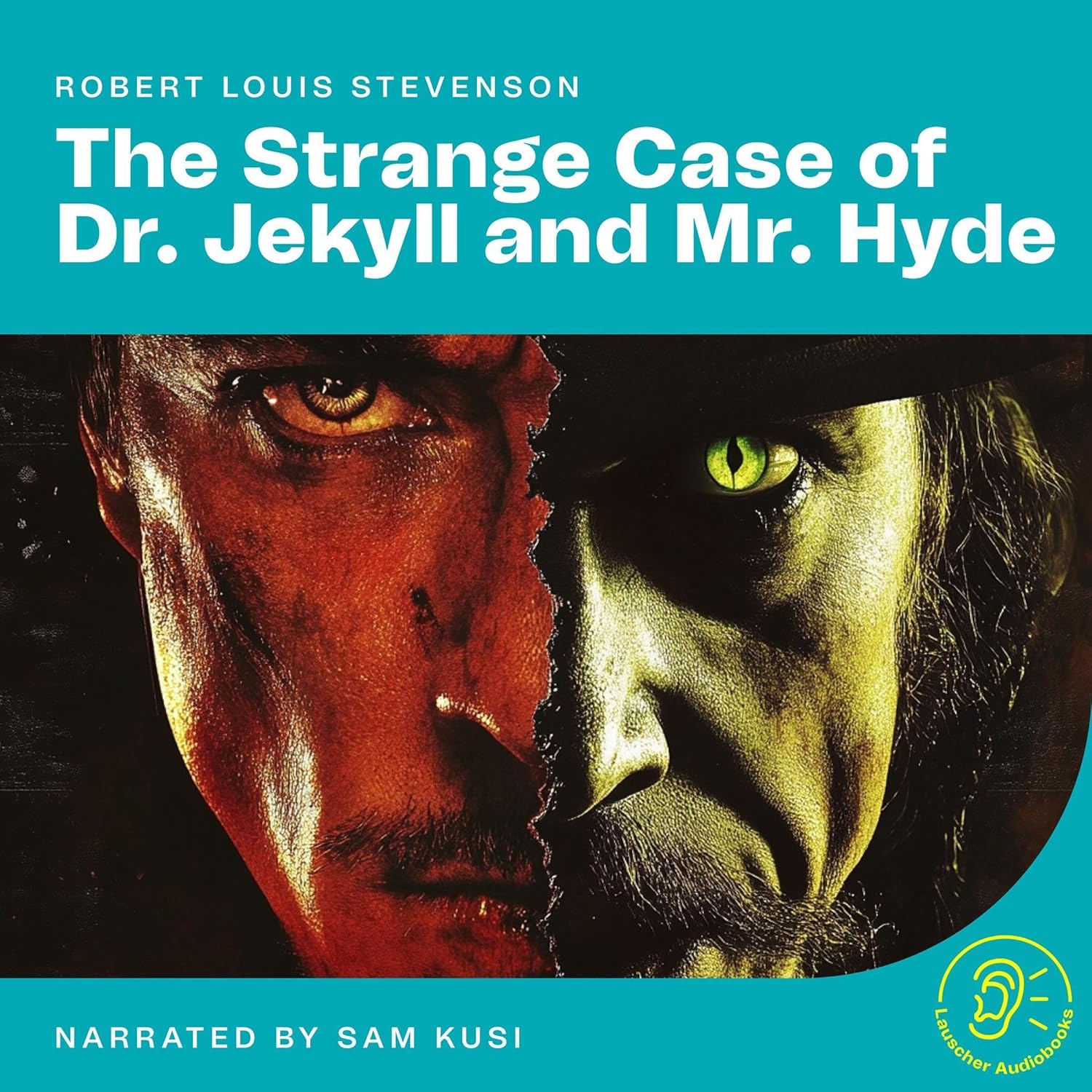
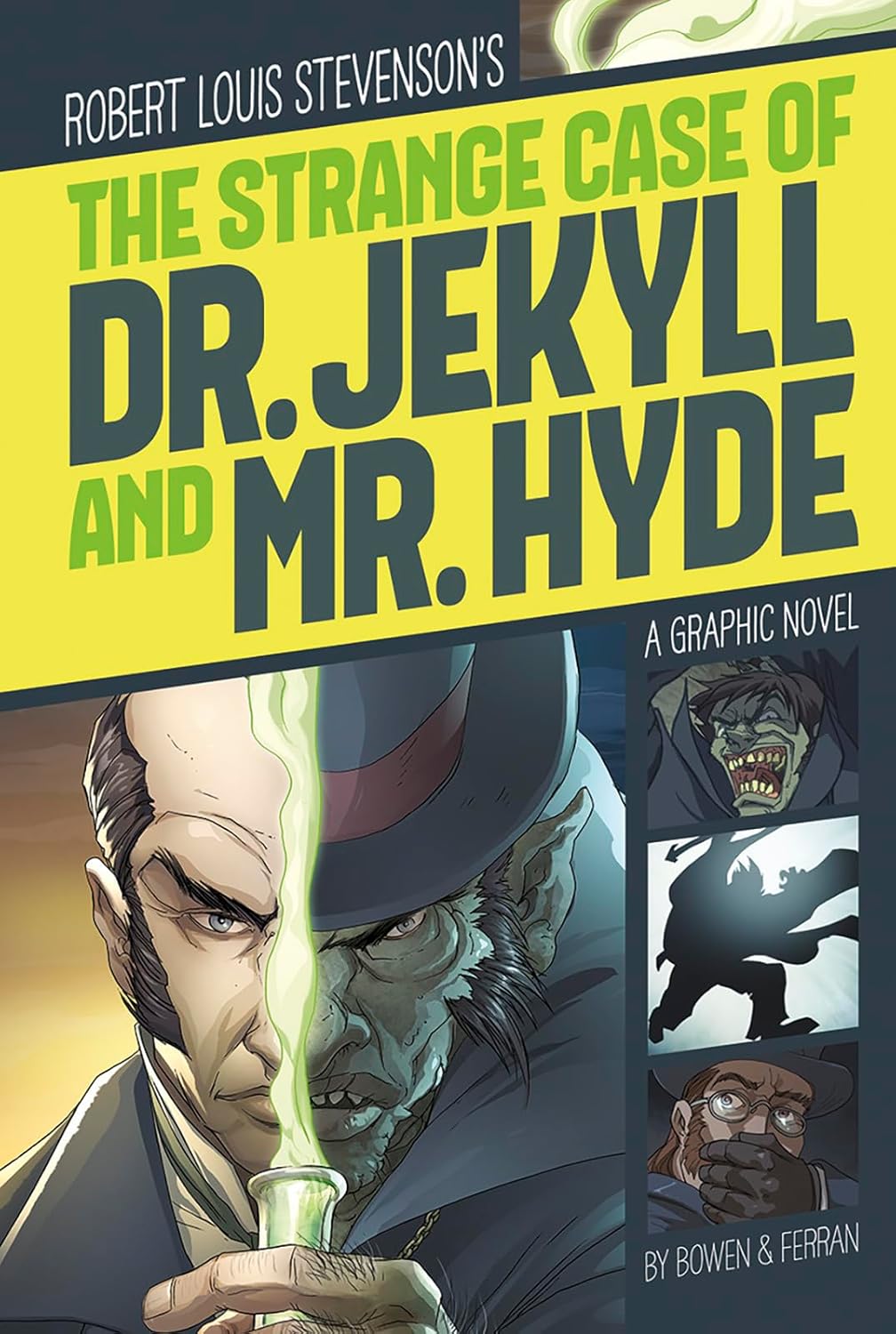
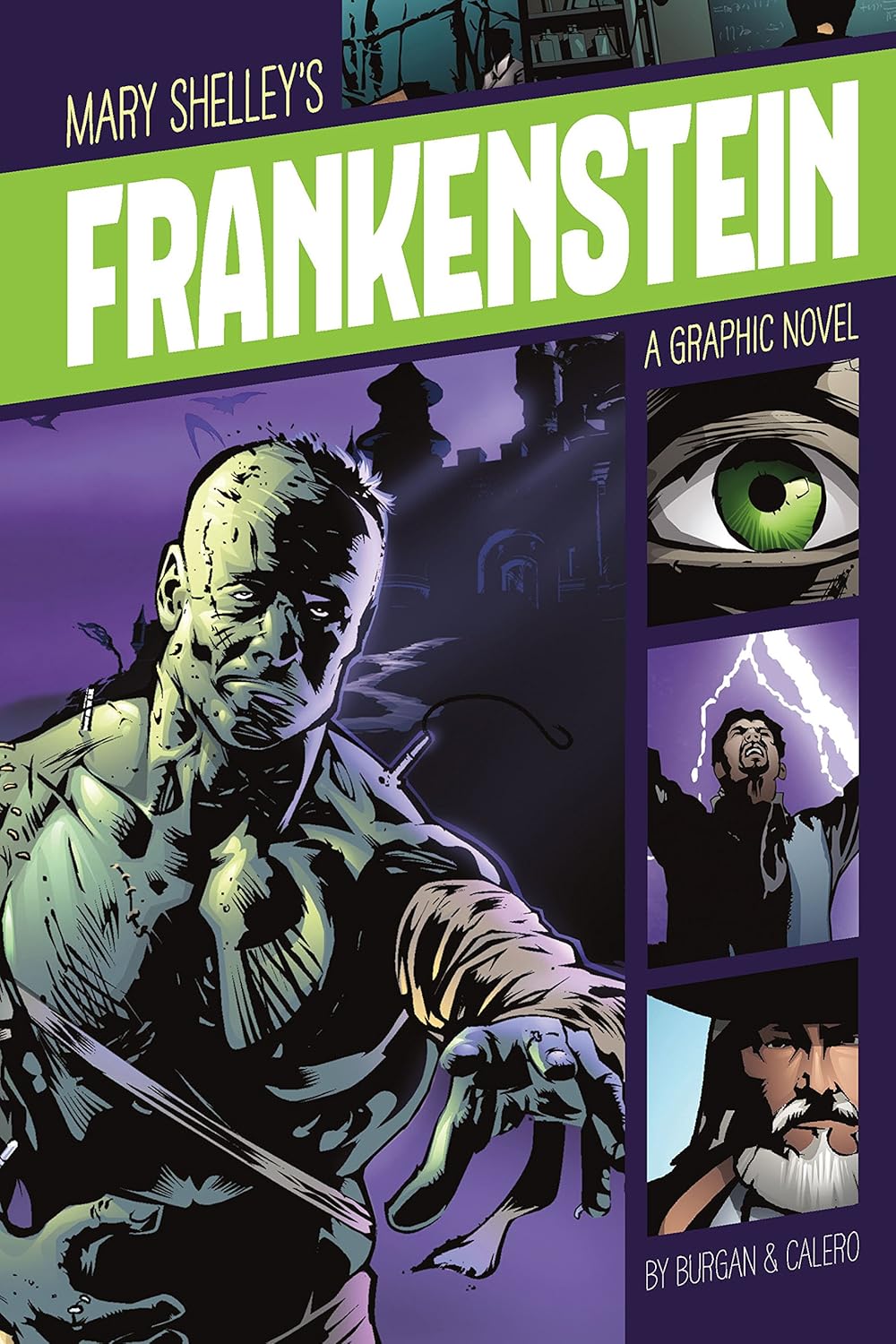
Format Selection: Consider mixing media across the semester to maintain student engagement and address different learning styles. For instance, you might use the Frankenstein film in September, switch to reading the Jekyll and Hyde novella in October (with or without the audiobook), return to film for Invasion of the Body Snatchers in November, and incorporate graphic novel excerpts for comparison. This variety keeps the structure fresh while building the same analytical skills. The Jekyll and Hyde text is particularly useful mid-semester when you want to slow down and do close reading; at roughly 60-80 pages depending on the edition, it’s manageable even for reluctant readers and provides a nice counterpoint to the faster pacing of film viewing.
Film Selection: For a semester course, I recommend starting with Frankenstein (clearest causation), adding Jekyll and Hyde (insanity defense complexity), then Body Snatchers or Day the Earth Stood Still (societal/global scale). For a full five-film semester, follow the chronological progression from individual to global responsibility.
Role Assignment: I let students indicate preferences but ensure balanced skill distribution. Strong speakers get challenging witness or attorney roles; students developing confidence might start as jury members with speaking roles during deliberation.
The Charging Decision: For films where this applies (Frankenstein, Invisible Man, Jekyll and Hyde), I announce this dramatically after students have viewed the film and received their roles. The prosecution team gets 24 hours to make their decision and file their charges, which I then share with the class. This creates genuine suspense and forces the defense to adapt.
Assessment: I evaluate students on preparation, in-character consistency, use of evidence, argumentation quality, and professional courtroom demeanor. Jury members are assessed on their deliberation contributions and written verdict justifications. By the third or fourth trial, expectations are higher and students are capable of more sophisticated performance.
Progression and Reflection: After each trial, students write a brief reflection comparing it to previous trials. What legal concepts from Frankenstein helped them understand Jekyll and Hyde? How did arguing about pod people’s rights change how they think about the Monster’s capacity? This metacognitive work helps them see their own growth.
Final Thoughts
There’s something beautifully circular about using these classic films in this way. Mary Shelley’s novel (which inspired Frankenstein) was itself about the consequences of creation—about what we owe to the things we bring into the world. In having students create trials from these stories, we’re asking them to be creators too: creators of arguments, of character interpretations, of justice itself.
And perhaps that’s the deepest lesson across all five films. Justice isn’t something we discover; it’s something we construct together through careful reasoning, empathy, and shared commitment to truth. Henry Frankenstein created alone, in secret, without consultation or oversight. Jack Griffin pursued power without accountability. Dr. Jekyll experimented on himself without considering the consequences for others. Our mock trials ask students to do the opposite—to build understanding collaboratively, in public, with accountability.
These films teach us that creation without responsibility leads to tragedy, that power without oversight corrupts, that individual choices have collective consequences. The mock trial activities let students explore what responsibility might look like—and in doing so, they create something meaningful together.
Whether you use one film or all five, the goal remains the same: to help students think deeply about responsibility, justice, and the choices we make when faced with difficult questions. These classic films give us the shared evidence we need for that exploration, and the mock trial format gives students the tools to engage with genuine intellectual rigor.
That’s what makes these old films so powerful in the classroom. They’re not just entertainment or historical artifacts. They’re laboratories for testing ideas about justice, responsibility, and what it means to be human—questions that matter just as much today as they did in 1931.
Have you used classic films in unconventional ways in your classroom? What texts create the best shared foundation for debate and discussion? I’d love to hear your experiences in the comments.


You must be logged in to post a comment.