
When governments rename geographic features unilaterally, they create a problem that teachers encounter immediately: confusion. Students open textbooks written last year; maps in classrooms display different names than news broadcasts; historical documents reference places that no longer carry their colonial designations. The impulse to correct historical injustices embedded in geography is sound. The execution, however, can undermine the very historical understanding and cultural respect the renaming intends to serve.
The Classroom Problem
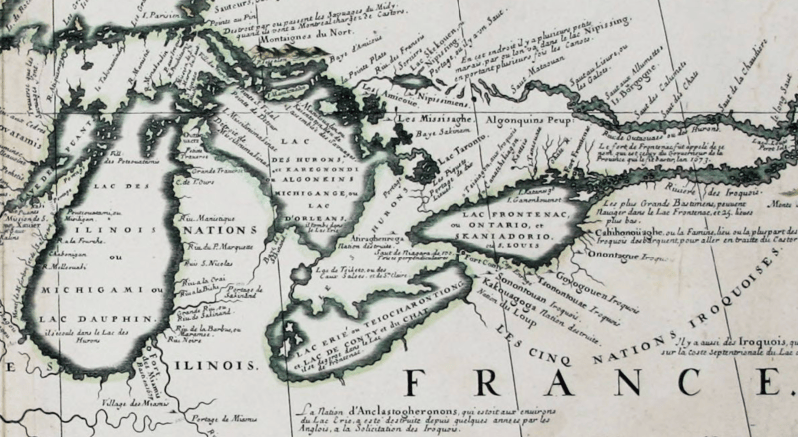
Consider what happens when a significant geographic feature is renamed overnight by executive order. A student researching the history of a mountain or river must now navigate multiple names across multiple sources: the old colonial name in historical records; the new official name on government maps; the indigenous name that may have existed centuries before either. Rather than deepening understanding, sudden unilateral renaming fragments it. Students cannot easily trace the arc of how a place was named, why it received its colonial designation, and what preceded it. They lose the connective thread between past and present.
Furthermore, teachers must decide whether to update lesson plans mid-year, explain why some sources contradict others, or navigate the awkward middle ground of teaching both names simultaneously. This creates pedagogical friction that distracts from the substance of what students should learn: the actual history and geography of these places.
Renaming things “America” through executive fiat creates a different but related problem. It signals that geographic nomenclature is a tool of political will rather than a product of deliberation, stakeholder input, and community understanding. Students absorb that lesson directly, whether educators intend it or not.
How New Zealand and Australia Did It Differently
Two neighboring countries offer instructive counterexamples. Both New Zealand and Australia have undertaken systematic efforts to restore indigenous place names and incorporate them into official use. The results illuminate why process matters as much as outcome.
New Zealand’s approach emerged from the Resource Management Act of 1991 and subsequent legislation that created formal pathways for indigenous communities to propose geographic name changes. The New Zealand Geographic Board (now Te Mapa Whenua o Aotearoa), established in 1974 and reformed significantly over the decades, became a deliberative body that works with Māori communities to explore historical names, verify their authenticity, and assess community support before official designation. The process is thoughtful; it is also slow. But the slowness protects integrity.
This approach has yielded widespread adoption of bilingual naming and restoration of traditional Māori place names across the country. Aotearoa, the Māori name for New Zealand itself, now appears routinely in official contexts alongside the colonial English name. Importantly, this dual recognition happened not through erasure of one name but through acknowledgment that the place held multiple names across time. Schools teach students both; students understand the history behind each.
Australia’s efforts paralleled New Zealand’s in important ways. The Australian Geographic Names Register, managed by Geoscience Australia, created mechanisms for Indigenous Australians to propose names from their languages and cultural traditions. States like South Australia and Western Australia have been particularly active in recognizing Aboriginal place names, often restoring them alongside colonial ones or, in some cases, replacing colonial names entirely.
What distinguished these efforts was community consultation. Before a name change became official, Indigenous language speakers and cultural authorities verified the name’s authenticity and significance. Government bodies did not simply decide unilaterally what the “correct” indigenous name should be; they invited Indigenous peoples to speak authoritatively about their own geography. The outcome has been that these renaming efforts carry cultural weight and community legitimacy. Teachers can explain not just that a place was renamed, but why, how the community was involved, and what the new name means in its original language.
The Pedagogical Case for Deliberation
These examples reveal why the process of renaming matters pedagogically. When students encounter geographic name changes that emerge from transparent deliberation and community engagement, they learn something valuable about how justice works in practice. It is rarely instantaneous; it requires listening, coordination, and sometimes compromise. Students see evidence that institutions can change course when they have legitimate reasons to do so, which paradoxically strengthens institutional credibility rather than undermining it.
Conversely, when geographic names change via executive order without prior public deliberation or community input, students learn a different lesson: that geography, language, and nomenclature are tools to be deployed by whoever holds political power. That lesson corrodes trust in institutions and obscures the actual history embedded in these places.
Furthermore, deliberative renaming preserves the pedagogical opportunity to teach the history of how places were named. A student studying the Rockies can understand the expedition that led to a colonial name, the indigenous peoples who inhabited the region for centuries before that, and the decision to restore or incorporate traditional names. The layered naming history becomes part of the curriculum. Sudden renaming flattens that history into a political act stripped of context.
The Risk of Performance Over Substance
There is a troubling dimension to unilateral geographic renaming that educators should address directly with students: the gap between performance and substance. A government can rename a place and declare that justice has been served, yet that act alone does nothing to increase educational funding for Indigenous students, improve representation of Indigenous history in curricula, or address the material conditions Indigenous communities face. In fact, if renaming becomes a substitute for more difficult work, it can function as performative justice, which actually displaces more substantive action.
New Zealand and Australia have not solved these problems perfectly or completely. But their deliberative approach to naming has allowed these efforts to coexist alongside meaningful work on Indigenous language preservation, curriculum development, and educational equity. The naming is a component of a larger commitment, not a substitute for it.
What Teachers Can Do
For educators, this distinction suggests a few practical approaches:
Teach the history of naming itself. When discussing geographic features, include how they were named, when, and by whom. This transforms a place name from a label into a historical source. Students learn that geography is not neutral; it is inscribed with human decisions and power dynamics.
Distinguish between renaming processes. Help students understand the difference between deliberative renaming involving community consultation and unilateral executive action. This teaches them to evaluate government decisions critically: process matters. Legitimacy matters. Consultation matters.
Use geographic renaming as a case study in institutional change. New Zealand and Australia’s efforts demonstrate how institutions can evolve to acknowledge historical injustices while maintaining clarity and community support. These are valuable models for students thinking about how change happens in democracies.
Avoid false binaries. The point is not to resist all geographic renaming or to celebrate every renaming uncritically. The point is to recognize that thoughtful, inclusive processes produce better outcomes than arbitrary executive action, both substantively and pedagogically.
Conclusion
The impulse to correct the colonial inscription of geography is just. The question is how to do it in ways that deepen rather than fragment historical understanding and that build community legitimacy rather than impose change unilaterally. New Zealand and Australia’s examples show that it can be done; it simply requires patience, consultation, and a commitment to process as well as outcome.
When geographic renaming happens without that deliberation, teachers encounter chaos. Students lose the connective thread between past and present. And the renaming, however well intentioned, teaches a lesson we may not want students to learn: that history and language are tools of political will, not products of collective understanding and deliberation.
In the classroom, clarity serves justice. Process serves substance. And when we restore traditional names, we honor them best by doing so thoughtfully, carefully, and in partnership with the communities whose history and language these places hold.
Opinions expressed are solely my own and do not represent the views or opinions of my employer.


You must be logged in to post a comment.