
Most people learn the story of Martin Luther as a dramatic theological showdown, a lone monk with a hammer and a grievance, nailing his objections to a church door in Wittenberg and setting off five centuries of religious transformation. It’s a compelling image, and it’s not wrong. But it’s incomplete. Because when you read Luther’s 95 Theses alongside the political landscape of early sixteenth-century Europe, as Dan Jones does so vividly in Power and Thrones, what emerges is something richer and more complicated: a document that was two things at once. It was a theological protest, yes; but it was also a political grenade lobbed into one of the most corrupt and combustible power arrangements in Western history.
To understand why the Theses carried that double charge, you have to understand the world that produced them.
The Medici Machine and the Market for Salvation
The Catholic Church in 1517 was not simply a spiritual institution. It was a financial empire, and at its center sat a papacy deeply entangled with the banking dynasty that had, quite literally, financed its ambitions. The Medici family had spent generations weaving themselves into the institutional fabric of Rome. They produced popes. They managed papal accounts. They extended credit for crusades, cathedrals, and the kind of lavish Renaissance patronage that would make Florence the cultural capital of Europe.
None of this was free. And the mechanism that helped pay for it, the one that would drive Luther to put quill to parchment, was the sale of indulgences.
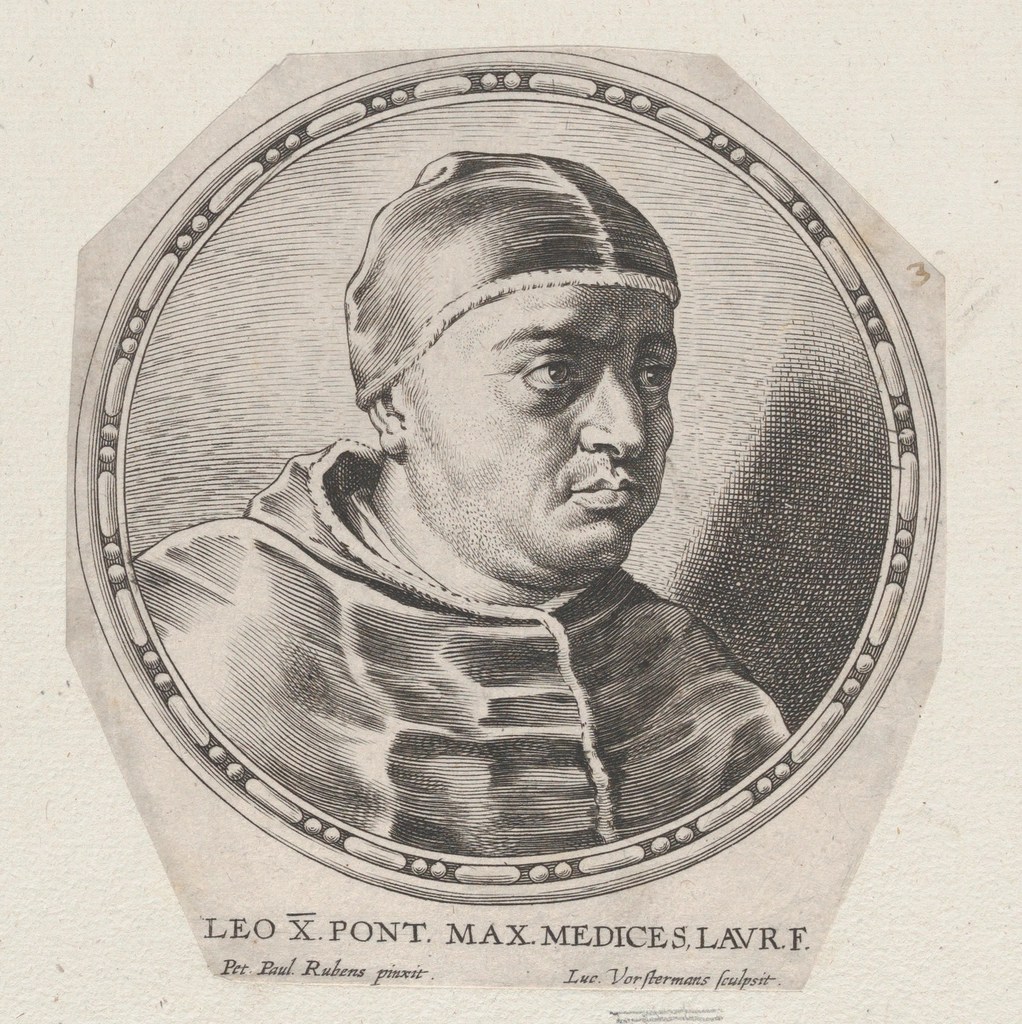
The logic of indulgences had developed over centuries of genuine theological reflection on sin, penance, and the economy of divine mercy. But by the early sixteenth century, the practice had drifted far from its doctrinal roots. Pope Leo X (himself a Medici, born Giovanni di Lorenzo de’ Medici) authorized an aggressive indulgence campaign across Germany and beyond, with proceeds earmarked partly for the construction of St. Peter’s Basilica in Rome. The Dominican friar Johann Tetzel was dispatched as an indulgence salesman of almost theatrical shamelessness, reportedly promoting the idea that a coin dropped into the collection chest could spring a soul from purgatory on its way down.
Luther’s outrage was real and doctrinally grounded. His first theses challenged the very premise: that the pope had authority over purgatory at all, that money could stand in for genuine repentance, that the Church could sell what only God could grant. These were serious theological objections, and they would eventually fracture Western Christianity in ways that are still visible today in the denominational landscape we inhabit.
But Luther was writing in Germany. And that matters enormously.
The German Princes and a Conspiracy of Convenience
The Holy Roman Empire was, as Voltaire famously observed, neither holy, nor Roman, nor an empire in any tidy sense. It was a patchwork of kingdoms, duchies, prince-bishoprics, and free cities nominally unified under an elected emperor, but practically governed by a constellation of powerful territorial princes who jealously guarded their autonomy. These princes had watched for decades as the papacy extracted enormous sums from German territories, money that flowed south to Rome, into Italian building projects and Medici family interests, and never returned.
The indulgence campaign wasn’t just offensive to German piety; it was offensive to German politics. Every coin Tetzel collected was a coin that didn’t stay in German lands. Every theological claim the Church made about papal supremacy was also an implicit claim about political supremacy, about who ultimately held authority over the people living within the Empire’s borders.
When Luther’s Theses spread (with remarkable speed, thanks to the relatively new technology of the printing press), the German princes didn’t read them only as theology. They read them as an argument that the papacy’s reach into German life had exceeded its legitimate authority. That the corruption in Rome was not merely a spiritual problem but a structural one, a problem of power operating without accountability, extracting resources without representation, demanding deference without delivering anything recognizable as genuine pastoral care.
This is the duality Jones illuminates so well. The Theses worked on two registers simultaneously: the doctrinal and the political, the sacred and the profoundly earthly. Luther may have written as a theologian; but his words were received, amplified, and protected by men who thought first about territory, taxation, and sovereignty.
A Document That Could Not Be Contained
What makes 1517 such a hinge moment is precisely that Luther’s critique couldn’t be separated into its religious and political components, because the Church itself had refused to keep those realms separate. When a pope who was also a Medici banker authorized a German fundraising campaign to build an Italian basilica, theology and finance were already inseparable. Luther didn’t create the duality; he exposed it.
The princes who sheltered Luther, who refused to hand him over to Rome, who eventually used the Reformation as justification for seizing Church properties and asserting greater local control, were not primarily motivated by the finer points of justification by faith. They were motivated by the recognition that the Reformation gave them leverage. It gave them a principled language for resistance that was simultaneously religious and constitutional, and that combination was extraordinarily powerful.
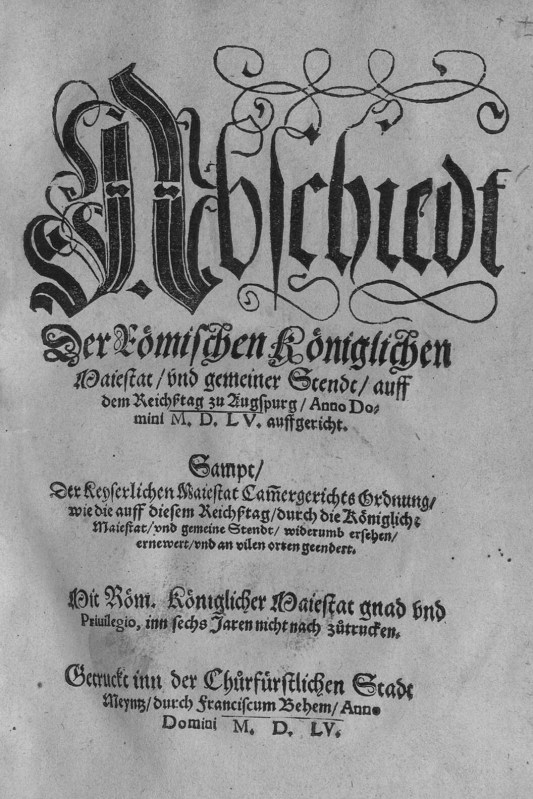
The Peace of Augsburg in 1555, which established the principle of cuius regio, eius religio (whose realm, his religion), was the political consequence of that leverage. German princes gained the right to determine the confessional identity of their territories. It was, in effect, a recognition that the Reformation had done what the princes had long wanted: it had broken the universal authority of Rome over German political life.
Why This Duality Still Matters
For students of history, and for anyone trying to understand how religious movements intersect with political power, the story of Luther’s Theses is a masterclass in how ideas travel and transform. A document written to provoke an internal church debate about penance became a manifesto for political reform. A monk’s theological objections became a prince’s bargaining chip. The corruption Luther attacked in Rome was not only spiritual corruption; it was the corruption that flows whenever an institution accumulates power without accountability, whenever financial interests dress themselves in sacred language, whenever the people nominally served by a system find themselves systematically extracted from instead.
The Reformation that followed was messy, violent, and in many ways deeply incomplete as a reform project. But it happened because Luther’s two arguments, the theological and the political, found two different audiences ready to hear them at exactly the same moment. The devout heard a call to repentance and doctrinal clarity. The powerful heard a call to sovereignty and fiscal independence. And together, those two audiences changed the map of Europe.
That’s the thing about documents that speak truth to power: they rarely say only one thing. They say what needs to be said to everyone who needs to hear it.
Interested in exploring the intersection of religion, politics, and power in the early modern world? Dan Jones’s Power and Thrones is a remarkable read for anyone who wants medieval and Renaissance history told with the narrative energy it deserves.


You must be logged in to post a comment.