The Pull of a Familiar Story
Moana may belong in our classrooms as a text about representation, but it should never be presented as an authentic window into Polynesian culture. That distinction sounds small, yet it decides whether we teach students to think critically or simply hand them a polished stereotype.
I understand the temptation. Students already know the songs, the visuals are stunning, and the film opens a door to a region most U.S. curricula ignore. When a unit on Oceania or world mythology comes up, Moana feels like a gift: engaging, accessible, and (on the surface) respectful. (The same can be said for Encanto and Coco)
The trouble starts when the film shifts from hook to evidence. Once we say, in effect, “this is what Polynesian culture looks like,” we have made a claim the film cannot support; and we have taught a source-literacy lesson that runs exactly opposite to the one we want students to learn.
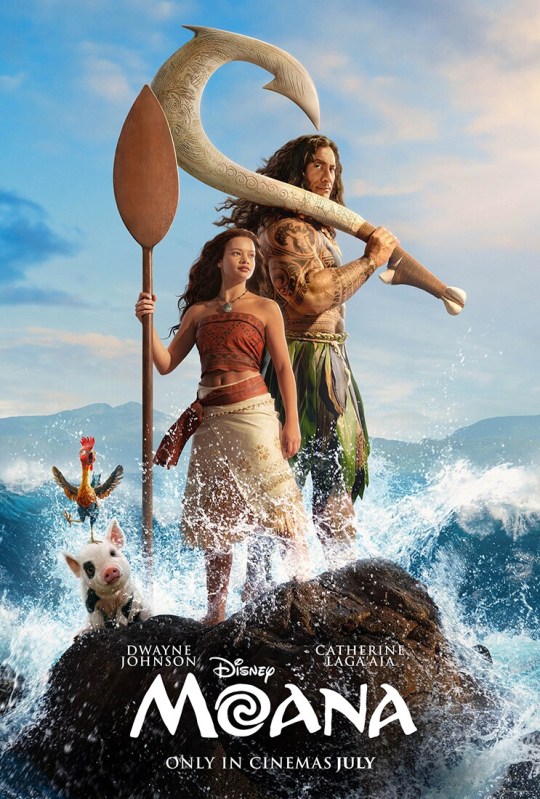
Image via Disney
Fiction Is Not the Problem; Mislabeling Is
Moana is not dishonest. It is an animated musical fantasy, and it never claimed to be ethnography. The error belongs to us when we change its category.
Think of it this way. A source about a culture tells us how someone outside (or partly outside) that culture chose to imagine it. A source of a culture comes from the people themselves: their oral traditions, genealogies, art, navigation knowledge, and scholarship. Moana is the first kind. It is excellent evidence of how a major American studio pictured the Pacific in 2016, and it is weak evidence of how any Pacific people understand themselves.
We would never teach Pocahontas as a primary source on the Powhatan Confederacy, or Mulan as a reliable account of Northern Wei China. Moana deserves the same scrutiny, even though (and perhaps because) its production made a more visible effort at cultural care.
One Ocean, Many Peoples
Polynesia is not one culture. It spans Samoa, Tonga, Tahiti, Aotearoa (New Zealand), Hawaiʻi, the Marquesas, Rapa Nui, and many more island groups, each with its own language, genealogies, and sacred stories. Moana folds that diversity into a single invented island, Motunui.
The blending shows up everywhere. Before release, critics noted Fijian music, Tahitian drumming, and Samoan tattoos in the trailers alone. The heart of Te Fiti is a Māori greenstone amulet. The coconut-armored Kakamora draw on Solomon Islands lore, which is Melanesian rather than Polynesian.
As fantasy world-building, this composite works. As a cultural portrait, it teaches students that “Polynesian” is a single aesthetic; and that is precisely the flattening our social studies standards ask us to undo.
When Ancestors Become Characters
In many Pacific traditions, Māui is not a cartoon sidekick. Tevita Kaʻili, a cultural anthropologist at BYU–Hawaiʻi, explained that many Polynesians see Maui as an important ancestor and as a real person. He criticized the film for turning that figure into an “egotistical buffoon”, and he pointed out that the traditional Māui needs no magic fishhook to shapeshift.
The character’s body drew sharp objections as well. New Zealand MP Jenny Salesa publicly compared real Polynesian actors with the film’s “half pig half hippo” Māui. Others saw his size as reinforcing a stereotype that all Polynesian people are obese.
Te Kā, the lava monster, raised a related concern. One Hawaiʻi commentator objected to what the writer read as Pele recast as a lava monster. Whether or not Disney intended that reading, the point for students stands: sacred figures were reshaped to serve a Hollywood plot, and an outside studio made the final call.
A Real Question, an Invented Answer
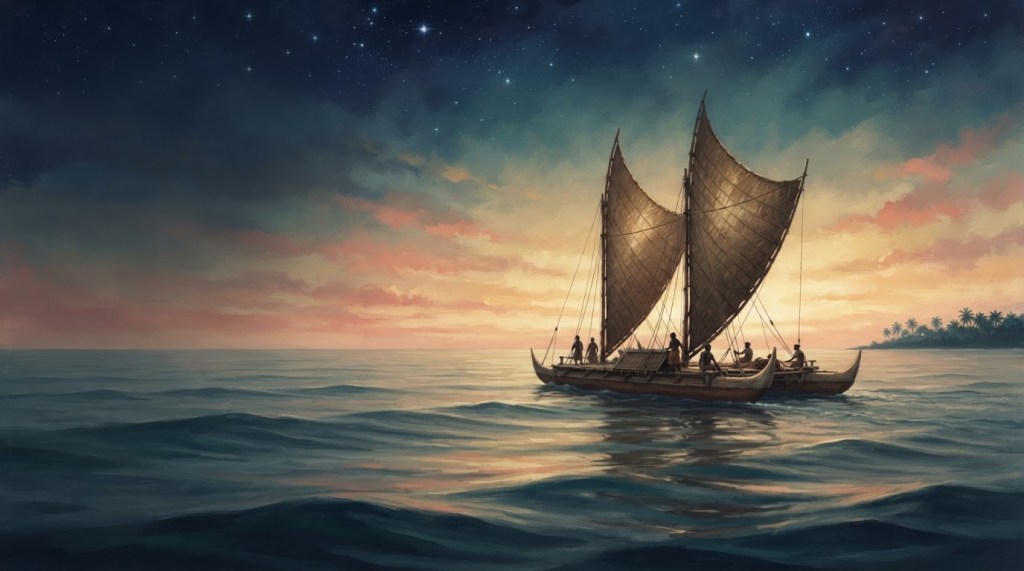
The film’s most compelling idea is that Moana’s people once voyaged, then stopped. That idea points to a genuine scholarly puzzle. After people settled West Polynesia roughly 3,500 years ago, long-distance voyaging appears to have paused for close to 2,000 years before the push east and outward resumed. Historians and scientists still debate why.
Moana answers that open question with a stolen heart, a spreading curse, and a chief’s fear. Director John Musker acknowledged that the story grew out of a kind of fantasy about how voyaging started again. That is a fine choice for a screenwriter, yet it becomes misinformation the moment a student repeats it as the reason voyaging stopped.
Who Holds the Pen?
Every source-analysis lesson we teach begins with the same questions: who made this, for what purpose, and for what audience? For Moana, the answers are clear. A global entertainment company made it to sell tickets, streaming subscriptions, and merchandise to a worldwide audience.
Disney did consult, and that effort deserves credit. The filmmakers traveled to the Pacific and met with anthropologists, historians, fishermen, and linguists, a group they came to call the Oceanic Story Trust. Still, consultants advise while the studio decides.
The limits of that arrangement became visible before the film even opened. In September 2016, Disney sold a child’s Māui costume that was essentially a brown skin bodysuit covered in tattoos. Critics compared it to blackface (some called it “polyface”), and Disney pulled it within days with an apology.
There is also the question of who benefits. Kaʻili argued that Disney profits from Polynesian stories while the communities connected to them receive little or nothing. When we present the film as the authoritative version, we quietly extend that imbalance into our classrooms.
What to Do Instead
None of this means banning Moana. Pacific responses were mixed, not uniformly negative; even Kaʻili acknowledged aspects the film portrayed accurately, and many viewers were moved by its celebration of wayfinding. The fix is to reposition the film from evidence to object of study.
A simple sequence works in either a history or an ELA classroom:
- Show a short clip as the hook. Ask students what they think they learned about Pacific cultures from it.
- Introduce Indigenous-authored sources. Pair the clip with a Māori pūrākau or Native Hawaiian moʻolelo about Māui, material from the Polynesian Voyaging Society on the Hōkūleʻa, or an excerpt of Epeli Hauʻofa’s essay “Our Sea of Islands.”
- Compare deliberately. Have students chart what Disney kept, changed, combined, or invented, and which island culture each element came from.
- Analyze authorship and purpose. Use the Oceanic Story Trust and the costume controversy to discuss who controls a story and who profits from it.
- Close with reclamation. Point students to the Hawaiian-language and te reo Māori versions of the film, which Pacific communities produced, and ask what changes when a community translates a story back into its own language.
These discussion questions keep the focus on reasoning rather than on judging the movie:
- What is the difference between a story inspired by a culture and a story from that culture?
- Why might a studio combine several island cultures into one invented place? What is gained, and what is lost?
- Who should decide how a sacred or ancestral figure is portrayed?
- What would a responsible version of this film’s research process look like?
The Lesson Behind the Lesson
Our students will spend their lives absorbing other cultures through screens. If we let a blockbuster stand in for a people, we model the very habit we should be teaching them to question. If we use that same blockbuster to ask who is telling the story, and whose story it really is, we give them a tool they will use long after they forget the soundtrack.
Moana can absolutely earn a place in your unit. It just shouldn’t hold the seat reserved for Pacific voices.
Sources
- Critics Accuse Disney of ‘Culture Theft’ Ahead of ‘Moana’ Release, NBC News
- How the Story of ‘Moana’ and Maui Holds Up Against Cultural Truths, Smithsonian Magazine
- ‘Moana’ Creates Waves of Mixed Opinions, Ke Alakaʻi (BYU–Hawaiʻi)
- Disney Pulls ‘Moana’ Costume Lambasted as ‘Polyface’, CBS News
- ‘Moana’ Character Gets Disney in Trouble, Gulf News
- Disney Pulls Moana Products That Some Found Offensive, Honolulu Civil Beat
- Maui Skin Suit Isn’t the End of Moana Trouble, Honolulu Civil Beat
- ‘Moana’ a Disney Hit but Portrayal Irks Some in the Pacific, Honolulu Star-Advertiser
- Moana’s ‘Brown Face’ Row Leaves Disney Red Faced, SBS News
- Disney’s Moana Isn’t Progressive; It’s Dangerous, Medium
To see other movie and book recommendations and a list of resources, read more here.


You must be logged in to post a comment.