
When American Labor Rose in Revolution
The period following World War I saw unprecedented labor unrest across the United States, from the Seattle General Strike to the West Virginia coal wars. These isolated conflicts, while dramatic, ultimately failed to coalesce into sustained revolutionary action. But what if events had unfolded differently? What if the scattered labor uprisings of 1919-1920 had been effectively coordinated by radical organizers, transforming isolated strikes into a nationwide revolutionary movement that fundamentally altered American politics and society?
The Point of Departure: Charleston, West Virginia, September 1919
In our timeline, the West Virginia coal strikes of 1919-1921 remained largely regional affairs, brutally suppressed by state militia and private security forces. But imagine if events had taken a different turn during the Battle of Blair Mountain in September 1919, when a chance encounter between three revolutionary organizers transformed isolated labor conflicts into coordinated national uprising.
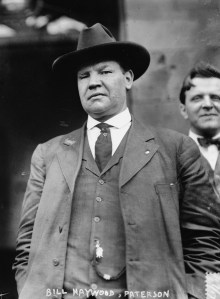
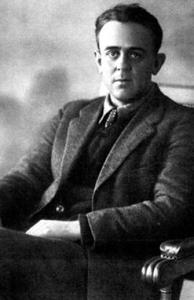
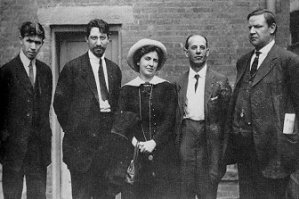
Jack Reed, the radical journalist fresh from witnessing the Russian Revolution, arrives in Charleston to document the coal miners’ struggle for his new magazine. There he encounters Bill Haywood, the legendary leader of the Industrial Workers of the World (IWW), who has come to organize the miners into “One Big Union.” Simultaneously, Elizabeth Gurley Flynn, the “Rebel Girl” of the labor movement, arrives to coordinate women’s auxiliary organizations supporting the strike.
The three revolutionaries, meeting in a smoke-filled union hall, realize that similar conditions exist across industrial America. With unemployment soaring, wages stagnant, and returning veterans competing for jobs, the entire American working class stands on the edge of revolutionary action. They decide to coordinate their efforts, using the West Virginia mountains as the base for a nationwide labor uprising.
The Revolutionary Coordination
The key innovation proves to be the establishment of the “American Workers’ Council” in October 1919, with Reed handling propaganda and communications, Haywood organizing industrial action, and Flynn coordinating community support networks. Using lessons learned from the Russian Revolution, they begin creating parallel institutions that challenge capitalist authority.
Communication Networks: Reed establishes underground newspapers and communication systems linking labor organizations from Seattle to Boston. His experience with Bolshevik organizational methods proves crucial in maintaining coordination across vast distances.
Military Organization: Haywood, drawing on his experience with Western mining conflicts, begins organizing workers into disciplined units capable of both striking and defending themselves against company security forces and state militia.
Community Infrastructure: Flynn develops networks of women’s organizations, immigrant societies, and neighborhood committees that provide logistical support for sustained resistance.
The coordination transforms isolated local strikes into components of a broader revolutionary strategy. When coal miners in West Virginia face company violence, solidarity strikes erupt simultaneously in steel mills in Pittsburgh, textile factories in Lawrence, and shipyards in Seattle.
The Seattle Connection
The Seattle General Strike of February 1919, which in our timeline lasted only five days, becomes the northwestern anchor of the revolutionary movement. Instead of collapsing under government pressure, the strike transforms into a permanent challenge to capitalist authority in the Pacific Northwest.
The Seattle workers, inspired by reports of successful coordination elsewhere, establish a “Workers’ Republic of Seattle” that begins implementing radical economic policies. Shipyard workers convert their facilities to producing agricultural equipment for striking farmers, while dock workers refuse to handle goods produced by non-union labor anywhere in the country.
The success in Seattle inspires similar actions in other western cities. Portland, Spokane, and San Francisco see the establishment of workers’ councils that coordinate with the national movement while maintaining local autonomy. The Pacific Coast becomes effectively independent of federal authority by the spring of 1920.
The Industrial Heartland Erupts
The most crucial development occurs when the coordination spreads to the industrial heartland of the Midwest and Northeast. The steel strike of 1919, which historically failed due to ethnic divisions and government intervention, becomes the catalyst for broader uprising when immigrant steelworkers and native-born miners find common cause through the Workers’ Council networks.
The Pittsburgh Soviet: Steelworkers in Pittsburgh, inspired by the Russian model, establish a workers’ council that takes control of steel production and begins implementing eight-hour workdays and worker control of safety conditions.
The Chicago Federation: Meatpacking workers, railroad employees, and industrial workers coordinate through a citywide federation that challenges both corporate and municipal authority.
The Detroit Uprising: Auto workers, frustrated by postwar layoffs and speedup policies, seize control of several factories and begin experimenting with worker-controlled production.
The Government Response and the 1920 Election
The coordinated labor uprising fundamentally alters the dynamics of the 1920 presidential election. Warren G. Harding, the Republican nominee, abandons his “return to normalcy” platform and instead campaigns on restoring “law and order” through aggressive federal intervention.
The Democratic Party, split between those supporting Wilson’s internationalism and those demanding domestic focus, fractures completely. James M. Cox’s moderate approach satisfies neither pro-labor progressives nor anti-revolutionary conservatives, opening space for more extreme responses.
Most significantly, the crisis enables the emergence of a “National Unity” movement led by General Leonard Wood, who campaigns on a platform of using military force to restore federal authority. Wood’s quasi-fascist approach gains support from business leaders, conservative Democrats, and Republicans who view Harding as insufficiently aggressive.
The election results in an unprecedented three-way split, with no candidate receiving an electoral majority. The House of Representatives, meeting in an atmosphere of national crisis, selects Wood as president on the promise that he will “restore American civilization” through whatever means necessary.
The Crackdown and Counter-Revolution
Wood’s inauguration in March 1921 triggers the most severe domestic conflict in American history since the Civil War. Declaring martial law in regions under workers’ council control, Wood deploys federal troops, National Guard units, and private security forces in a coordinated campaign to crush the labor movement.
The Battle of Blair Mountain Escalated: Instead of ending with miners’ defeat, the West Virginia conflict becomes a sustained guerrilla war as workers use mountain terrain to resist federal forces.
The Seattle Siege: Federal forces, supported by naval units, attempt to retake Seattle through a prolonged siege that destroys much of the city’s port infrastructure.
Industrial Warfare: Battles in Pittsburgh, Chicago, and Detroit between workers and federal forces destroy significant industrial capacity and result in thousands of casualties.
The violence radicalizes both sides. Workers’ councils begin implementing increasingly revolutionary policies, including property seizures and the establishment of revolutionary tribunals. Meanwhile, Wood’s government suspends constitutional protections and begins mass arrests of suspected radicals.
The International Dimension
The American labor uprising attracts international attention and intervention on a scale unprecedented in U.S. history:
Soviet Support: The newly established Soviet Union, despite its own economic difficulties, provides covert support to American revolutionaries, including weapons, advisors, and propaganda assistance.
Allied Intervention: Britain and France, fearing the spread of revolution, provide intelligence and limited military support to Wood’s government while restricting trade with revolutionary-controlled territories.
Mexican Complications: The revolutionary government of Mexico, sympathetic to American workers, allows Soviet agents to operate from Mexican territory and provides sanctuary for American revolutionary leaders.
Canadian Border Crisis: The conflict spills across the Canadian border as American refugees flee persecution and Canadian workers organize sympathy strikes.
The Fragmentation of America
By 1922, the United States has effectively ceased to function as a unified nation. Different regions operate under different governmental systems:
The Federal Zone: Areas under Wood’s military control, primarily the Southeast and parts of the Northeast, operate under martial law with suspended constitutional protections.
Workers’ Republics: The Pacific Northwest, parts of the industrial Midwest, and scattered mining regions maintain workers’ council governments that implement radical economic policies.
Neutral Territories: Some states, particularly in the agricultural Midwest and Mountain West, attempt to maintain neutrality while providing humanitarian aid to refugees from both sides.
Corporate Enclaves: Major corporations establish their own security zones around key facilities, operating as semi-independent entities with private armies.
Economic Collapse and Social Transformation
The prolonged conflict devastates the American economy and triggers profound social changes:
Industrial Disruption: The destruction of key industrial facilities and the breakdown of transportation networks cripples American manufacturing capacity.
Agricultural Crisis: Farmers, caught between competing authorities and unable to access markets, face economic ruin that leads many to support the revolutionary movement.
Financial Panic: The collapse of federal authority triggers banking crises and currency instability that spread internationally.
Social Revolution: In revolutionary-controlled territories, rapid implementation of radical policies including women’s suffrage, racial equality, and worker control of production creates a fundamentally different society.
The International Consequences
The American civil conflict has profound effects on global politics:
European Stability: The collapse of American economic power forces European nations to develop alternative financial and trade relationships, accelerating European economic integration.
Soviet Legitimacy: The success of revolutionary movements in America provides propaganda victories for the Soviet Union and encourages communist movements worldwide.
Imperial Reshuffling: The weakening of American power creates opportunities for other nations to expand their influence in Latin America and the Pacific.
Delayed World War: The absence of stable American leadership potentially delays or prevents the rise of fascism in Europe by removing a key democratic model and economic partner.
The Resolution: The Hartford Accords of 1924
By 1924, both sides in the American conflict face exhaustion and external pressure for resolution. The Hartford Accords, mediated by international observers, establish a federal system that accommodates both revolutionary and traditional territories:
Regional Autonomy: Different regions maintain significant autonomy over economic and social policies, effectively creating multiple Americas within a loose federal structure.
Constitutional Amendment: The 19th Amendment is expanded to include worker representation in corporate governance and federal guarantees of labor organization rights.
International Supervision: International monitors oversee the implementation of the accords and ensure protection of minority rights in all territories.
Economic Reconstruction: Massive international aid programs help rebuild American industrial capacity while accommodating worker control in revolutionary territories.
Long-term Consequences: A Different America
The labor uprising and its resolution create a fundamentally different trajectory for American development:
Economic Democracy: The integration of worker control into American capitalism creates a more equitable but less efficient economic system that influences global labor relations.
Political Fragmentation: The federal system becomes more decentralized, with regions pursuing different approaches to social and economic policy.
International Relations: America’s reduced global influence and internal divisions affect its role in international affairs, potentially preventing American hegemony.
Social Progress: The revolutionary period accelerates progress on civil rights, women’s equality, and economic justice by several decades.
The Avoided New Deal
In this alternate timeline, many of the policies later associated with Franklin Roosevelt’s New Deal are implemented during the revolutionary period of the early 1920s:
Labor Organization: Strong labor unions become institutionalized much earlier, creating different patterns of worker-management relations.
Social Welfare: Workers’ councils implement unemployment insurance, healthcare programs, and old-age pensions that become permanent features of American society.
Economic Regulation: Government oversight of business practices emerges from the conflict rather than from later economic crisis.
Racial Progress: The revolutionary emphasis on worker solidarity accelerates civil rights progress, potentially avoiding the need for a later civil rights movement.
Conclusion: The Revolution That Succeeded
The story of the American labor uprising of 1920-1924 represents one of the great “what ifs” of American history—the possibility that coordinated revolutionary action could have fundamentally transformed American society decades before the New Deal.
This alternate history suggests that the scattered labor conflicts of the post-World War I period contained genuine revolutionary potential that was only contained through the absence of effective coordination. The success of revolutionary organization, even temporarily, might have created a more equitable but less globally dominant America.
The lesson remains relevant: in periods of economic crisis and social upheaval, the presence or absence of effective revolutionary leadership can determine whether discontent leads to gradual reform or fundamental transformation. The American workers’ revolution demonstrates how alternative models of economic organization can emerge from periods of crisis, creating different patterns of development that reshape national trajectories for generations.
The red summer that lasted becomes not just a labor uprising, but a fundamental reimagining of American society that influences global patterns of economic and political development throughout the 20th century.
Suggested Reading
To better understand the historical context and themes explored in this alternate history, consider these essential readings:
1. “Rebel Voices: An IWW Anthology” edited by Joyce L. Kornbluh
Essential collection of Industrial Workers of the World documents that provides foundation for understanding radical labor organizing strategies.
2. “Ten Days That Shook the World” by John Reed
Reed’s firsthand account of the Russian Revolution that would have informed his approach to American revolutionary organizing.
3. “The Great Steel Strike and Its Lessons” by William Z. Foster
Contemporary analysis of the 1919 steel strike that shows both the potential and limitations of industrial action.
4. “Revolution in Seattle” by Harvey O’Connor
Detailed account of the Seattle General Strike that demonstrates the possibility of worker control in American cities.
5. “The Battle of Blair Mountain” by Robert Shogan
Comprehensive history of the West Virginia coal wars that provides the foundation for our scenario’s revolutionary base.
6. “Elizabeth Gurley Flynn: Modern American Revolutionary” by Lara Vapnek
Biography of the “Rebel Girl” that shows the potential for women’s leadership in revolutionary movements.
7. “Red Summer: The Summer of 1919 and the Awakening of Black America” by Cameron McWhirter
Analysis of racial violence and resistance that provides context for broader social upheaval.
8. “Labor’s Giant Step: Twenty Years of the CIO” by Art Preis
Study of later labor organizing that shows what earlier revolutionary success might have achieved.
9. “The Palmer Raids” by Beverly Gage
Documentation of government anti-radical activities that provides context for the repression revolutionary movements would have faced.
This alternative history was inspired by analysis of the revolutionary potential present in post-World War I American labor conflicts and the recognition that effective coordination between radical organizers could have transformed isolated strikes into sustained revolutionary action.
While these events are not true they are based on historic fact and the possibility of one change in history. To read more of my Alternate History scenarios, be sure read here.

 BFWClassroom