
The Incubator
Terror, China, and the Fracturing Dollar Order, 2000–2025
This post is part of The Long Ledger series on BFWClassroom.com. The series examines 125 years of American economic foreign policy and its global consequences.
History rarely announces its turning points. The ones that seem obvious in retrospect were not always recognized as pivots in the moment; they were recognized as catastrophes, opportunities, or curiosities, and only later assembled into the narratives we use to explain them. The first twenty-five years of the twenty-first century will likely be remembered as a period of accelerating fracture: of the post-Cold War order, of the dollar’s unchallenged dominance, of the assumption that economic interdependence produces political stability, and of the consensus that American military and financial power could be deployed simultaneously without contradiction.
The fracture did not begin in 2000. It began in the decisions documented in the previous three installments of this series: in Versailles’s economic punishment architecture, in the petrodollar’s structural dependencies, in the Washington Consensus’s blind spots about institutional capacity, and in the assumption embedded in China’s WTO accession that economic integration and political liberalization were inseparable. What the 2000s did was bring all of those accumulated stresses to a point of simultaneous visibility. The contradictions that had been manageable in isolation became impossible to ignore in combination.
The Post-9/11 Wars as Economic Events
The attacks of September 11, 2001 were acts of mass murder, and the organizations that carried them out were driven by genuine ideological conviction. Understanding them requires taking that ideology seriously rather than reducing it to a symptom of something else. But understanding the conditions that allowed those organizations to develop, recruit, and operate at scale also requires examining the economic and political vacuums in which they grew.
Al-Qaeda developed in the space left by the Afghan civil war, which was itself a Cold War proxy conflict funded by the CIA, Saudi Arabia, and Pakistan during the 1980s. The United States spent approximately $3 billion arming and training the mujahideen to bleed the Soviet occupation; when the Soviets withdrew and the Cold War rationale for engagement evaporated, American attention moved on. What remained in Afghanistan was a country with a destroyed economy, a heavily armed population, deeply fractured governance, and no functioning state infrastructure. The Taliban emerged into that vacuum with Saudi funding, and Al-Qaeda found in Taliban-controlled Afghanistan the operational base it needed.
The American response to 9/11, whatever its moral justifications in the moment, was economically staggering in its long-term consequences. The wars in Afghanistan and Iraq ultimately cost, by the most comprehensive estimates including long-term veterans’ care and accumulated interest on war debt, somewhere between $6 trillion and $8 trillion. That is not a misprint. To put it in context: the Marshall Plan, adjusted for inflation, cost roughly $130 billion. The post-9/11 wars cost roughly sixty Marshall Plans, and the regions where they were fought are, by most credible measures, less stable today than they were in 2001.
The Iraq War compounded the problem in a specific and consequential way. Saddam Hussein’s government was a brutal dictatorship; it was also a secular one that served as a regional counterweight to Iranian influence. Its destruction removed that counterweight and created the power vacuum into which the Islamic State eventually grew. ISIS proved to be a genuinely novel kind of political-military organization: it combined apocalyptic ideology with sophisticated financial operations including oil smuggling, taxation of controlled populations, antiquities trafficking, and, for a period, the administration of a proto-state economy across a territory roughly the size of the United Kingdom. It was not simply a terrorist organization; it was a state-building project funded by the economic opportunities created by state collapse. The vacuum the Iraq War created was the incubator, and understanding that relationship between economic vacancy and political violence is essential for understanding the global security environment that followed.
China’s Forty-Year Patience
While the United States was deploying $6–8 trillion in military expenditure across conflicts that produced uncertain and contested strategic returns, China was executing one of the most patient and consequential economic development strategies in recorded history.
Deng Xiaoping’s market reforms, begun in 1978, had created three decades of extraordinary growth by positioning China as the world’s preferred manufacturer for labor-intensive goods. China’s WTO accession in 2001 accelerated the process dramatically, integrating Chinese manufacturing into global supply chains so thoroughly that within a decade, the phrase “made in China” was nearly synonymous with “manufactured consumer goods” across the American retail economy. China accumulated enormous trade surpluses and invested significant portions of them in U.S. Treasury securities, a practice that simultaneously kept the yuan undervalued and helped finance American government debt. The arrangement was mutually convenient for years, and its long-term strategic implications were not a primary concern for either party during the period when it was most advantageous.
The Belt and Road Initiative, formally launched in 2013, was the external expression of a maturing strategy: a multi-trillion-dollar infrastructure investment program spanning more than 140 countries, explicitly designed to build the trade and transportation networks that would anchor China at the center of a new global economic geography. Overland rail corridors through Central Asia to Europe; port investments across South Asia, East Africa, and the Mediterranean; fiber optic networks; energy pipelines. The explicit model was the Marshall Plan in ambition, if not in the mechanisms of implementation.
Critics described Belt and Road as debt-trap diplomacy, arguing that China deliberately structured loans on terms that recipient nations could not repay, thereby gaining strategic leverage over their ports and infrastructure. Supporters described it as development finance filling a gap that Western institutions had left. The evidence, examined carefully, is more complex than either framing: some projects delivered genuine infrastructure value to recipient nations; others imposed debt burdens without comparable local economic development, particularly where Chinese-staffed construction imported labor rather than employing local workers. The strategy was neither simply generous nor simply predatory; it was strategic in the precise sense that the Marshall Plan was strategic, designed to build a network of economic relationships that would serve Chinese interests as they compounded over decades.
The Yuan’s Structural Challenge
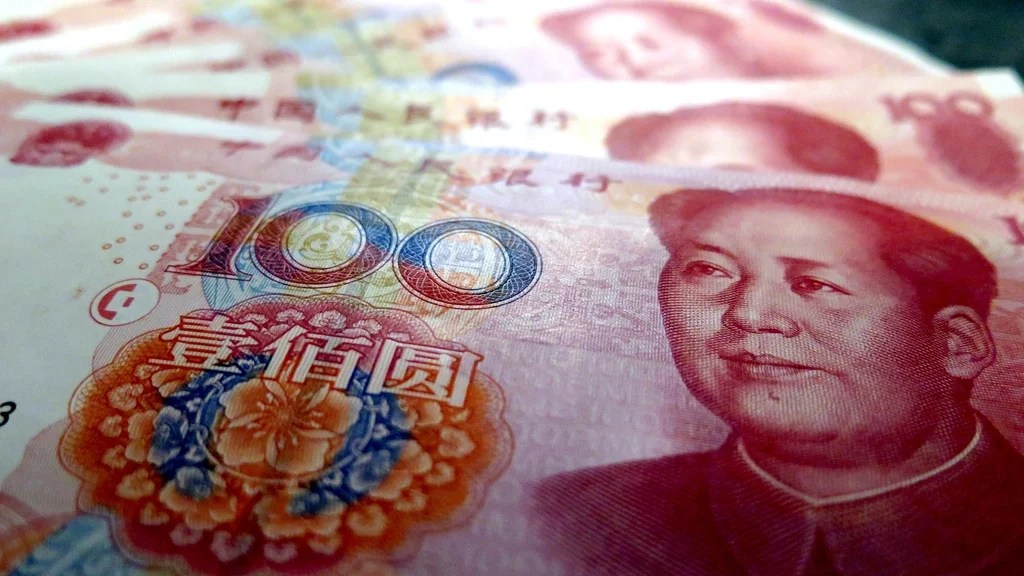
China’s current economic challenge is a structural one that explains much of its foreign policy behavior over the last decade, and that is significantly underreported in coverage that focuses on China’s strengths rather than its vulnerabilities.
The demographic dividend that fueled three decades of extraordinary growth, a large, young workforce entering labor-intensive manufacturing, is exhausting itself. China’s population is aging rapidly, its working-age population has been declining since around 2015, and its domestic labor costs have risen to the point where it is losing price competitiveness in the lowest-skill manufacturing categories to countries like Vietnam, Bangladesh, and Indonesia. The domestic consumer market, while growing substantially, cannot yet absorb the output of China’s enormous industrial base. Export-led growth, the model that built modern China, is running into structural limits.
This means China genuinely needs to expand its global economic influence, not as an optional geopolitical ambition but as an economic necessity. A yuan that achieves meaningful reserve currency status would reduce China’s exposure to dollar-denominated financial pressure, including the kind of sanctions that have been deployed against Russia. A Belt and Road network that locks in commodity and trade relationships creates demand for Chinese goods and Chinese financing that does not depend on access to Western-dominated financial infrastructure. A BRICS financial architecture that normalizes yuan settlement for energy and commodity trade reduces the transaction costs of doing business outside the dollar system.
China’s Cross-Border Interbank Payment System, CIPS, processed the equivalent of $245 trillion in yuan-denominated transactions in 2025, a 43% increase from the prior year. That infrastructure was not built in response to any single crisis; it was built over a decade as a deliberate alternative to the SWIFT system that Western governments have proven willing to use as a sanctions tool. Anyone who wants to understand why multiple nations are conducting energy transactions in yuan right now needs to understand that the infrastructure enabling those transactions was constructed with considerable patience and foresight, not improvised under pressure.
The Dollar Under Pressure
The petrodollar system, described in Part 2 of this series, is facing its most serious challenge since Nixon closed the gold window in 1971. The challenge is not imminent collapse; the dollar’s structural advantages, including deep and liquid capital markets, strong legal institutions, and the sheer network effects of a system that most of the world has used for fifty years, remain real and durable. No single alternative currency is currently capable of replacing the dollar’s reserve role.
What has changed is the direction of travel, and the pace at which that direction is becoming visible. Saudi Arabia conducted oil sales in currencies other than dollars for the first time in decades, including in yuan, during 2024. Russia’s exclusion from the SWIFT banking system following its 2022 invasion of Ukraine accelerated the development of alternative payment infrastructure by countries that, whatever their views on the Ukraine war, recognized that SWIFT access could be revoked by political decision. The BRICS grouping expanded in 2024 to include Saudi Arabia, Iran, the UAE, Egypt, and others, creating a coalition representing a substantial portion of global GDP and an explicit collective interest in reducing dollar dependence.
The current Iran conflict has applied direct pressure to all three pillars of the petrodollar system simultaneously: Gulf energy stability, dollar-denominated oil settlement, and the American security architecture that underpins both. Iran’s demand that Strait of Hormuz traffic settle in yuan is not a permanent restructuring of the global financial system; it is an emergency measure that happens to be demonstrating, in real time, that yuan settlement infrastructure works and that major economies will use it when they need to. That demonstration has a durability that the emergency conditions that produced it will not.
Oligarchic Interests and the Distortion of Statecraft
One of the more significant structural developments of the 2000–2025 period is the degree to which foreign policy in multiple major powers has become entangled with the interests of oligarchic networks that operate alongside, and sometimes in tension with, formal state institutions.
In Russia, the privatization of Soviet state assets in the 1990s created a class of extremely wealthy individuals whose fortunes depended on access to global financial markets and whose political survival depended on Vladimir Putin’s continued power. Russian foreign policy since the mid-2000s, including the annexation of Crimea, the invasion of Ukraine, and the aggressive projection of influence through energy markets and information operations, serves Russian state interests as Putin defines them; but it also serves the specific interests of resource-extraction oligarchs whose business models require political stability at home and controlled competition abroad.
In the United States, the structural entanglement of private financial interests with foreign policy decision-making is a longer-standing phenomenon and one that neither party has fully confronted. The revolving door between defense contractors and the Defense Department, the influence of fossil fuel interests on energy policy with direct foreign policy implications, and more recently the visible participation of technology sector billionaires in governmental decision-making all represent a structural blurring of public interest and private interest that has real consequences for how American foreign policy is formulated. This is not a partisan observation; the phenomenon predates the current administration by decades and has operated across administrations of both parties.
The significance for this series is that both countries, the two powers most directly in competition for geopolitical influence in the current moment, are making foreign policy that is simultaneously shaped by formal strategic doctrine and by the specific material interests of oligarchic networks that those governments cannot or will not fully discipline. That combination produces foreign policy that is less coherent, less predictable, and less amenable to conventional diplomatic management than the strategic competition frameworks developed during the Cold War were designed to handle.
Where the Fracture Lines Are
The 125-year story traced across this series ends not with a resolution but with a set of genuinely open questions, each of which carries significant implications for the world your students will inherit as adults.
Will the dollar maintain its reserve currency status? The answer depends on American fiscal discipline, which has been inconsistent across administrations of both parties; on whether China can construct a credible alternative with sufficient depth and institutional credibility; and on whether the geopolitical alignments that sustain dollar demand, particularly in Gulf energy markets, hold or fracture further.
Can the United States sustain a coherent foreign economic policy in a political environment where both major parties are, for the first time in decades, skeptical of free trade and open markets? The bipartisan consensus that sustained the WTO framework and the globalization architecture for thirty years has dissolved, and what replaces it is not yet clear.
Is BRICS a transformative development or a coordination problem looking for a purpose? The expansion of 2024 gave it significant economic weight; whether it can translate that weight into coherent institutional action is a different question, one that depends partly on whether China and India can manage their bilateral tensions well enough to cooperate on shared economic interests.
These are not rhetorical questions posed for effect. They are the questions that will shape the economic conditions your students live in as working adults, and the students who understand the 125-year pattern this series has traced will be considerably better equipped to navigate what comes next than those who encounter the current headlines without historical context.
 You will find more infographics at Statista
For the Classroom
“Why do prices keep going up?” Part of the current inflationary pressure connects directly to this history: energy price spikes driven by Gulf instability flow through the petrodollar system into the dollar’s value and into the price of everything that moves by ship or truck. Students who understand that mechanism can read economic news with more precision than students who encounter inflation as a mysterious force.
“Why did all the factories leave?” The China shock was a documented, well-researched phenomenon, not a political slogan. The trade models that predicted net gains were correct at the aggregate level and wrong at the community level, and that gap between aggregate and local was one of the central failures of how globalization was managed. Acknowledging that failure is not protectionism; it is honesty about what the policy actually produced.
“Why is America fighting wars that never seem to end?” Because the strategic rationale for entry is rarely matched by a credible theory of exit, and because the economic and institutional vacuums that follow military intervention create new instabilities faster than military force can resolve them. The pattern has held from Vietnam through Afghanistan through Iraq through the current conflict.
“Why does China own so much of our debt?” Because the petrodollar system generates dollar surpluses that need to be invested somewhere, and U.S. Treasury securities are the deepest and most liquid market for that investment. China’s Treasury holdings were, for decades, a feature of a mutually convenient arrangement rather than a deliberate strategic trap. The arrangement is now under stress from both sides for reasons this series has traced.
“Is BRICS actually going to replace the dollar?” Not in any near-term timeframe, and probably not as a simple replacement ever. What is more likely is a gradual shift toward a multipolar financial system in which the dollar remains important but no longer dominant in the way it has been since 1971. That transition is already underway. Its pace and character will depend on decisions being made right now by governments, central banks, and traders across multiple continents.
Further Reading
- Rush Doshi, The Long Game: China’s Grand Strategy to Displace American Order (2021) — the most carefully documented account of China’s strategic planning across multiple decades
- Adam Tooze, Crashed: How a Decade of Financial Crises Changed the World (2018) — essential on the 2008 crisis and its global political consequences through the 2010s
- Fareed Zakaria, The Post-American World (updated 2011) — measured and analytically rigorous on the structural rise of non-Western powers
- Nils Gilman, “The Twin Insurgency” (The American Interest, 2014) — short essay on how plutocracy and criminal networks simultaneously undermine state capacity; relevant to the oligarchy discussion
- Podcast: Odd Lots (Bloomberg) — consistently excellent on current economic policy with appropriate historical grounding; the episodes on petrodollar fragility and yuan internationalization are directly relevant
- Documentary: Dirty Money (Netflix, 2018) — individual episodes illustrate how oligarchic financial interests operate across borders in ways that supplement the analytical framing here
This concludes The Long Ledger: American Economic Power and the World It Made. A follow-up series on post-2025 economic scenarios — the Iran conflict, U.S. debt, and the fracturing dollar order — begins with the Addendum post.


You must be logged in to post a comment.